
Date
23.03.2026
Unlocking London’s Hidden Heritage: The Evolution and Potential of the Mews House
Introduction
London’s architectural landscape is defined as much by its grand public avenues as it is by its intimate, hidden spaces. Among the most iconic of these are the mews properties, a typology that represents a unique and enduring part of the city’s urban fabric. At Patalab Architects, our extensive experience in navigating the spatial, historic, and planning complexities of London’s mews has positioned us at the forefront of their contemporary reinvention.
From the creation of tranquil family homes like Marylebone Mews House to the geometric complexity of the Bulgarian Church, this case study explores the history of the London mews, the unique challenges these sites present, and how Patalab’s expertise in unlocking development opportunities is extending the life of these historic properties for modern use.

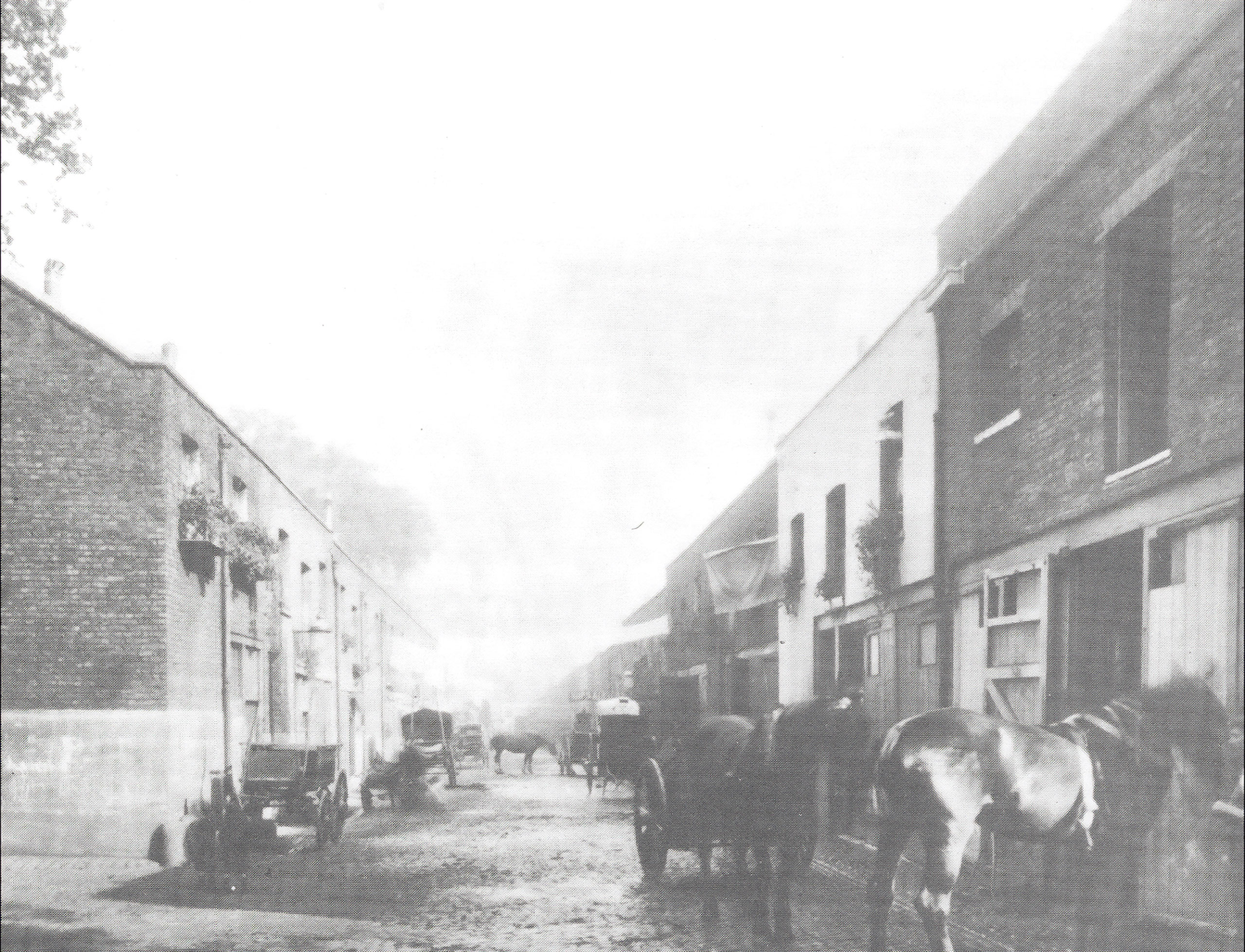
Typical historical mews setting. Extract from 'The Mews of London' by Barbara Rosen and Wolfgang Zuckermann, published 1982 (image source: preservingdcstables.blogspot.com/2013/12/london-mews-as-they-were)
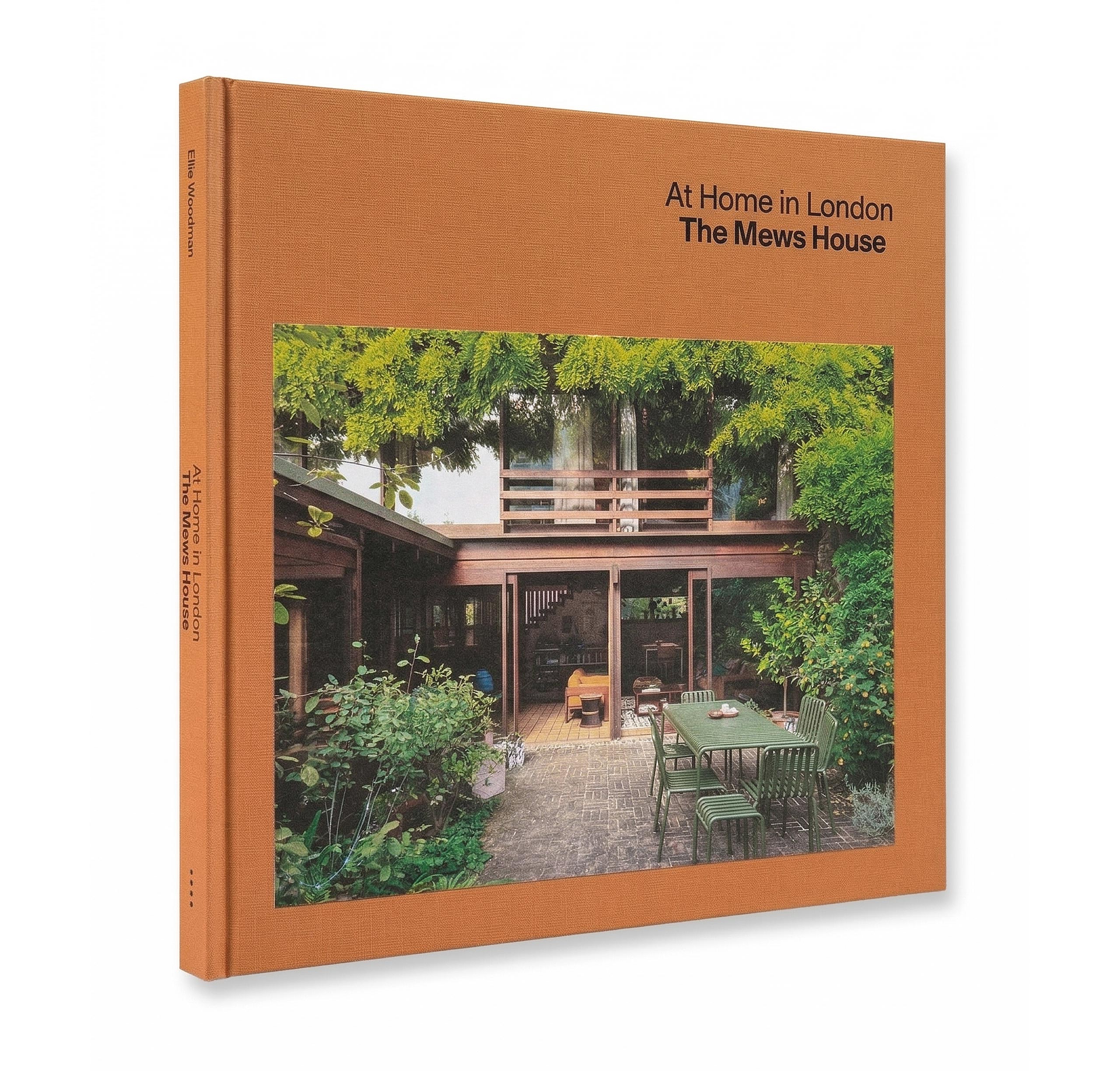
At Home in London: The Mews House by Ellis Woodman, co-published by The Architecture Foundation & Mack Books
The Historical Fabric: From Stables to Sanctuaries
Set behind the grand terraces of Georgian and Victorian London, the intimately scaled mews originally served a highly functional purpose. They accommodated coaches, horses, and stable hands. Tucked away from the primary streets, these secluded courts and alleys were the utilitarian backbone of affluent 18th and 19th century households.
However, the advent of the motorcar in the early twentieth century rendered their original use obsolete. As noted in the Architecture Foundation’s co-publication, At Home in London: The Mews House by acclaimed architecture critic Ellis Woodman, these spaces began to be converted for residential use, initially favoured by artists, bohemians, and those seeking quiet sanctuary. As Woodman explores, the mews soon became a site for radically experimental new-build homes, challenging established notions of domesticity.
This experimental spirit is beautifully illustrated by pioneering projects such as 62 Camden Mews (1965) by Ted Cullinan, which masterfully navigated spatial constraints through its innovative materiality and the expansion of garden space. Later examples highlight the flexibility of the typology, ranging from the bold volumetric play and generosity achieved through double height spaces and expansive glazing in Levring House by Jamie Fobert Architects, to the reimagining of a former underutilised light industrial site into a mixed-use residential and workplace scheme at Sprowston Mews by Matheson Whiteley. Today, the mews remains a perennially popular model for development, blending historic charm with the opportunity for bold, contemporary interventions.
The Challenge: Navigating Spatial, Planning, and Estate Constraints
While visually charming, mews properties present formidable challenges for traditional redevelopment. They are almost always located within tight, landlocked sites, constrained by complex party wall agreements, stringent conservation area regulations, and limited access to natural light.
Furthermore, historical remnants often complicate the brief. During our work on Marylebone Mews House, for example, freeholder-leaseholder agreements dictated that we retain a basement plant room that originally served the larger mansion block behind it. Similarly, our work converting a mews property for the Bulgarian Church (St John of Rila) in South Kensington presented extremely tight spatial tolerances for a brief that demanded the grandeur of a liturgical space.
Beyond municipal planning, mews properties frequently require working within the strict frameworks of Central London estates. These include the Grosvenor Estate, the Howard de Walden Estate, and the Portman Estate, and we have extensive experience navigating all of them. In this context, reviewing the historic lease is critical. Even freeholders will often need to apply for a licence to alter before any work can commence, adding an additional layer of complexity to the development process. At Patalab, we view these limitations not as roadblocks, but as parameters for spatial innovation.
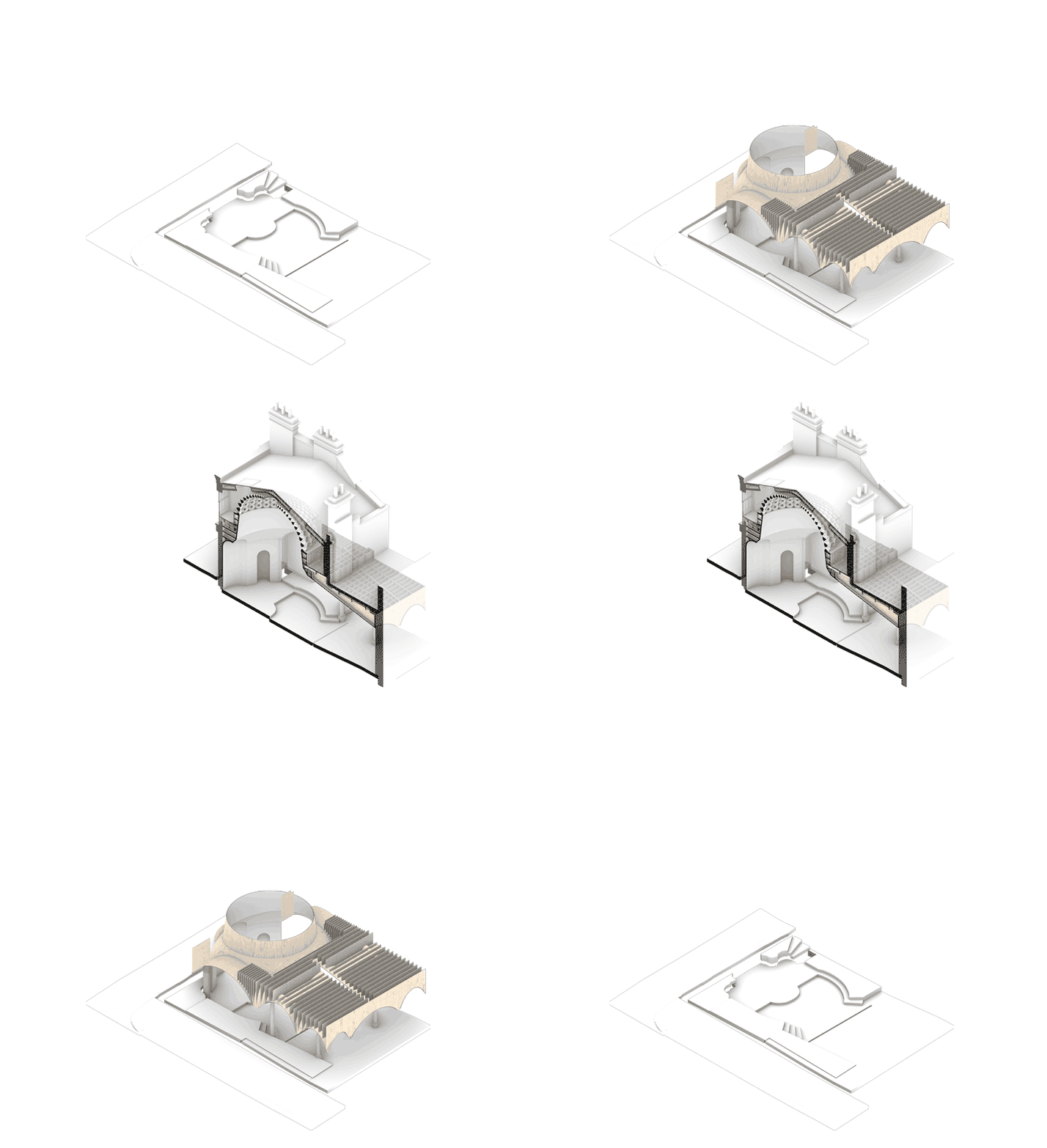
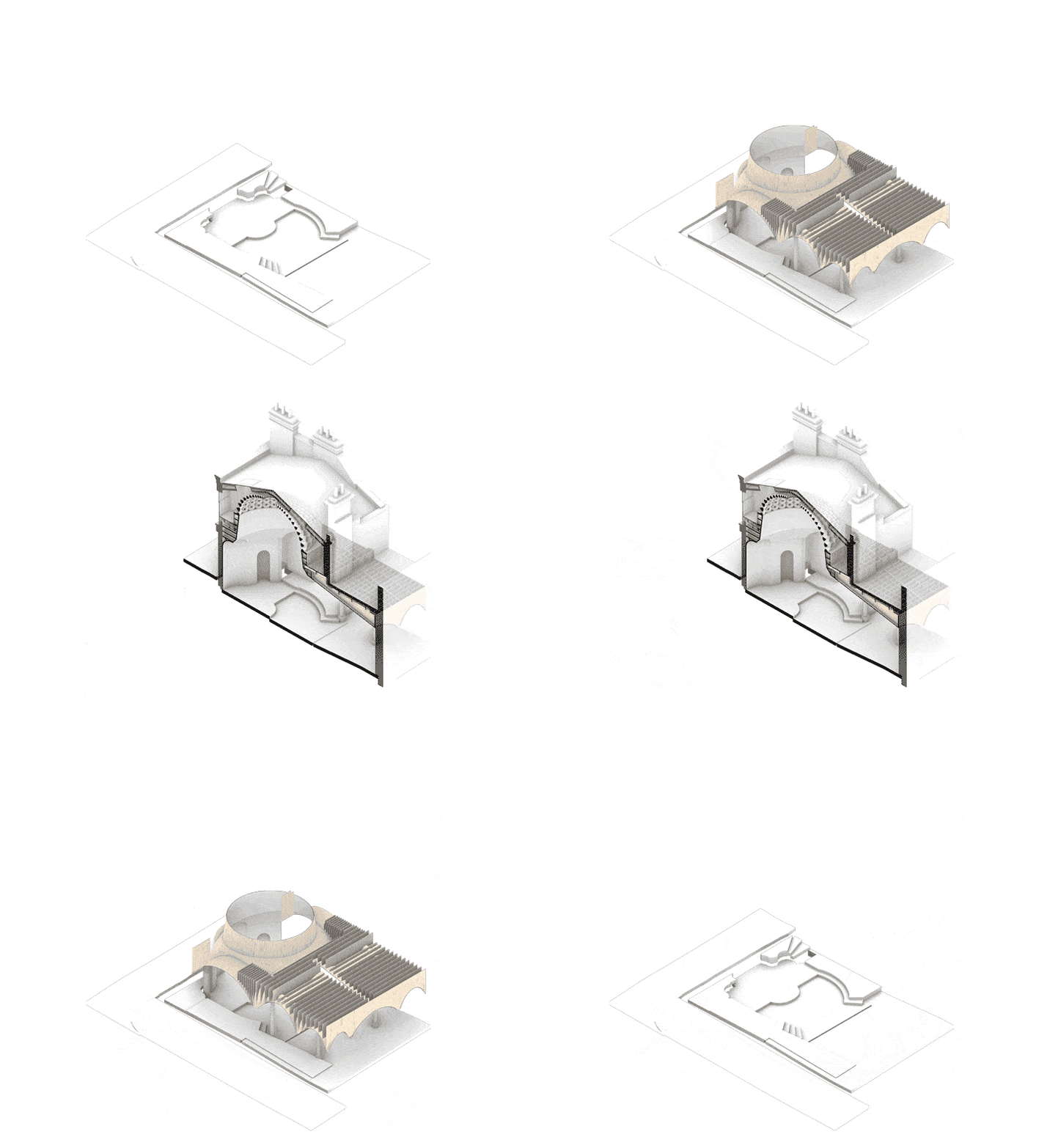
Bulgarian Church: techtonic animation and placement of forced perspective geometry within the existing mews structure
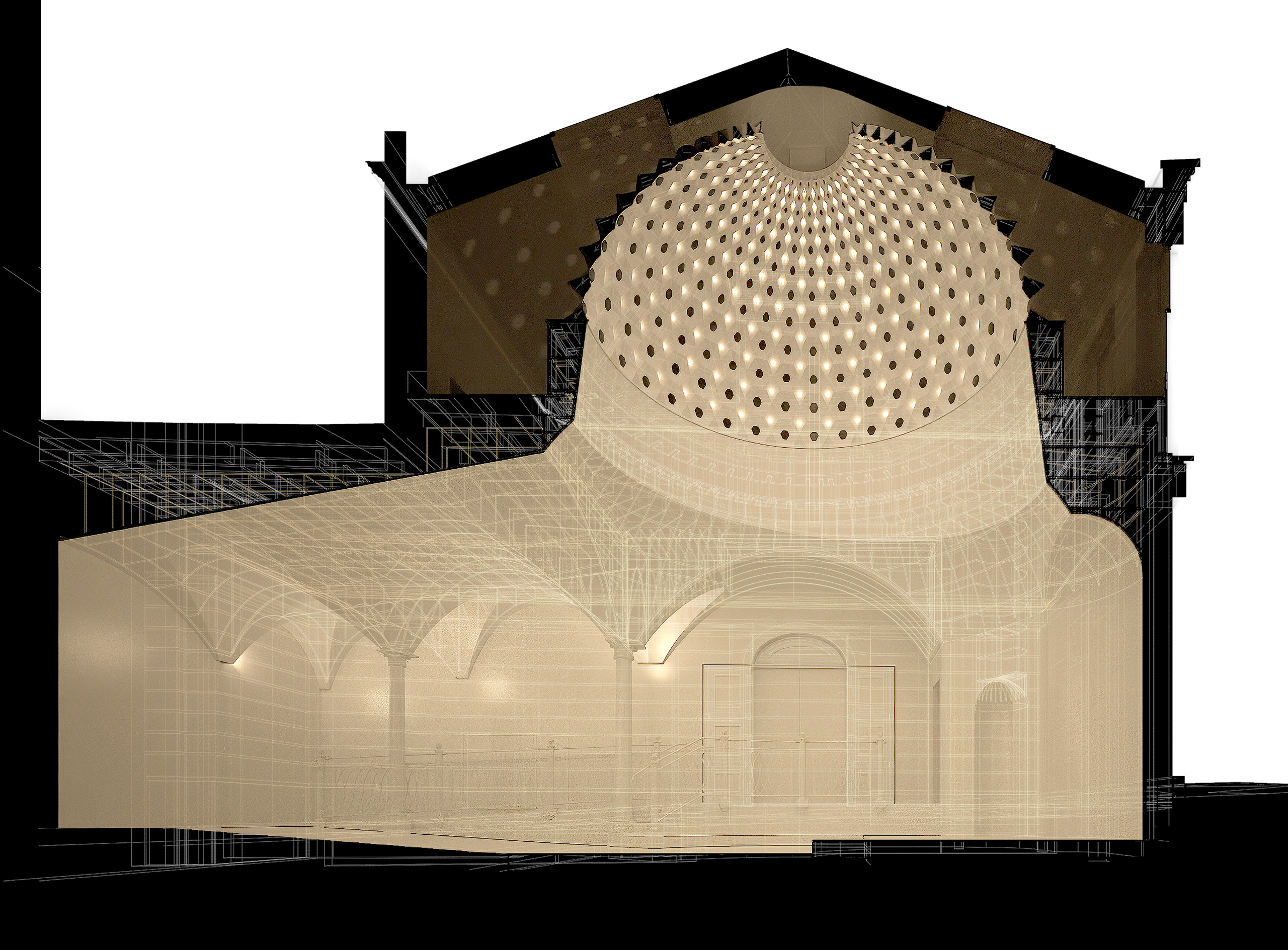
Bulgarian Church: reflective ceiling perspective plan of waffle structure
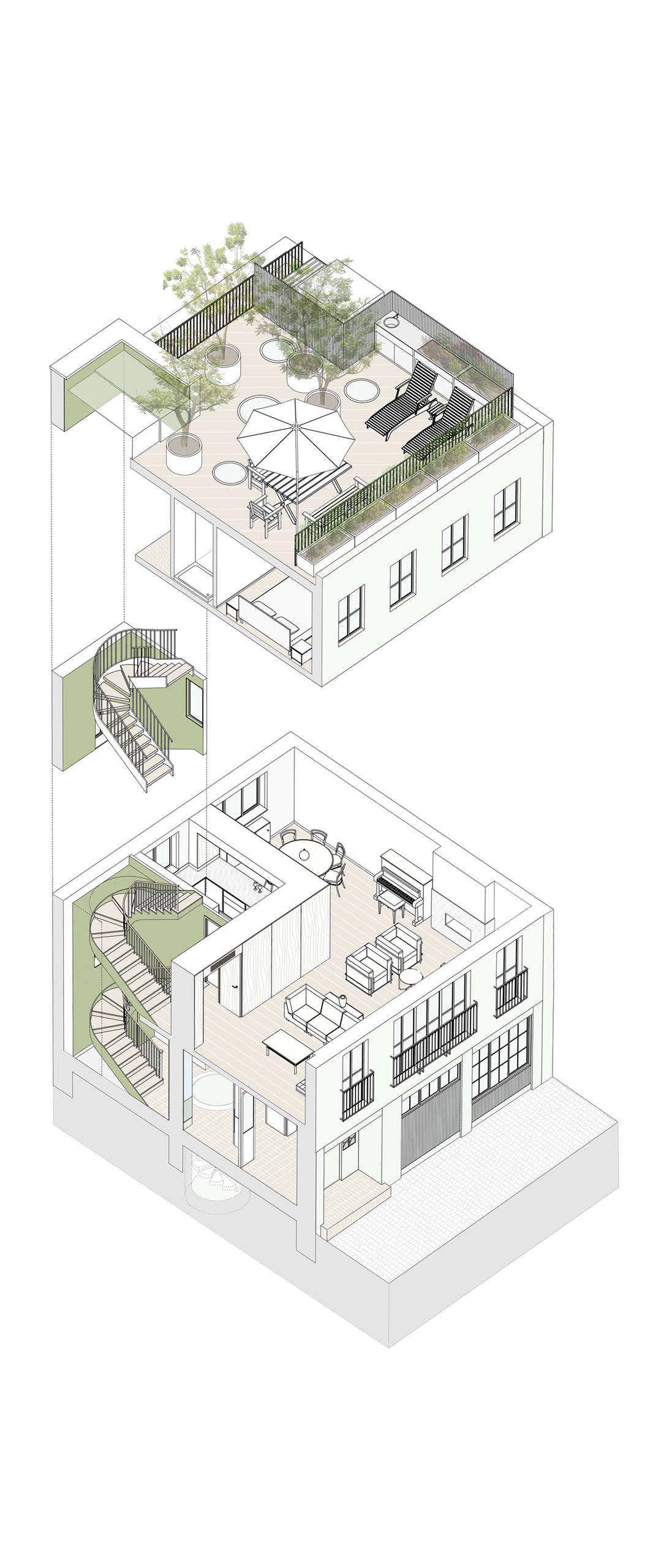
Belgravia Mews House: axonometric drawing of the proposal
Phase 1: Unlocking Substantial Development Potential
Maximising the potential of a mews site requires looking beyond its existing envelope and rethinking its fundamental programming. Mews properties uniquely possess the potential to double in size. A traditional two storey mews house can often be extended both upwards and downwards, and Patalab has the expertise to unlock this hidden value through strategic architectural interventions.
> Subterranean Expansion and Roof Extensions:
With lateral expansion usually impossible, we frequently unlock value by excavating downwards or extending upwards. In Marylebone Mews House, extensive basement extension and facade remodelling allowed us to create a generous family home despite a constrained footprint. Similarly, on Montague Mews West within the Portman Estate, we successfully unlocked a mansard roof extension through a careful design proposal on a property that was previously marked as unsuitable for a roof extension, representing a significant planning win.
> Garage Conversions:
Integrating the ground floor is another common strategy to increase habitable space. While obtaining municipal planning permission for garage conversions is usually quite straightforward, we understand that the primary hurdle is often securing the required licence to alter from the relevant estate. We have successfully achieved this on several projects, including Wimpole Mews.
> Densification and Subdivision:
Mews properties do not have to remain single dwellings. Much like Matheson Whiteley’s reimagining of Sprowston Mews, we seek to elevate the typology beyond standard development. For our Primrose Mews Flats project, we transformed a quintessential single-dwelling mews into two self-contained, highly desirable apartments. By focusing on high-quality materiality and clever spatial subdivision, we demonstrated how these sites can gracefully meet current housing demands while providing homes that feel bespoke and a joy to inhabit rather than speculative and uninspiring.
> Roof Top Gardens:
Building on the legacy of projects like Ted Cullinan’s Camden Mews that sought to creatively expand and maximise connection to outdoor amenity, we frequently integrate roof top gardens into our designs. Alongside our approved green roof terrace at Belgravia Mews House, our conceptual study for Primrose Mews House proposed making the second floor a combined internal and external terrace. This design allowed the outdoor space to flow down into a terrace atrium, bringing natural light and greenery deep into the plan.
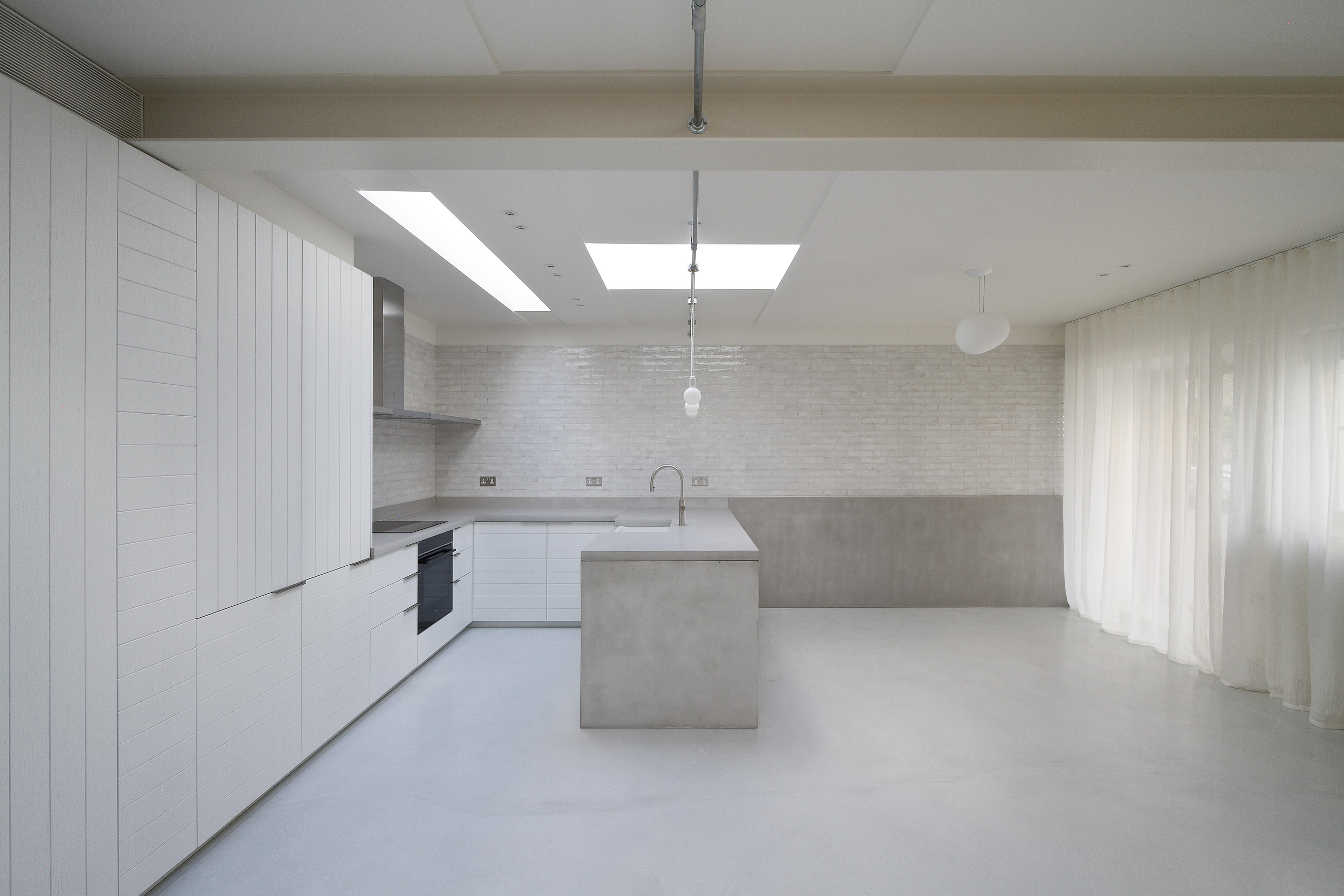
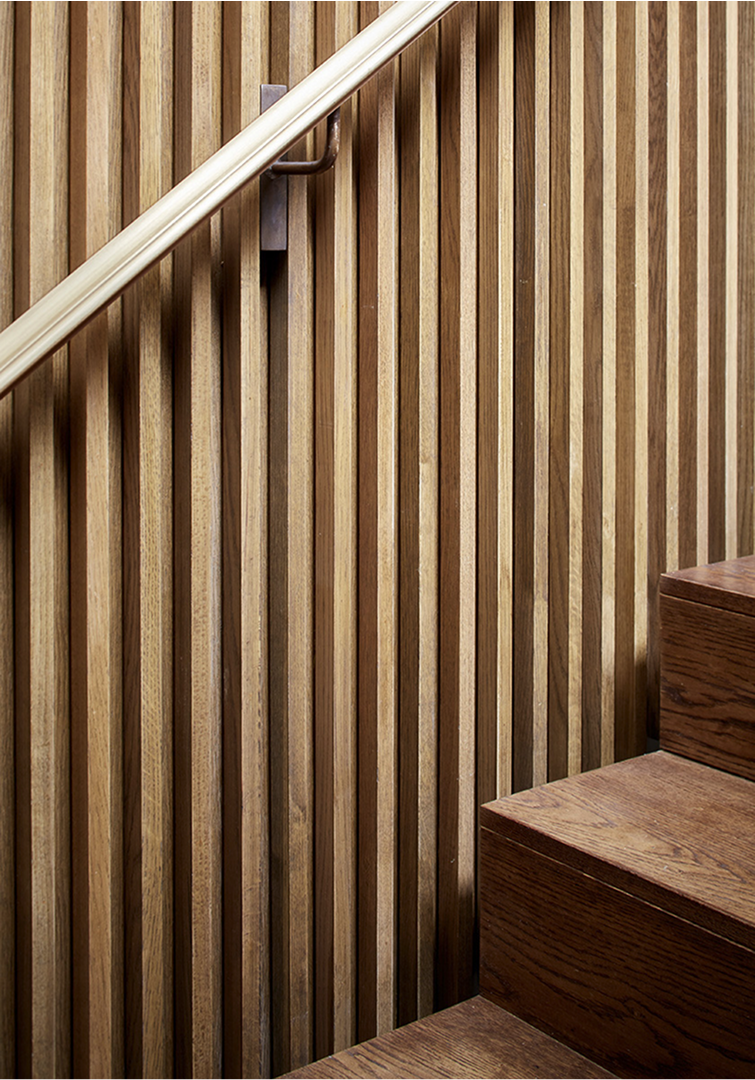
Primrose Mews Flats: continuation of timber siding storage cupboard forming a microcement-wrapped kitchen peninsula and wainscot
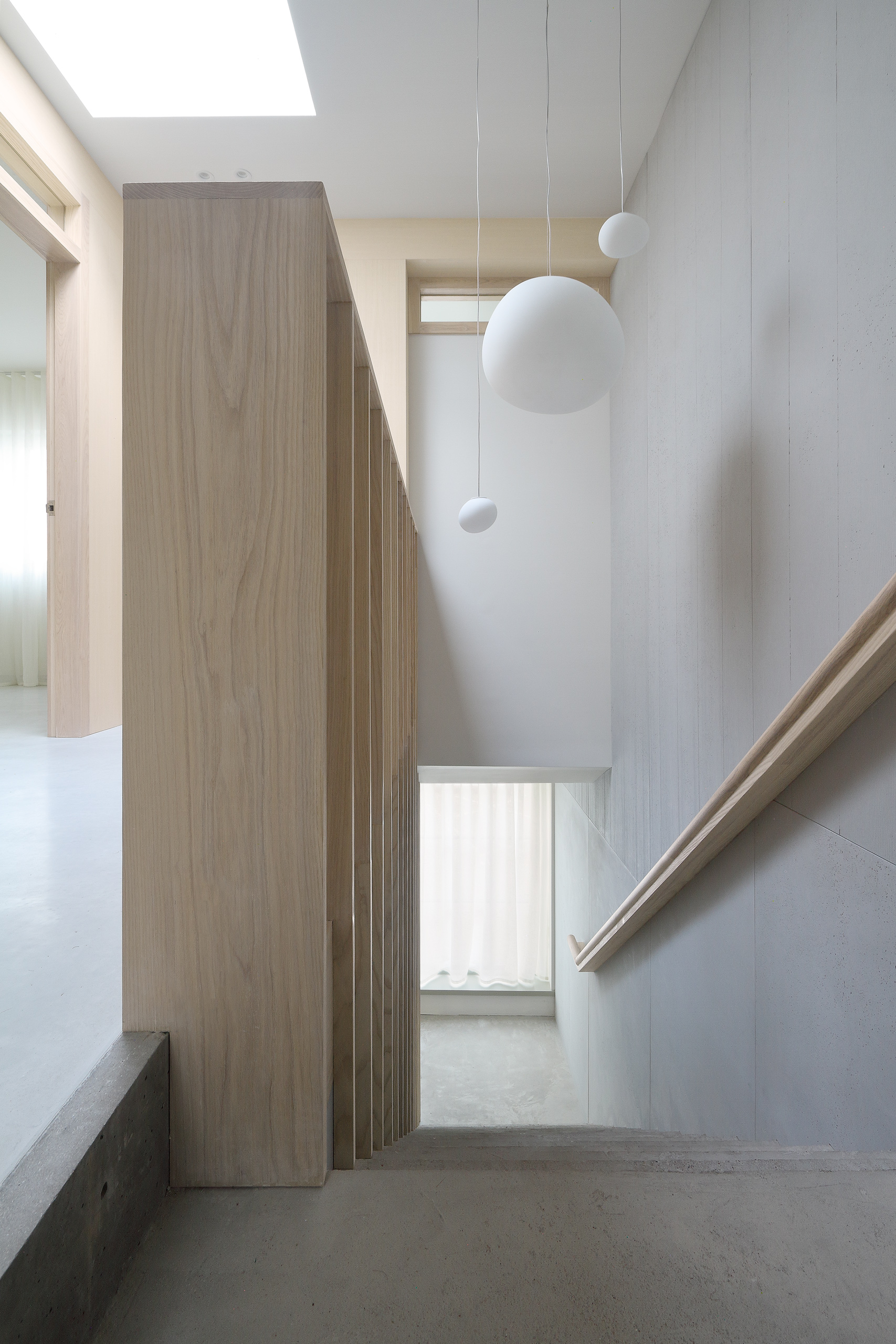
Primrose Mews Flats: making an entrance; new double-height staircase leading to the second floor flat embodying and accentuating the project’s play of light, volume and reinterpretation of the mews aesthetic with natural ash and concrete materiality
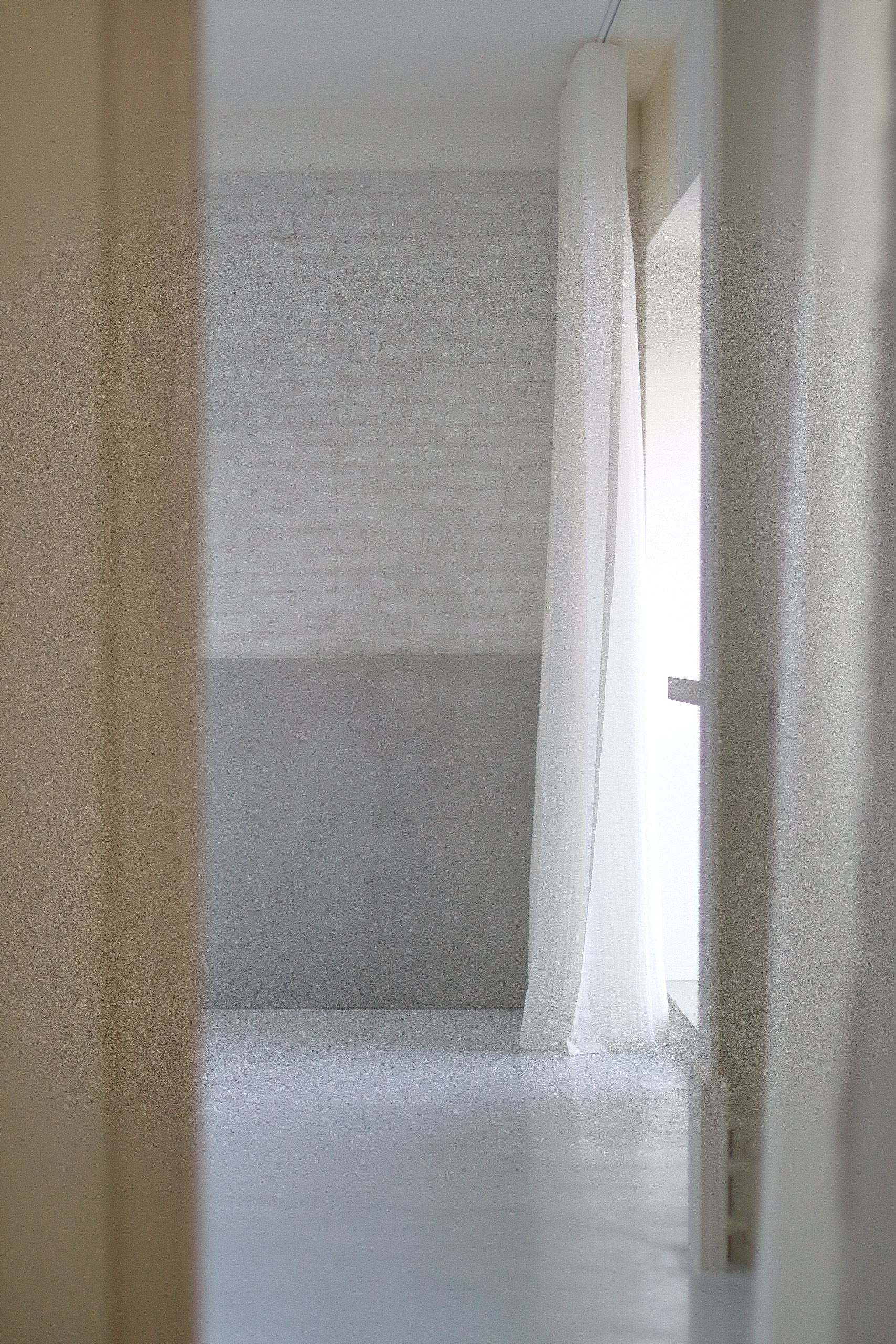
Primrose Mews Flats: glimpse through from the cocoon bedroom side window into the glowing living space
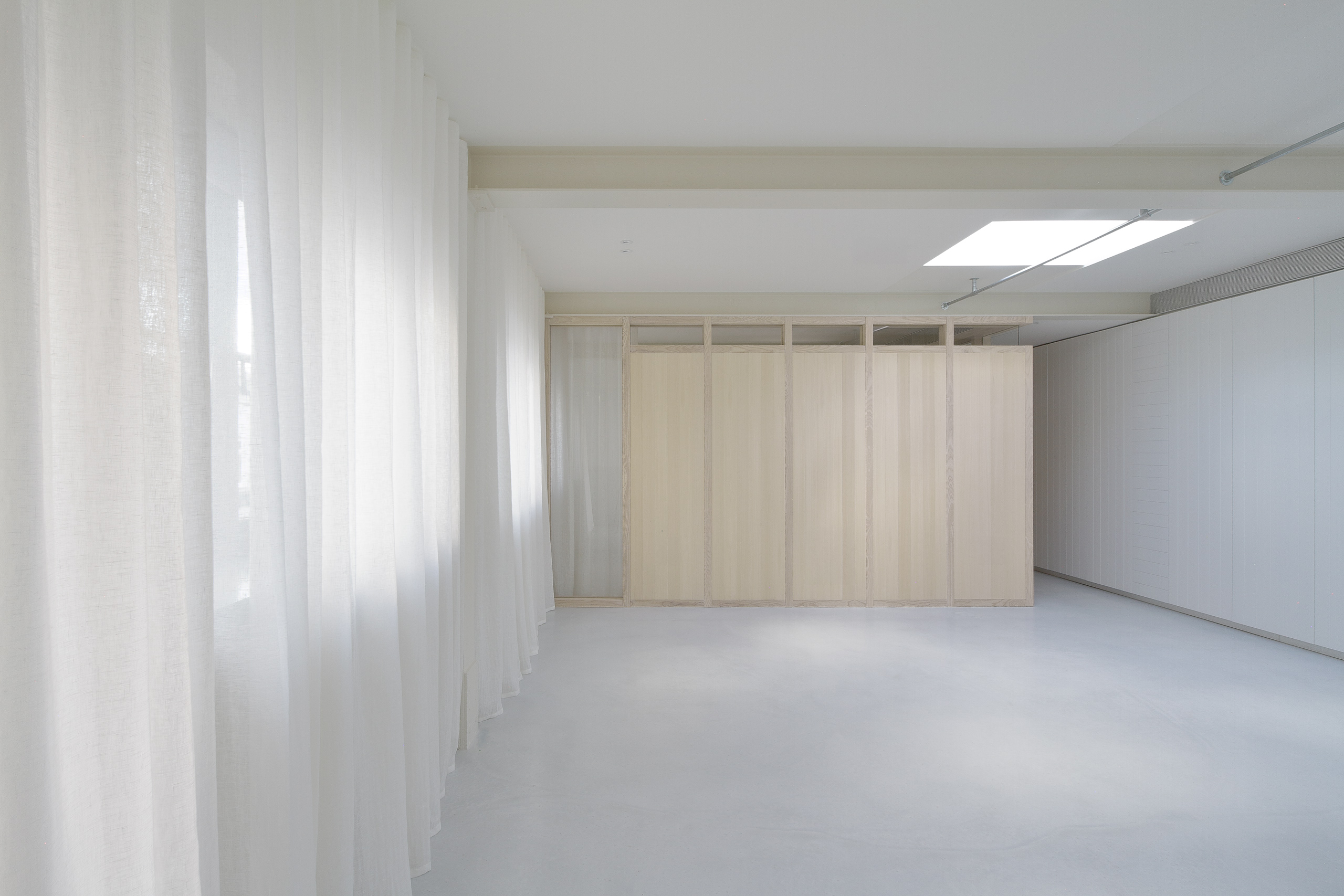
Primrose Mews Flats: ash cocoon bedroom within the wider volume, accentuated through the side and clerestory windows
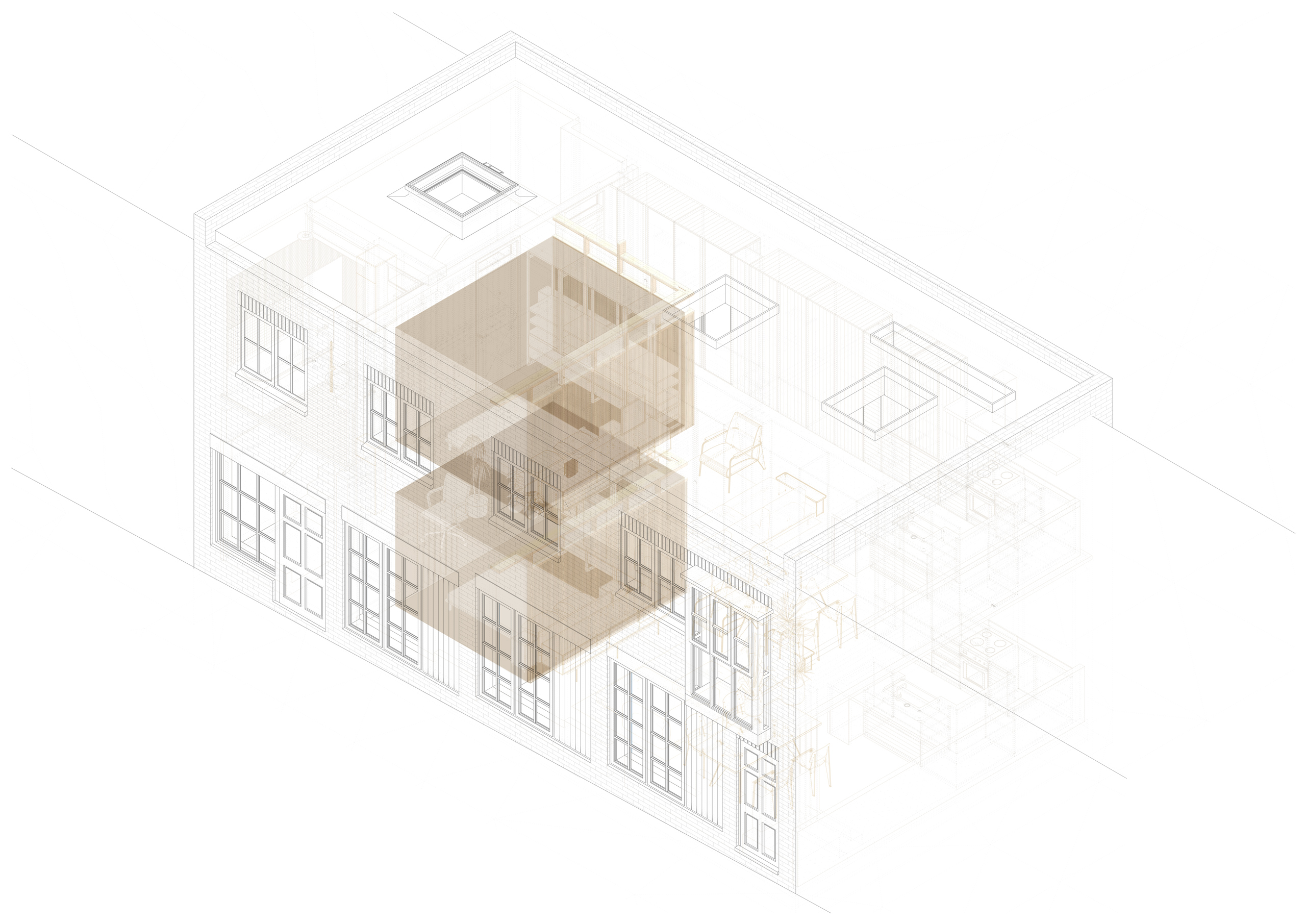
Primrose Mews Flats: conceptual isometric drawing
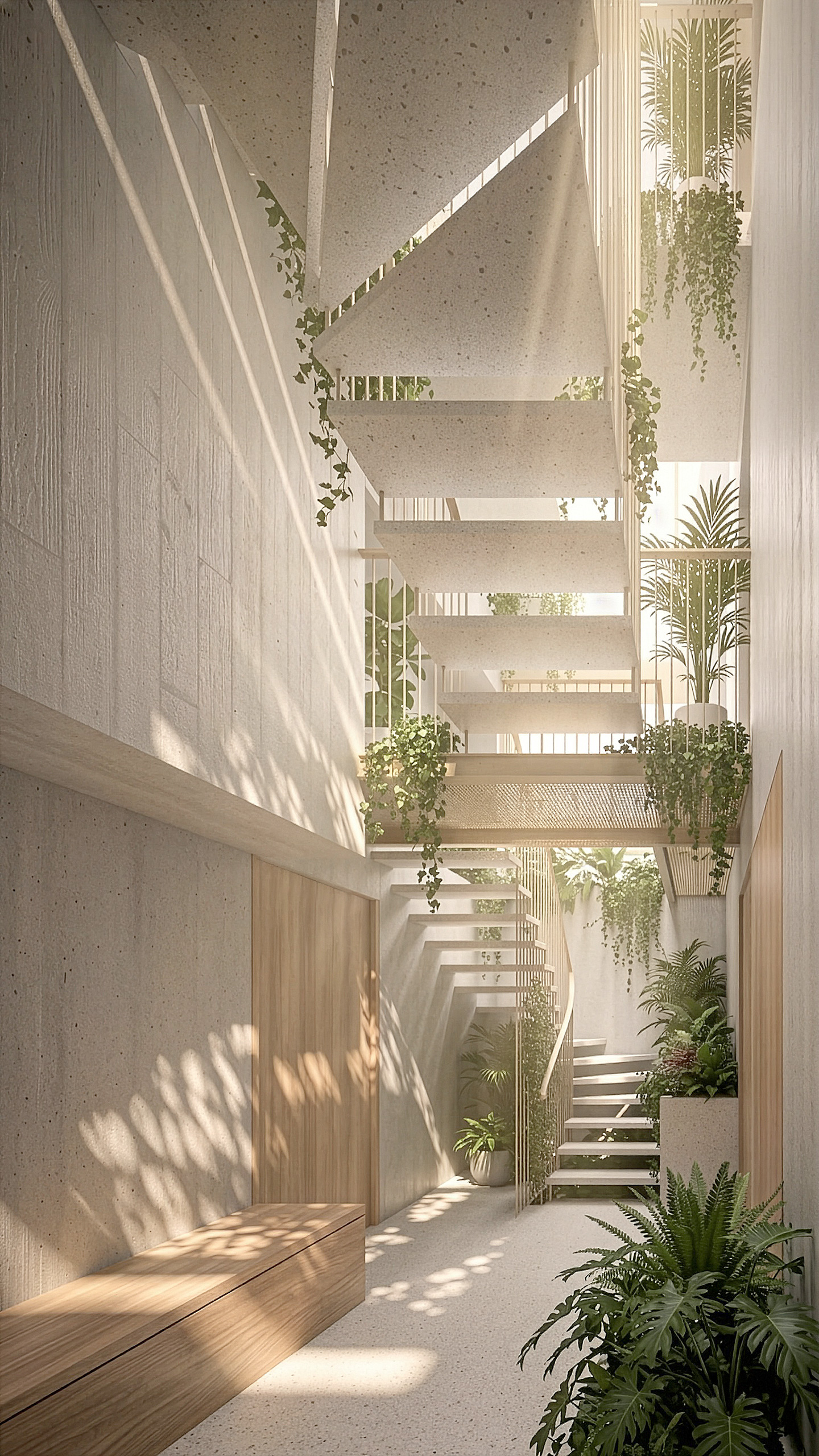
Primrose Mews House: visual impression of entrance looking onto vertical garden atrium
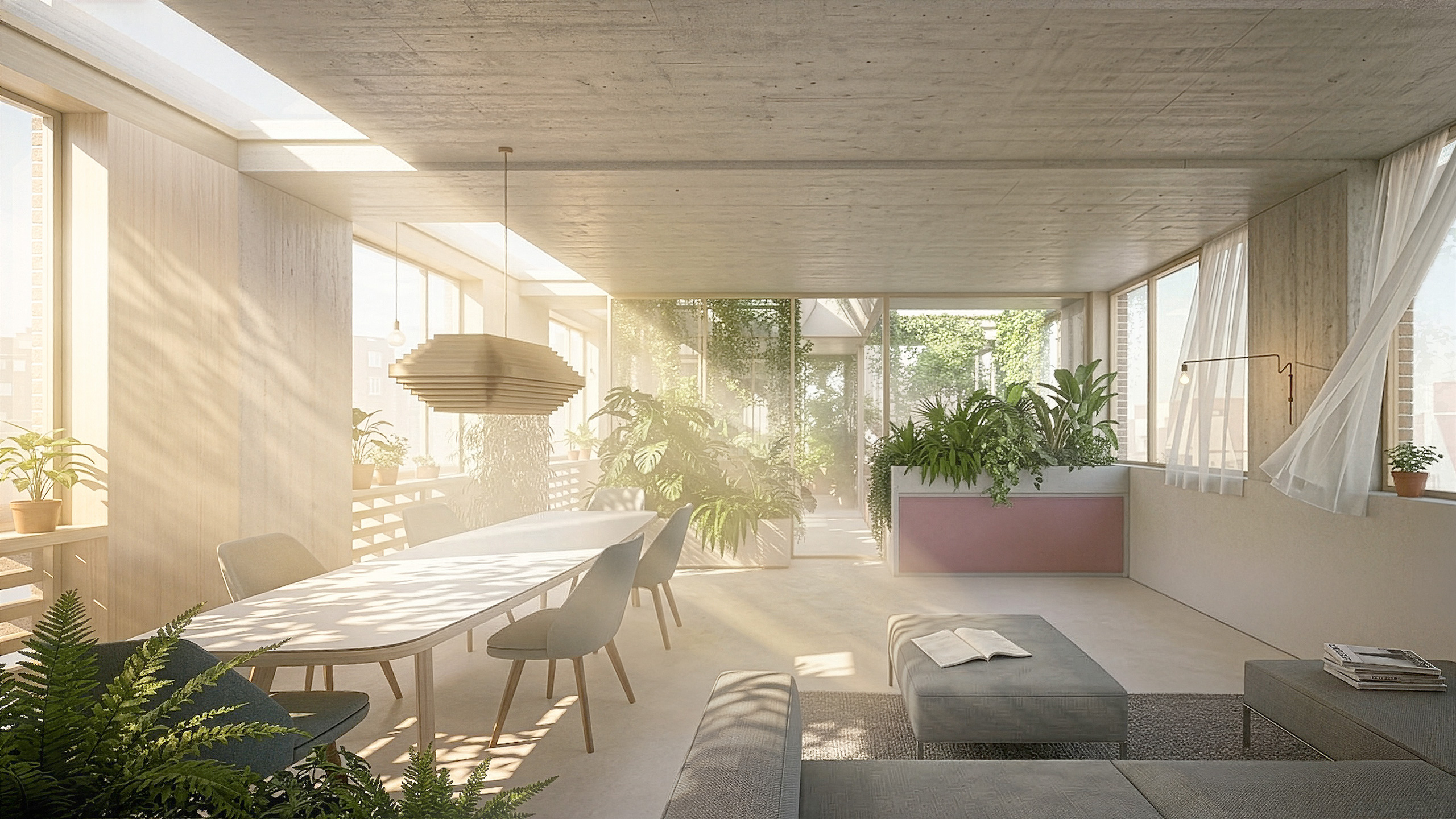
Primrose Mews House: visual impression of second floor, with generous glazing and verdant atrium interwoven between living and kitchen space
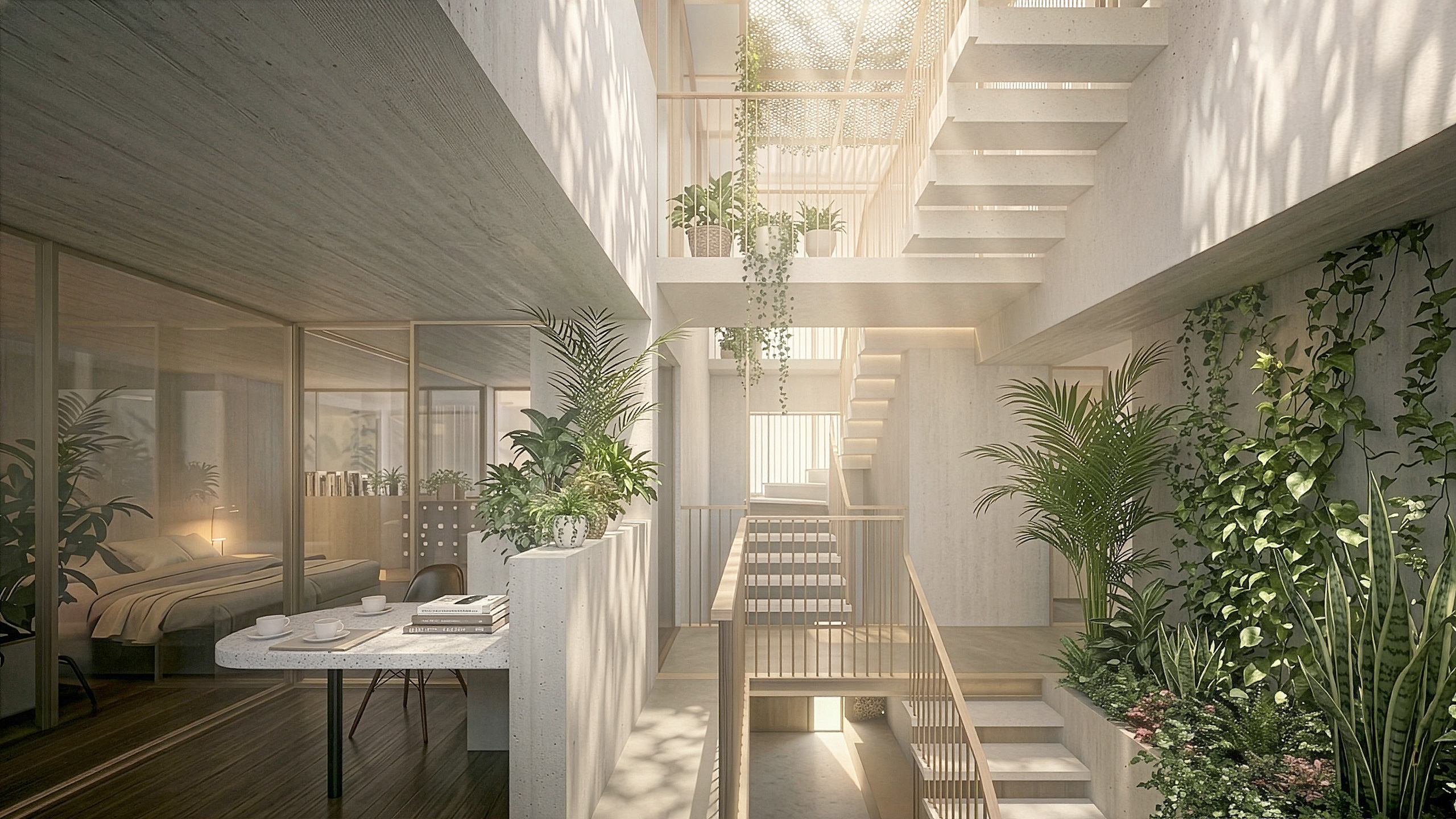
Primrose Mews House: visual impression of atrium with integrated internal terrace adjacent bedroom, interwoven with verdant planting
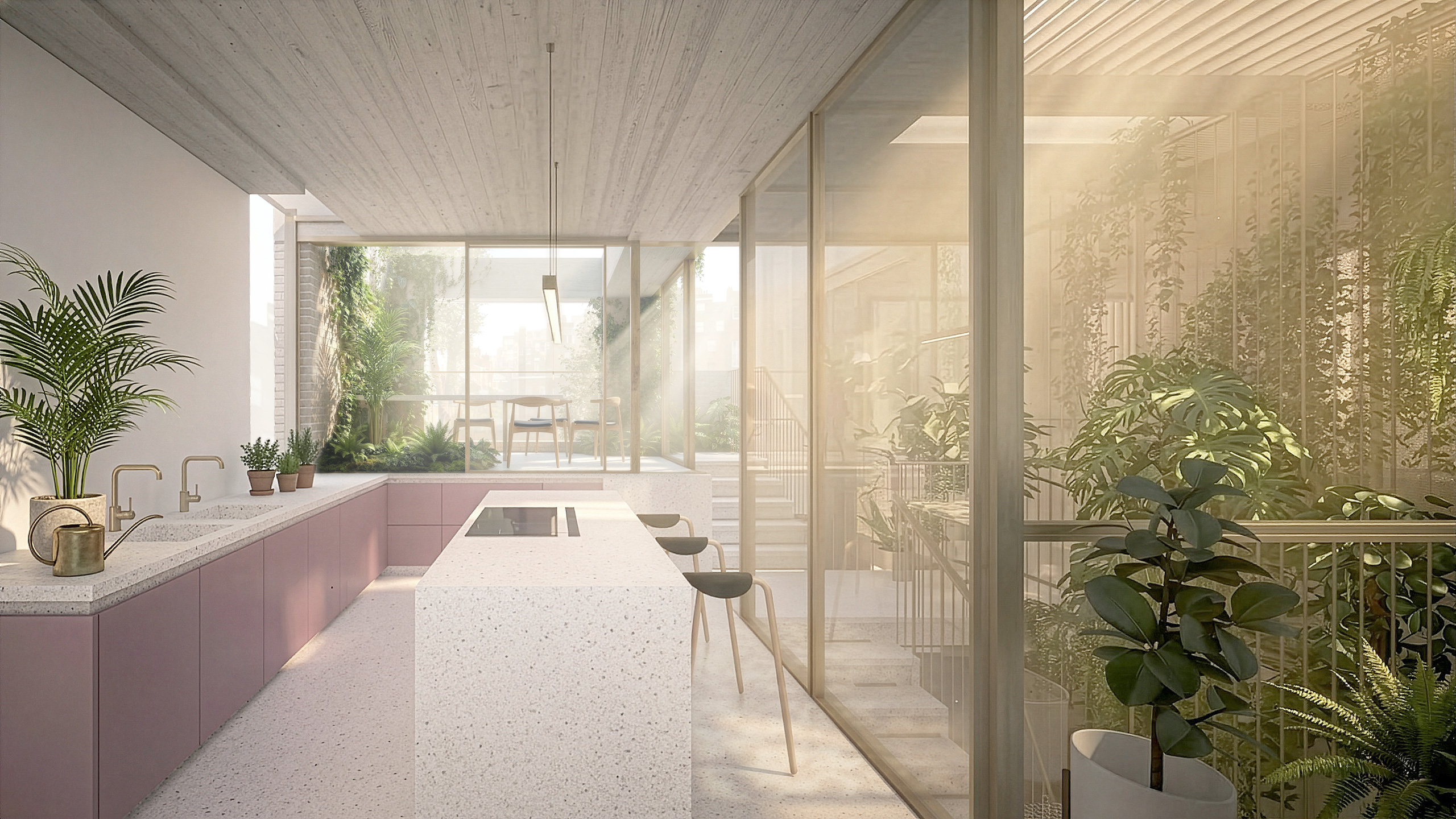
Primrose Mews House: visual impression of second floor kitchen, atrium and terrace spaces
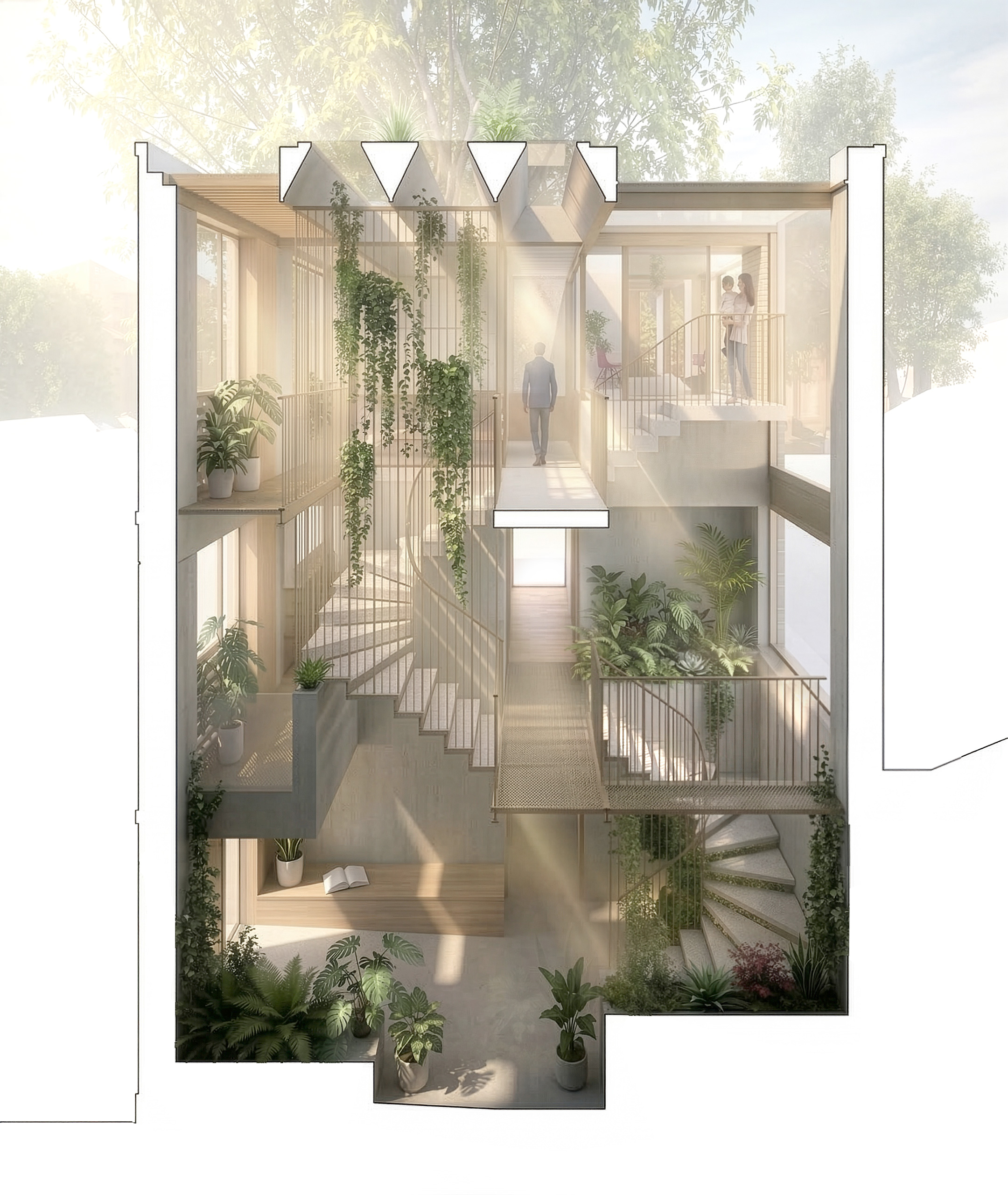
Primrose Mews House: perspective section study of central atrium, interweaving circulation and living spaces with nature
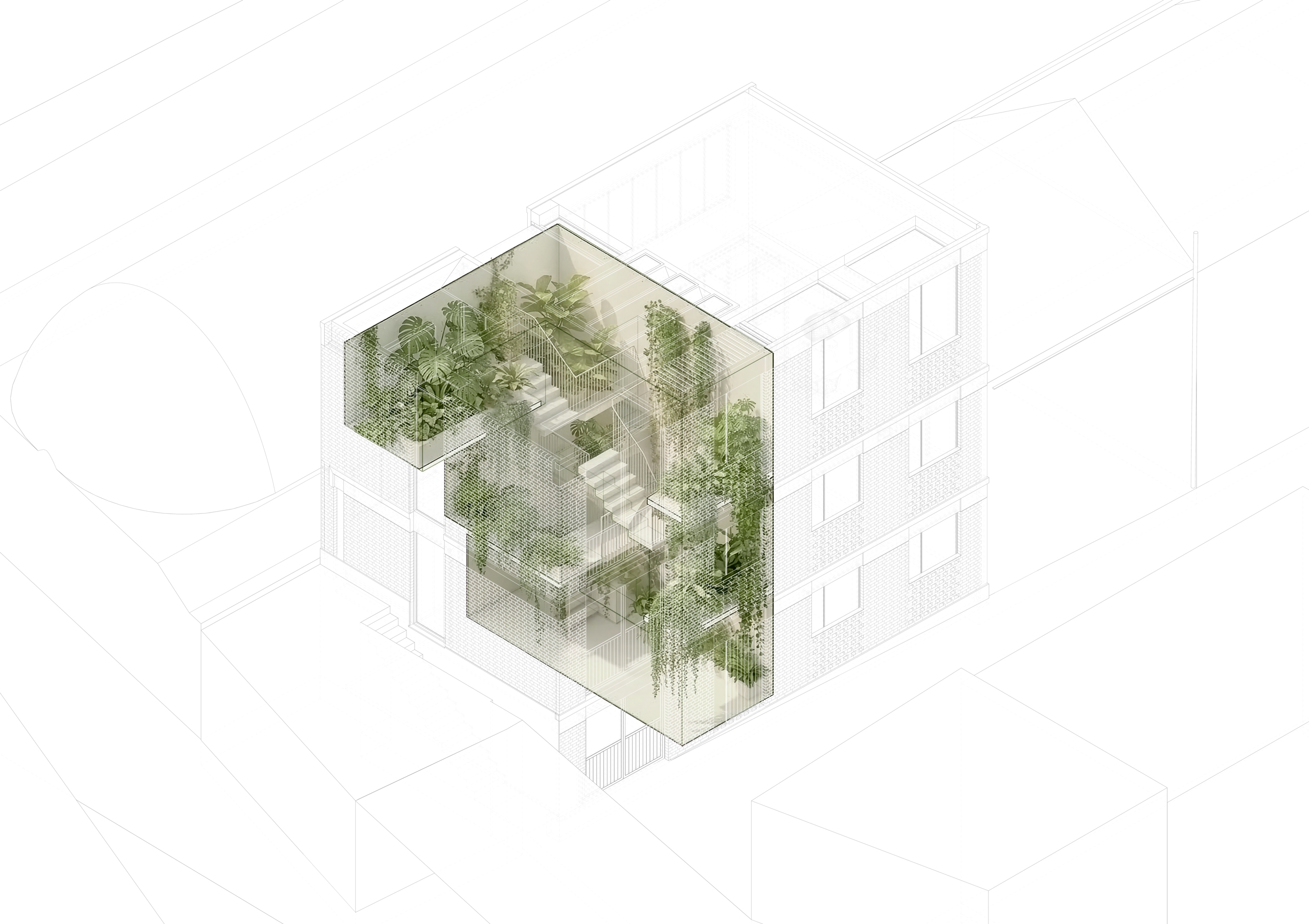
Primrose Mews House: conceptual isometric drawing
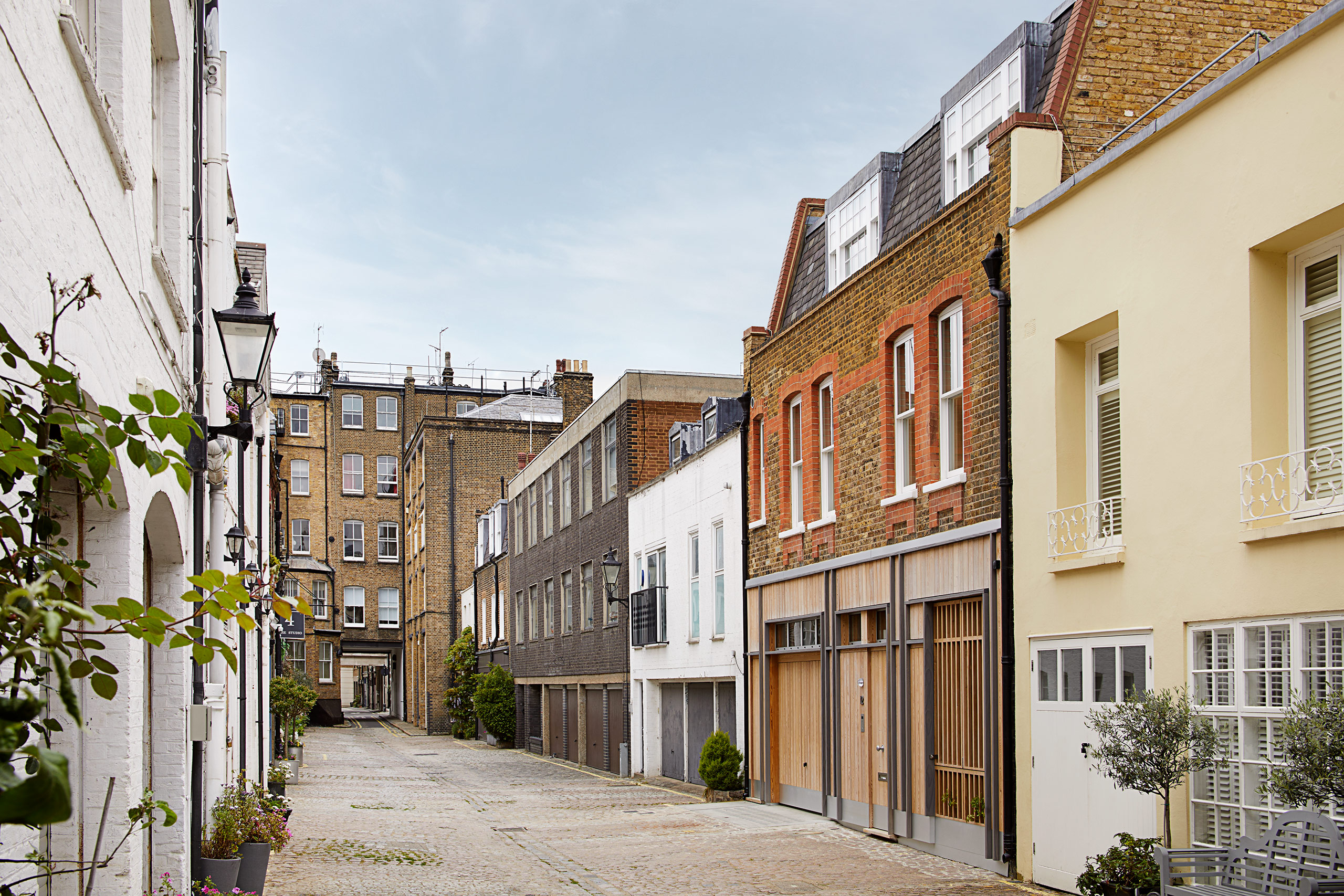
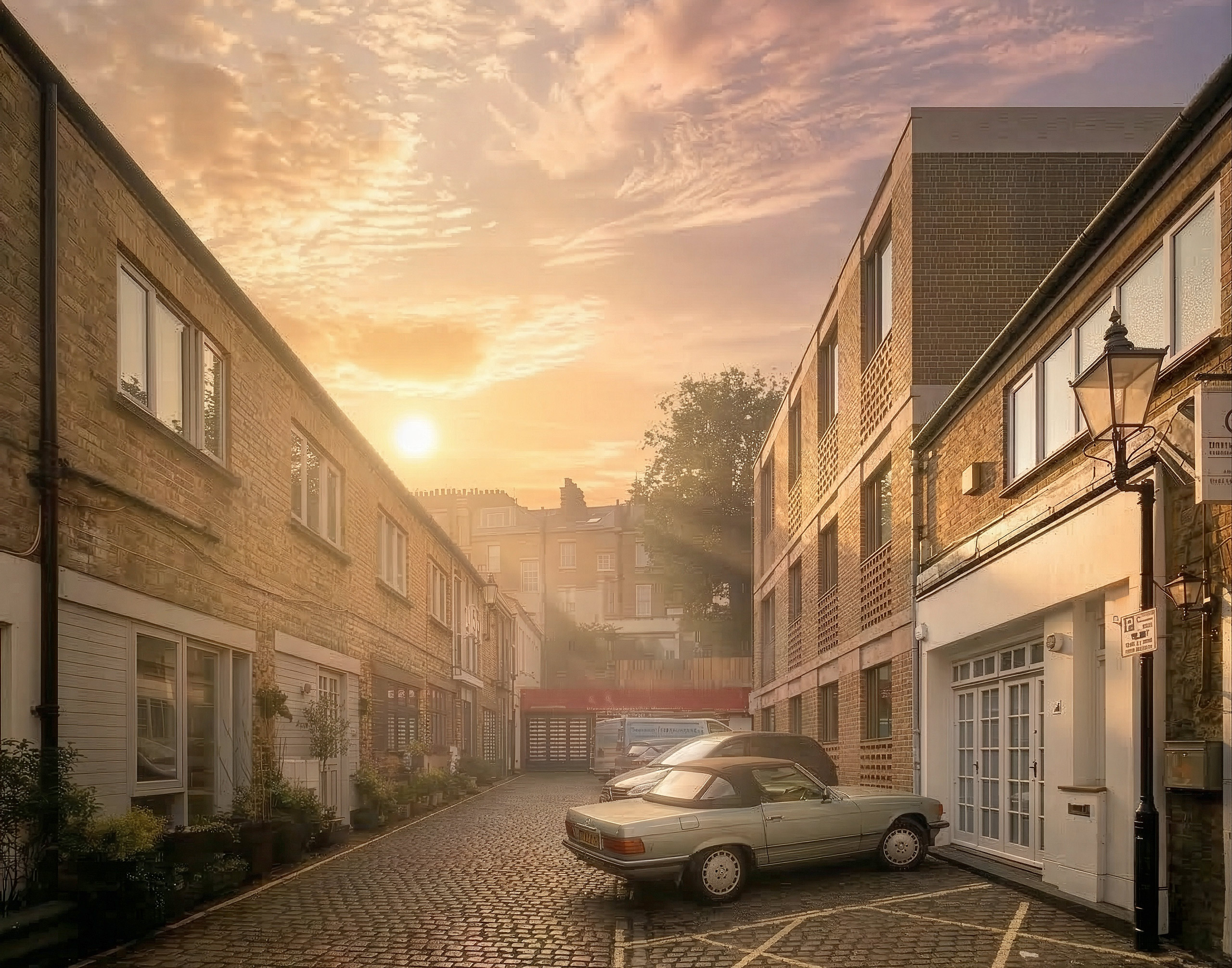
Marylebone Mews House: approach and front elevation of Marylebone Mews
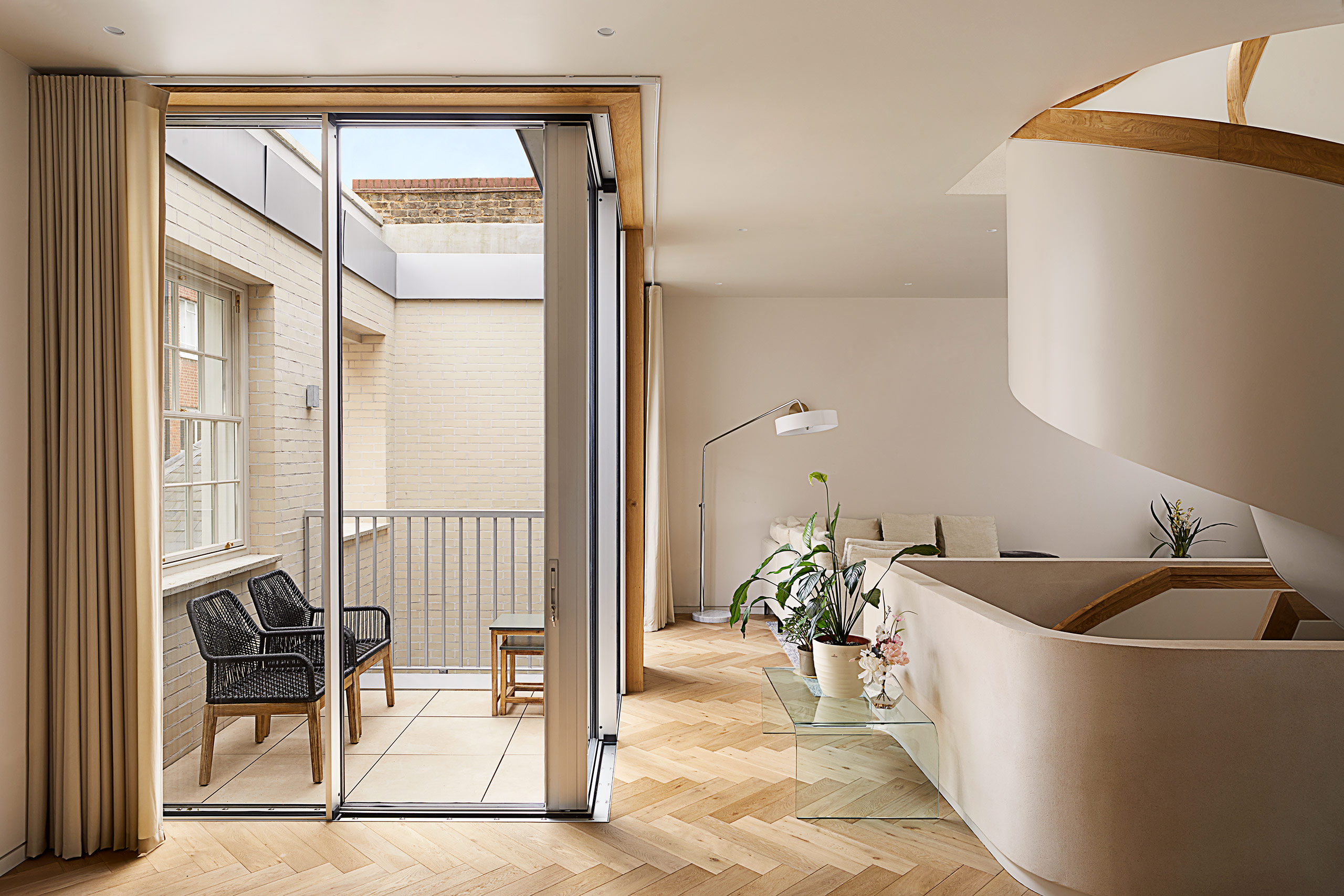
Marylebone Mews House: first floor living area with open stairwell and generous lightwell
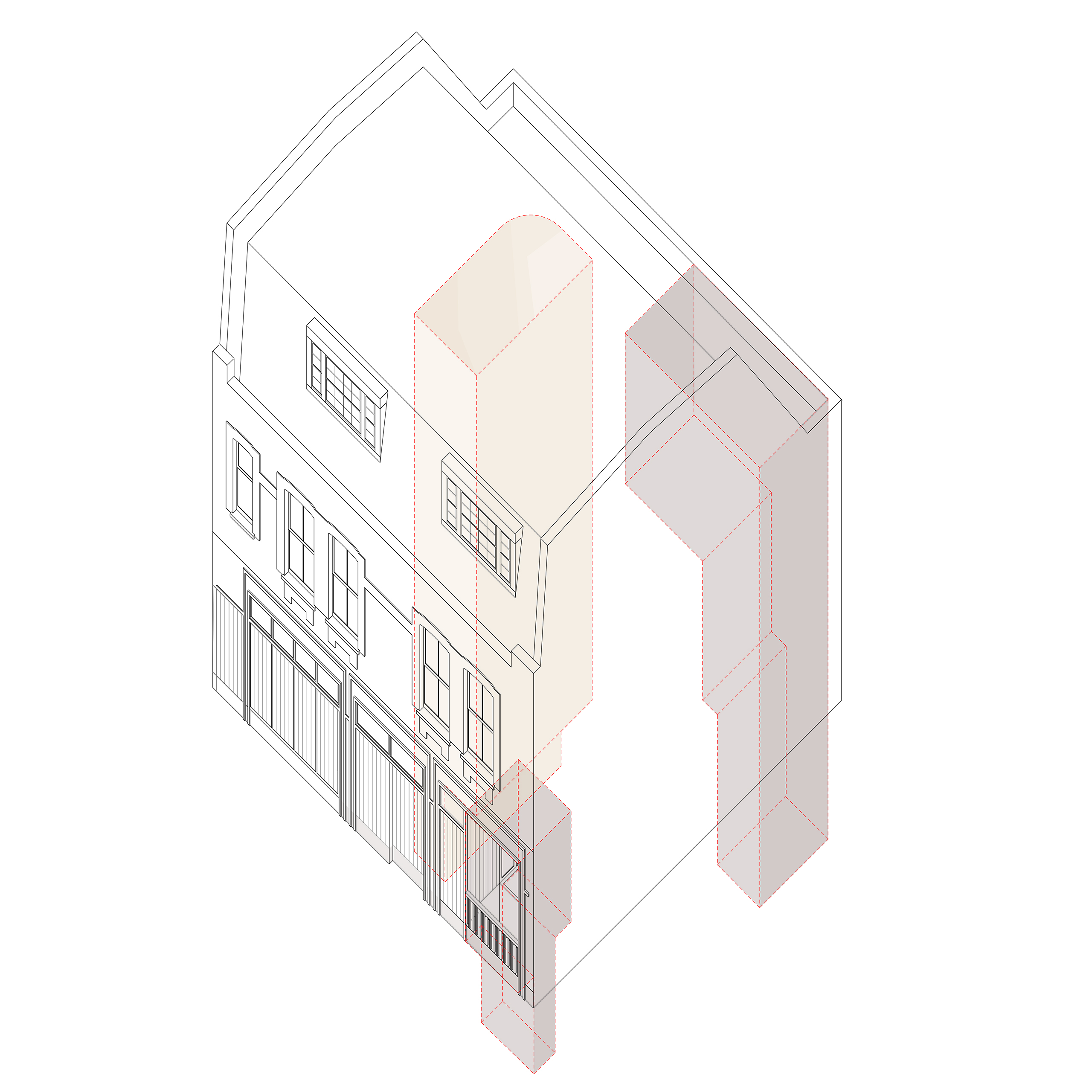
Marylebone Mews House: axonometric of final scheme showing circulation (beige) and lightwells (grey) interventions
Phase 2: Sectional Connectivity, Light, and Craft
The historical function of a mews house – designed to keep horses and smells away from the main house – means they often lack windows on the rear elevation and suffer from cellular, cramped entrance sequences with highly restricted access to external amenity. Overcoming these limitations often requires high-impact interventions.
> Maximising Volume and Amenity:
Echoing the bold volumetric play seen in Jamie Fobert’s Levring House, our currently developing design for Wimpole Mews demonstrates how profound spatial transformations can be planned efficiently to maximise a project’s architectural value. To overcome the historic lack of external amenity and cramped entry sequences, our proposed interventions feature a widened entrance and a striking new staircase, aimed at immediately establishing a sense of volume and grandeur upon arrival in antithesis to the conventional mews entry condition. Furthermore, the design strategically carves out internal terraces, similarly to our explorations in Primrose Mews House, which interweaved this concept with dense vegetation and light in a vertical garden atrium. By incorporating internal windows and an open balustrade structure adjacent to these terraces, we intend to create a continuous visual and spatial connection through the section of the house, drawing natural light and a sense of the outdoors deep into the previously constrained floor plan devoid of external amenity space.
> Engineering Light and Perception:
In Marylebone Mews House, we carved out deep internal lightwells, allowing daylight to filter down the centre of the house, animated by sweeps of mica-mixed clay plaster and an expressive, continuous staircase.
> Digital Craft and Joinery:
Where spatial constraints are severe, we rely on our expertise in digital craft. For the Bulgarian Church, we utilised advanced 3D modelling and forced perspective to create a series of intersected vaulted ceilings that gradually decrease in scale, giving the illusion of profound depth. Even in residential settings like Primrose Mews Flats, custom joinery defines the space. We designed intimate ash timber cocoon bedrooms suspended within the primary structural framework, balancing a hard-wearing industrial palette with warmth and filtered light.
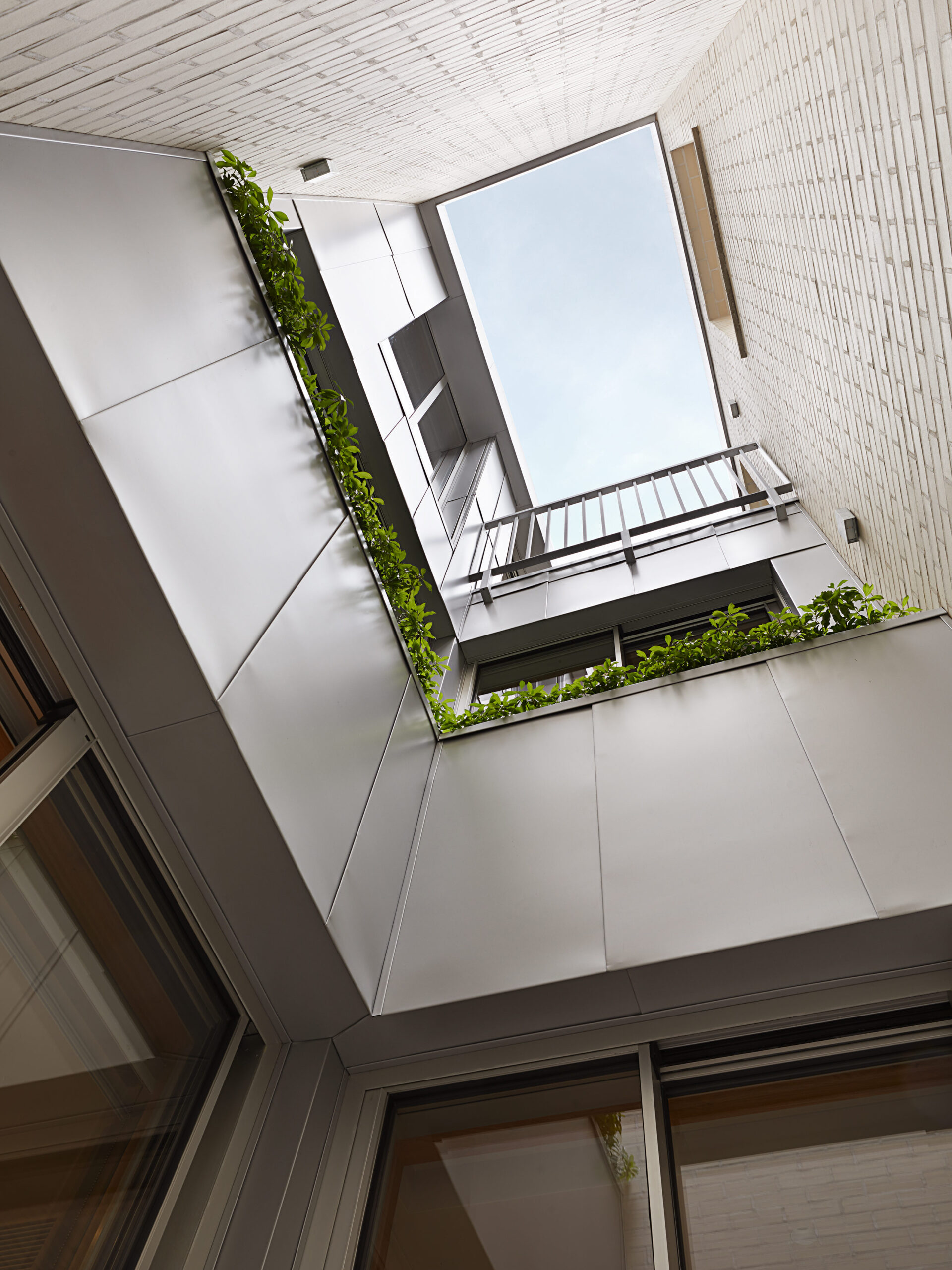
Marylebone Mews House: generous rear lightwell and terraces
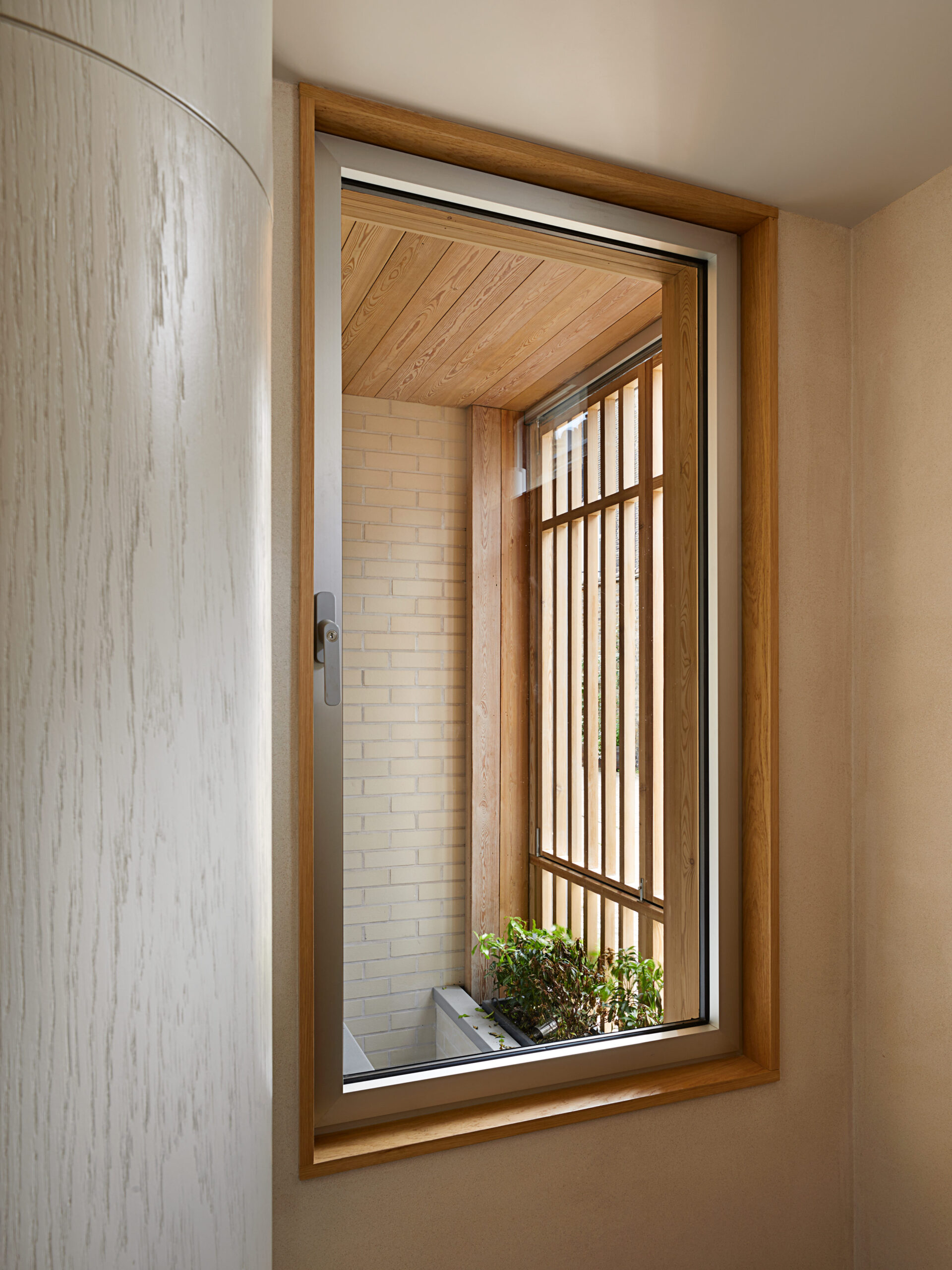
Marylebone Mews House: tonal material palette and internal window to ground floor entrance, providing additional borrowed light and glimpses through the front lightwell
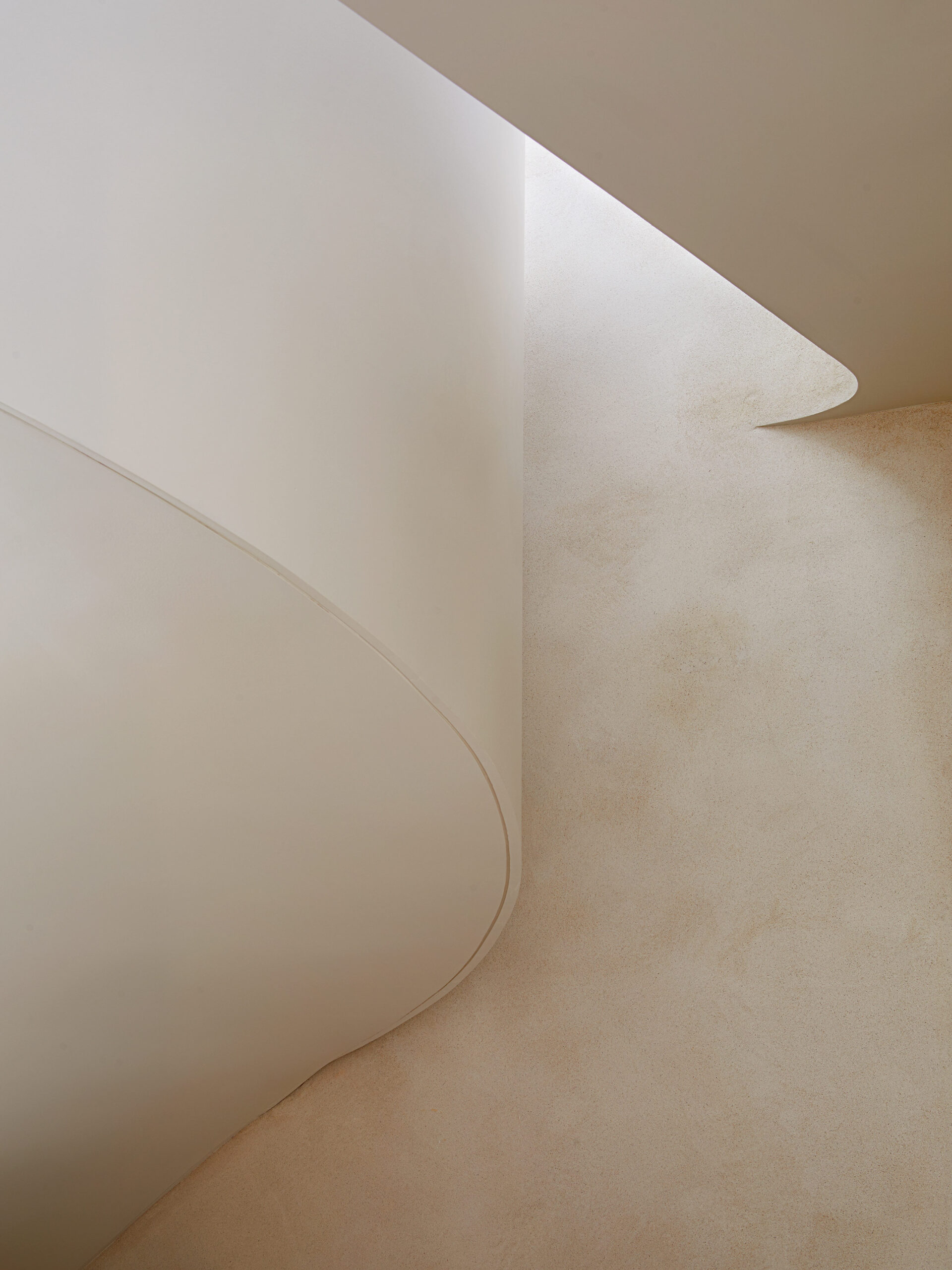
Marylebone Mews House: subtle contrast in material texture emphasising the geometric interplay and staircase as a focal point
Phase 3: Sustainable Retrofit and Extending Lifespans
True architectural success in the 21st century demands sustainability. Extending the life of London’s mews properties is inherently an act of sustainable retrofitting. By preserving the historic masonry shell and upgrading the thermal performance of the envelope, we future proof these heritage assets.
Our Belgravia Mews House project exemplifies this fabric-first approach. The approved design introduces significant sustainability improvements, including the installation of a high-efficiency heat pump, full internal wood fibre insulation, and the replacement of existing windows with energy-performant glazing. By bridging the gap between historical preservation and modern environmental standards, we ensure these properties are functionally and ecologically viable for the future.
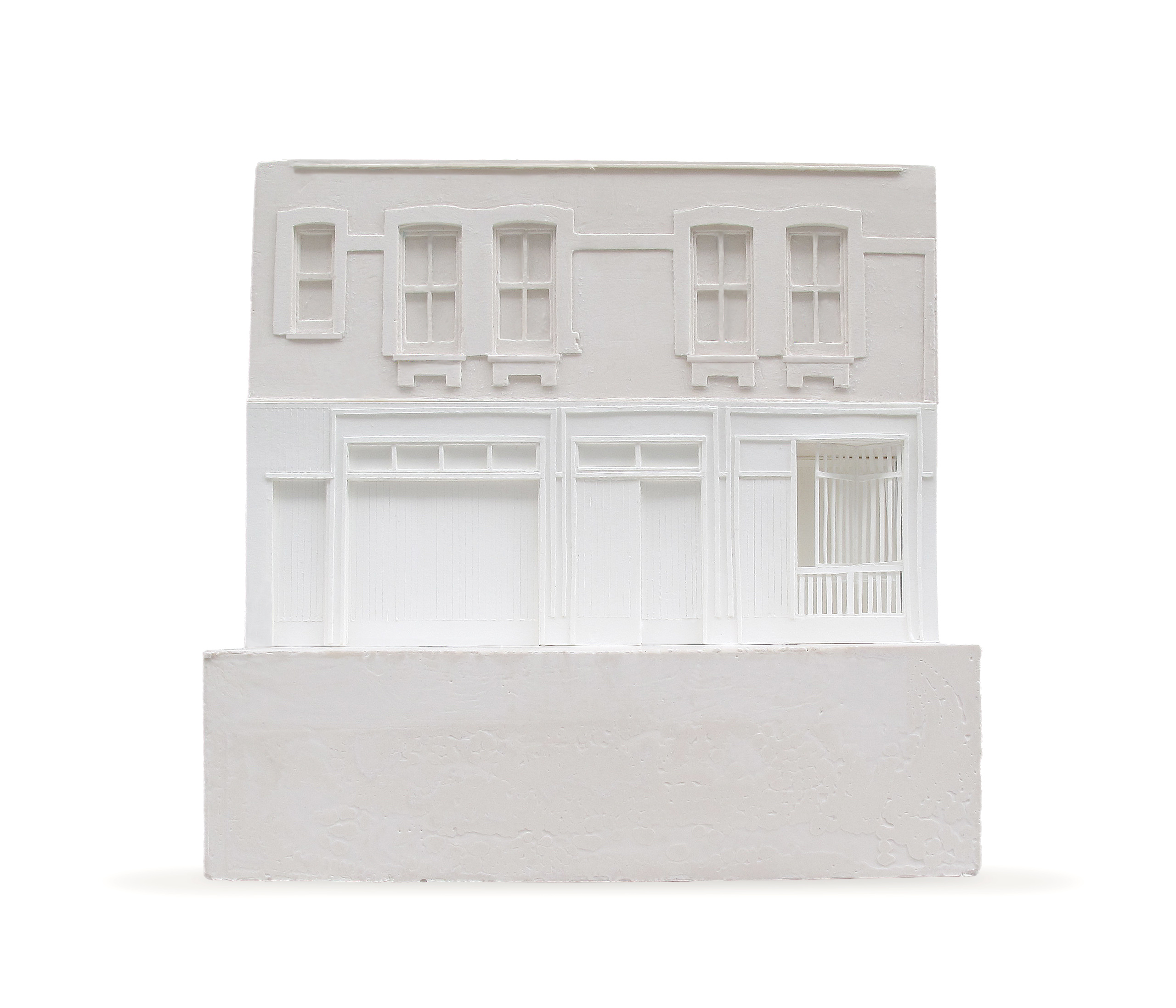
Marylebone Mews House: cast plaster elevation study model
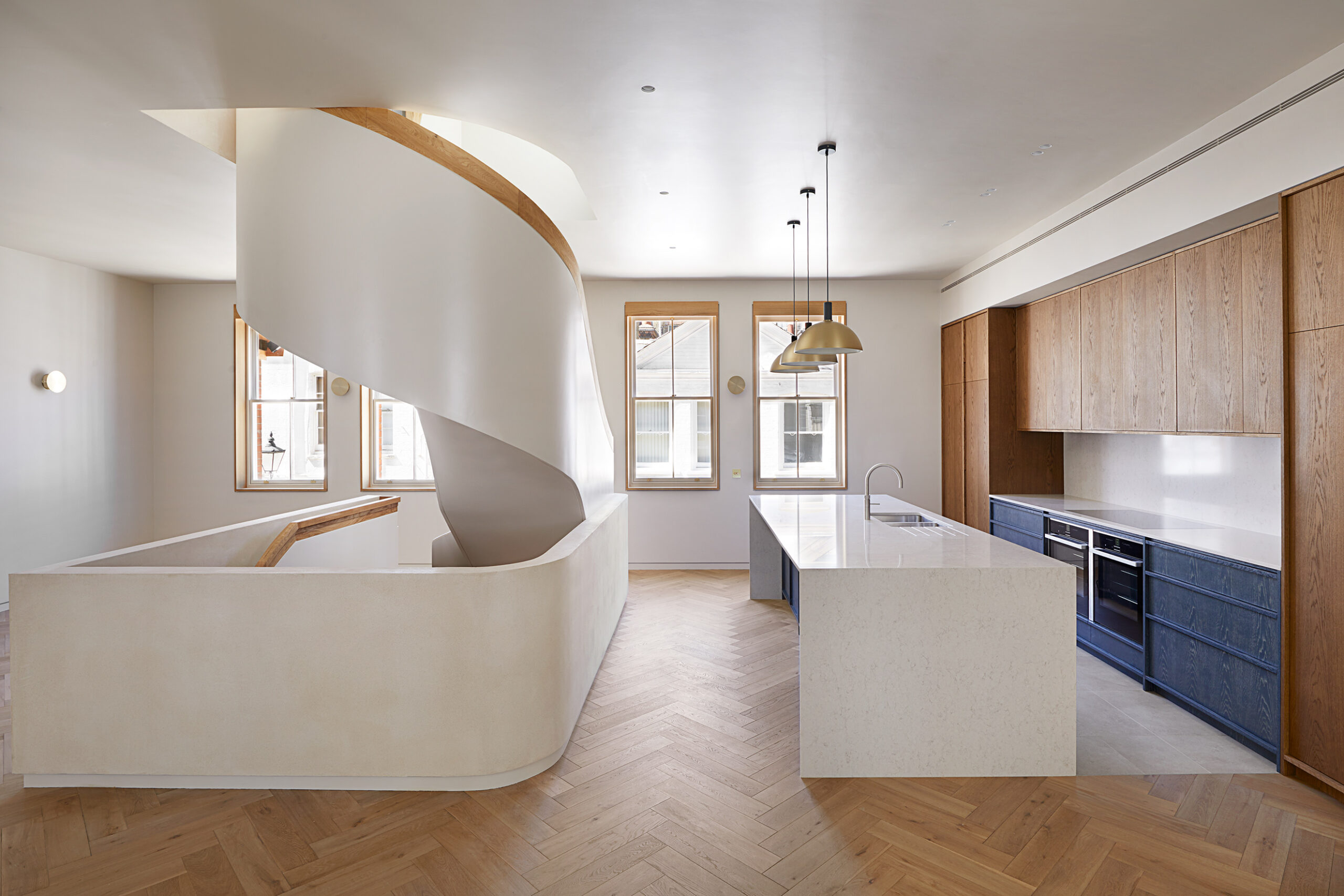
Marylebone Mews House: characteristic Mews beautifully transformed into tranquil, light-filled family home in the heart of London, featuring open sculptural staircase interesting first floor living area
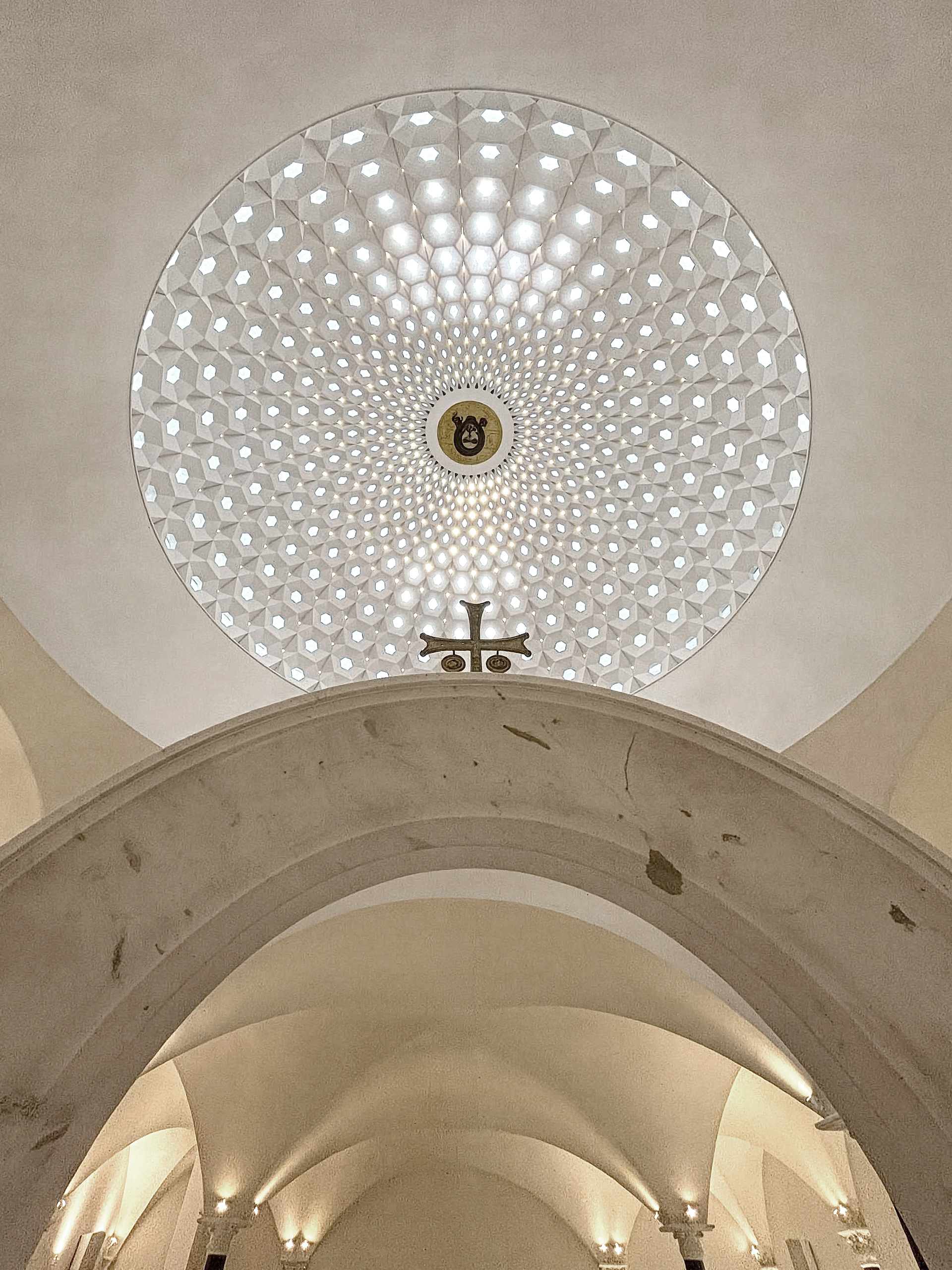
A new space for the Bulgarian Church: completed dome and vaulted ceilings
Conclusion
The London mews is a testament to the city’s ability to evolve. As documented in At Home in London: The Mews House, this architectural typology has transitioned from utilitarian stables to some of the most desirable property in the capital.
Whether navigating complex subdivisions in Primrose Hill, securing mansard extensions on the Portman Estate, carving out lightwells in Marylebone, securing green roof permissions in Belgravia, or developing highly inventive sectional connections for our ongoing work at Wimpole Mews, Patalab Architects has proven that the constraints of a mews property need not restrict its potential. By combining rigorous planning strategy, spatial ingenuity, and digital fabrication, we consistently unlock profound development opportunities, ensuring that London’s historic mews houses will continue to thrive for generations to come.