

Date
25.09.2023
Bespoke Staircase Design: Orchestrating Space
Introduction
We always enjoy the chance to develop a bespoke staircase design. Over the years Patalab have designed many staircases – from the German Embassy’s garden access steps to a flight of stairs that is more like a detailed piece of bespoke timber and concrete furniture at the centre of a renovated garage. Bespoke staircase design provides us with the opportunity to radically transform the layout of a building as well as create a feature that can increase property value and enhance the character of a building.


The Bird in Hand: completed common area staircase; transition section between solid balustrade at ground floor level to open balustrade above, and 40mm structural motif expressed
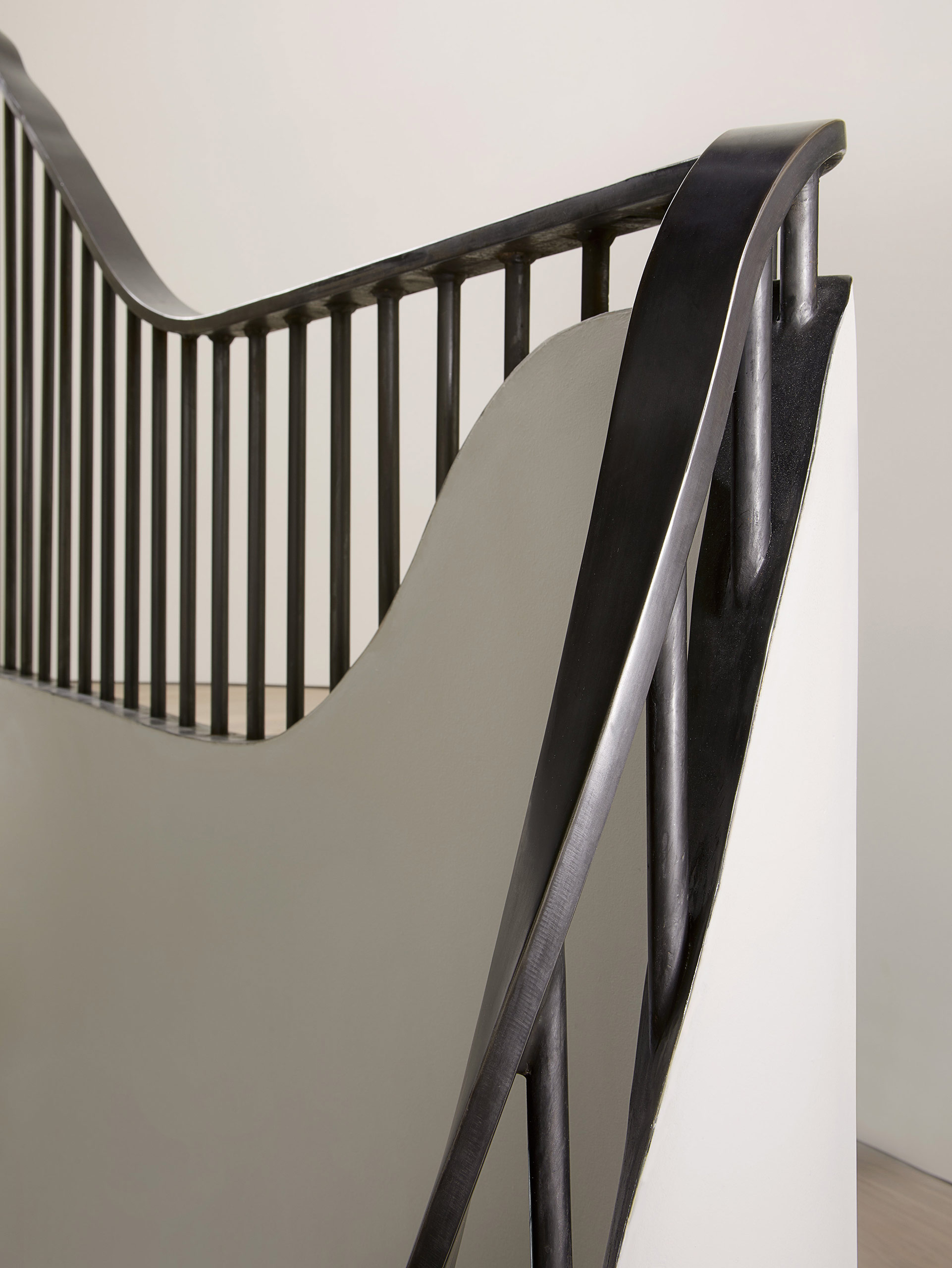
The Bird in Hand: completed common area staircase; transition section between solid balustrade at ground floor level to open balustrade above, demarcating the change of use as one progresses up the flights
Staircases as Beautiful and Fascinating Objects
A bespoke staircase design is the culmination of many considerations. It is primarily utilitarian, facilitating access between levels, but something in the carefully calculated proportion and rhythm of the steps, the way it travels in a diagonal or curve, eccentric in rooms of walls, floors and ceilings perpendicular to each other, makes it into a beautiful and fascinating object.
UK Building Regulations require that all steps negotiating a level change of over 60cm in a house are provided with guarding to either side, yet the name of this element, the balustrade, originates in the Italian word for pomegranate flower. This hidden poetry in Approved Document K of the Building Regulations is due to the 17th century style of guarding – the name has endured even if the bulbous stone railings are reserved for ornate listed buildings, palaces and grand parks.
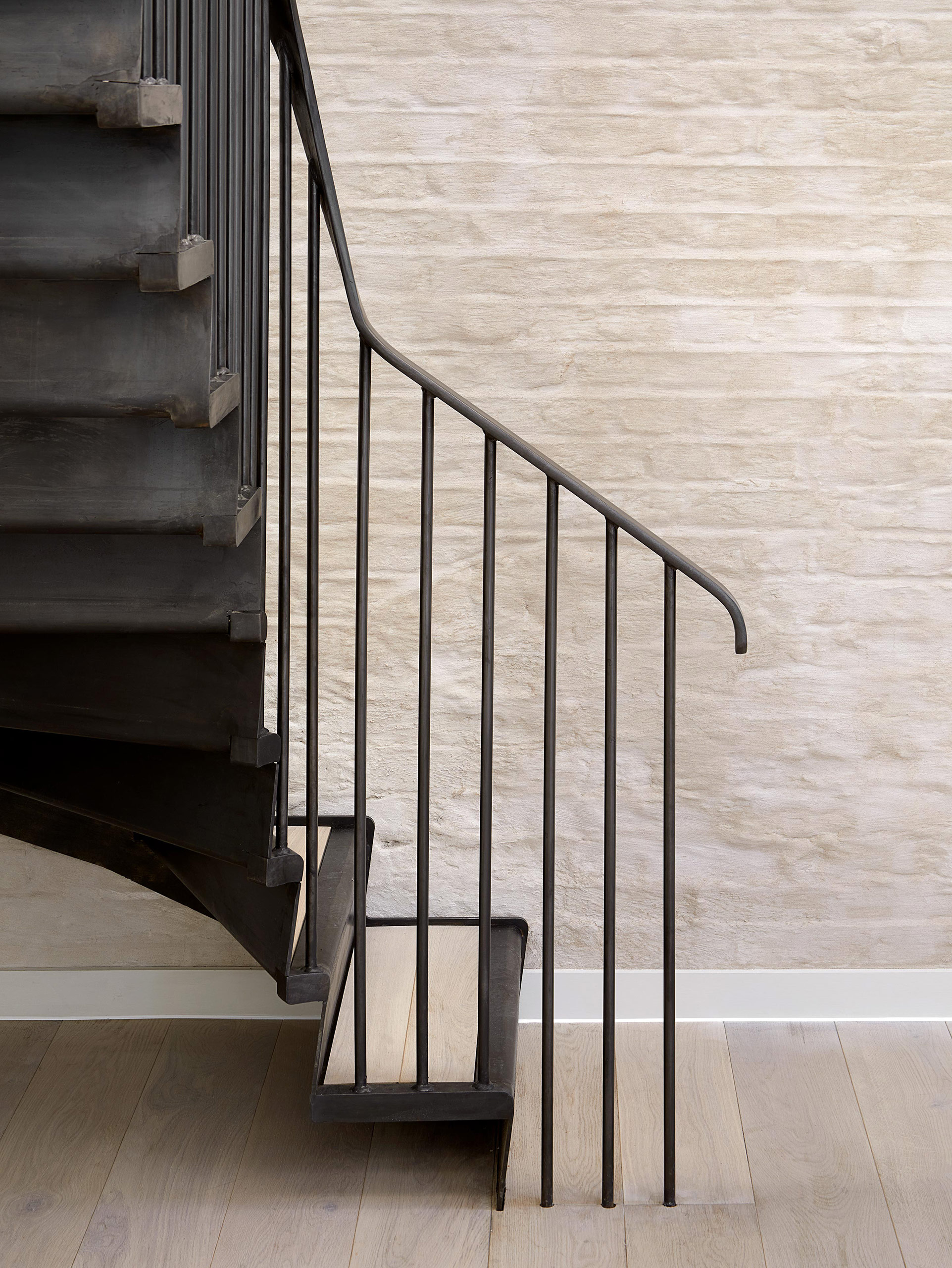
The Bird in Hand: completed rear extension; mezzanine stair transition to first floor office, with glimpses to existing rear elevation brick openings
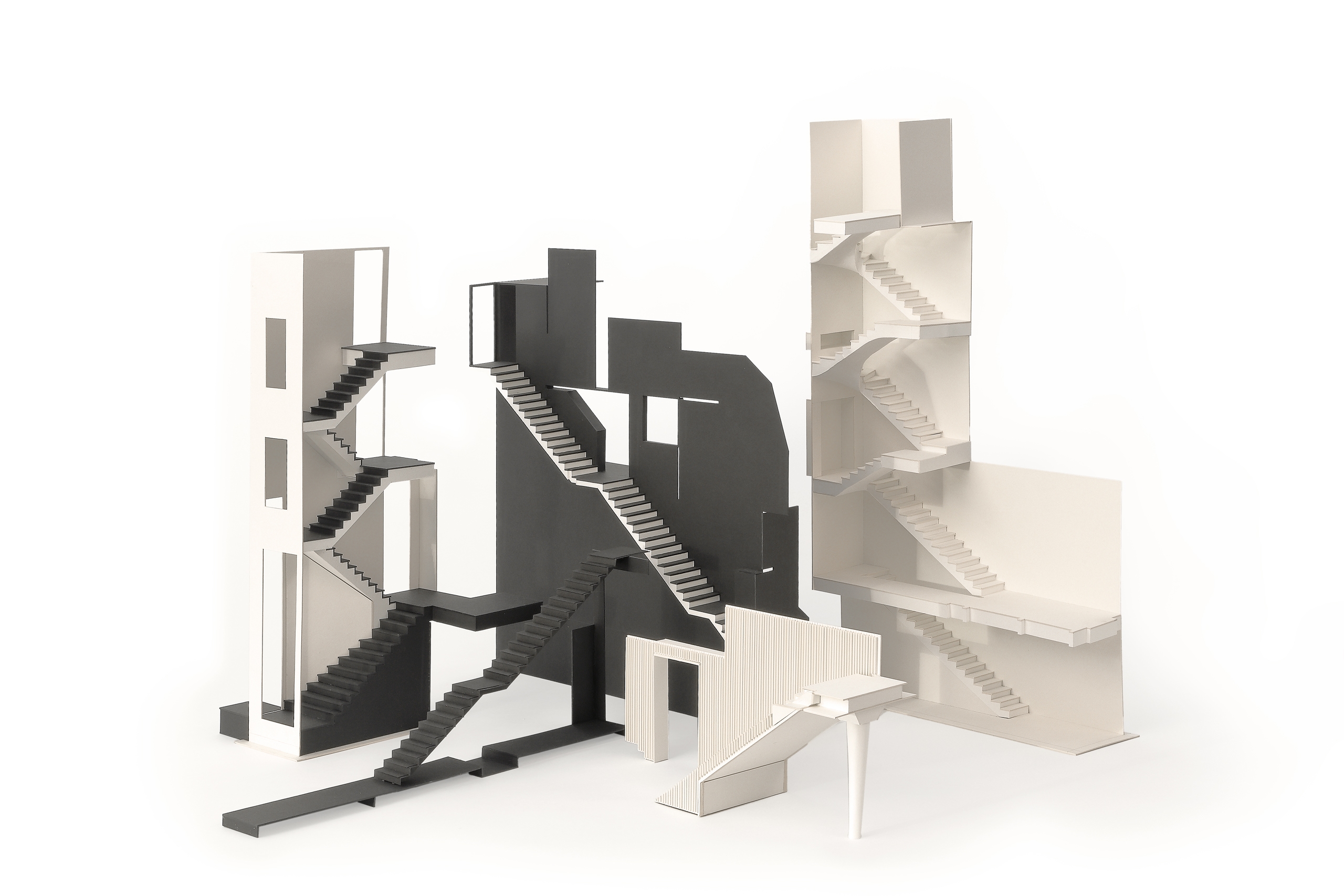
Patalab Staircases: study models
Modern balustrades can be simpler, fusing with the handrail to form solid sweeps and spirals that sit like an Anish Kapoor sculpture in the centre of a room. The elegant form can distract you from the fact that the staircase is confined to a limited amount of space. Or perhaps this object is languorous, slowly moving through space, designed to impress and cinematically deliver hosts descending to greet their visitors.
As exemplified in our mixed-use project The Bird in Hand, the solid balustrade from entrance level elegantly transitions into an open one at first floor level, gradually demarcating the change of occupancy as one ascends from office use to residential on the upper two floors. Staircases can also become an extension of a space, as explored in our office refurbishment in Shoreditch High Street, where steel tubes extend down from a triple height space to adjoin and form the staircase guarding.
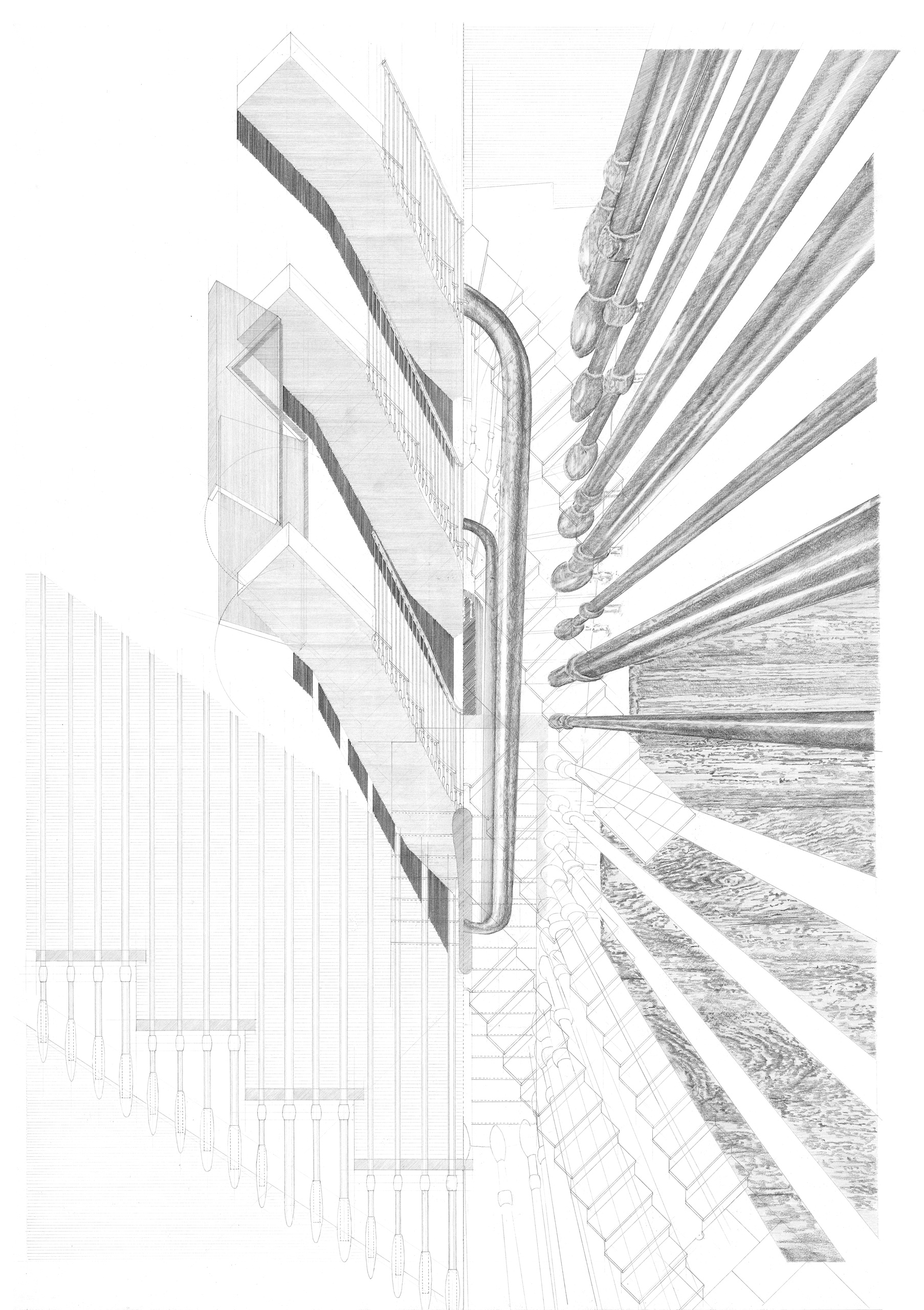
Argyll House: composite design concept drawing
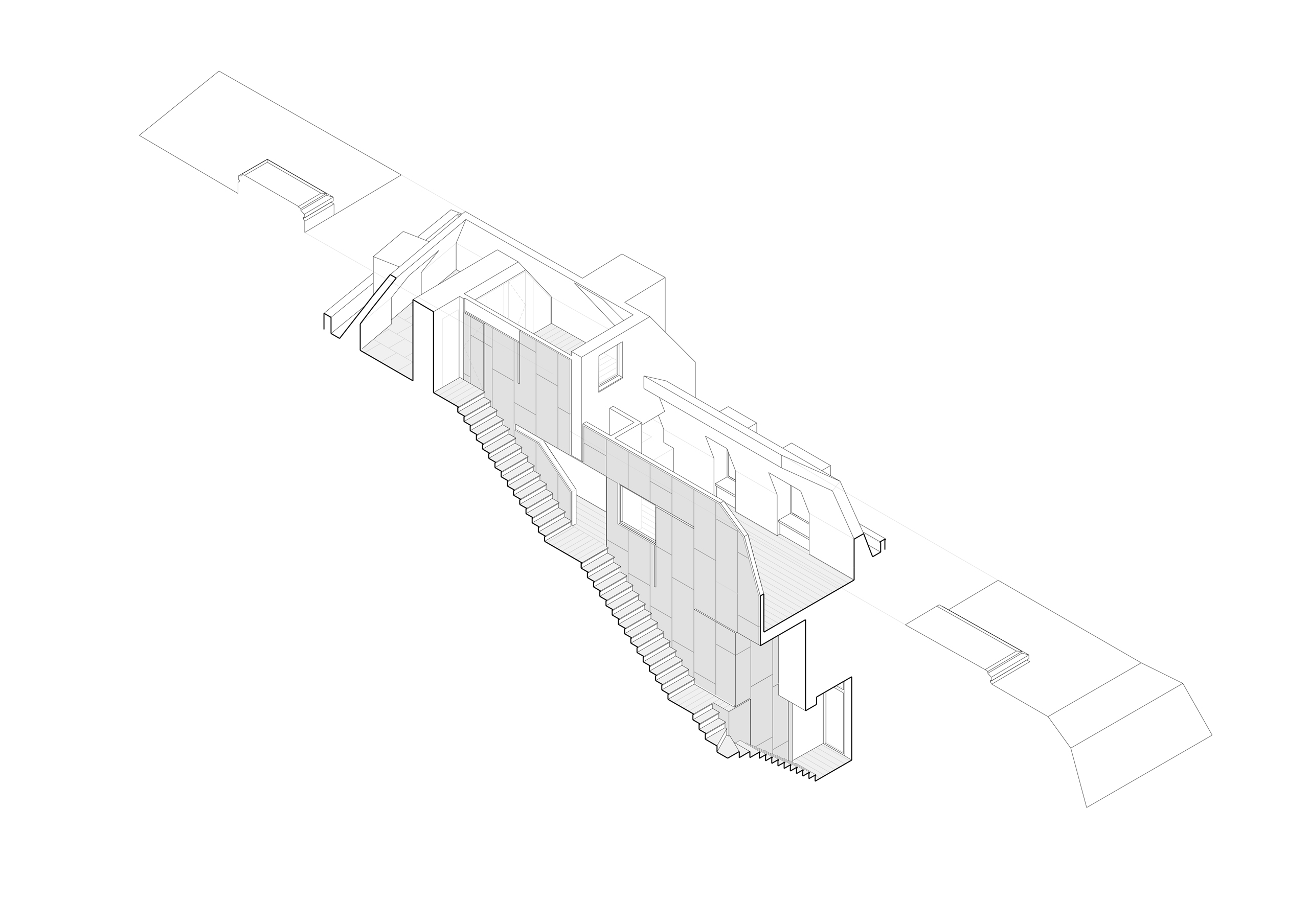
Cascade House: exploded Isometric Staircase Study
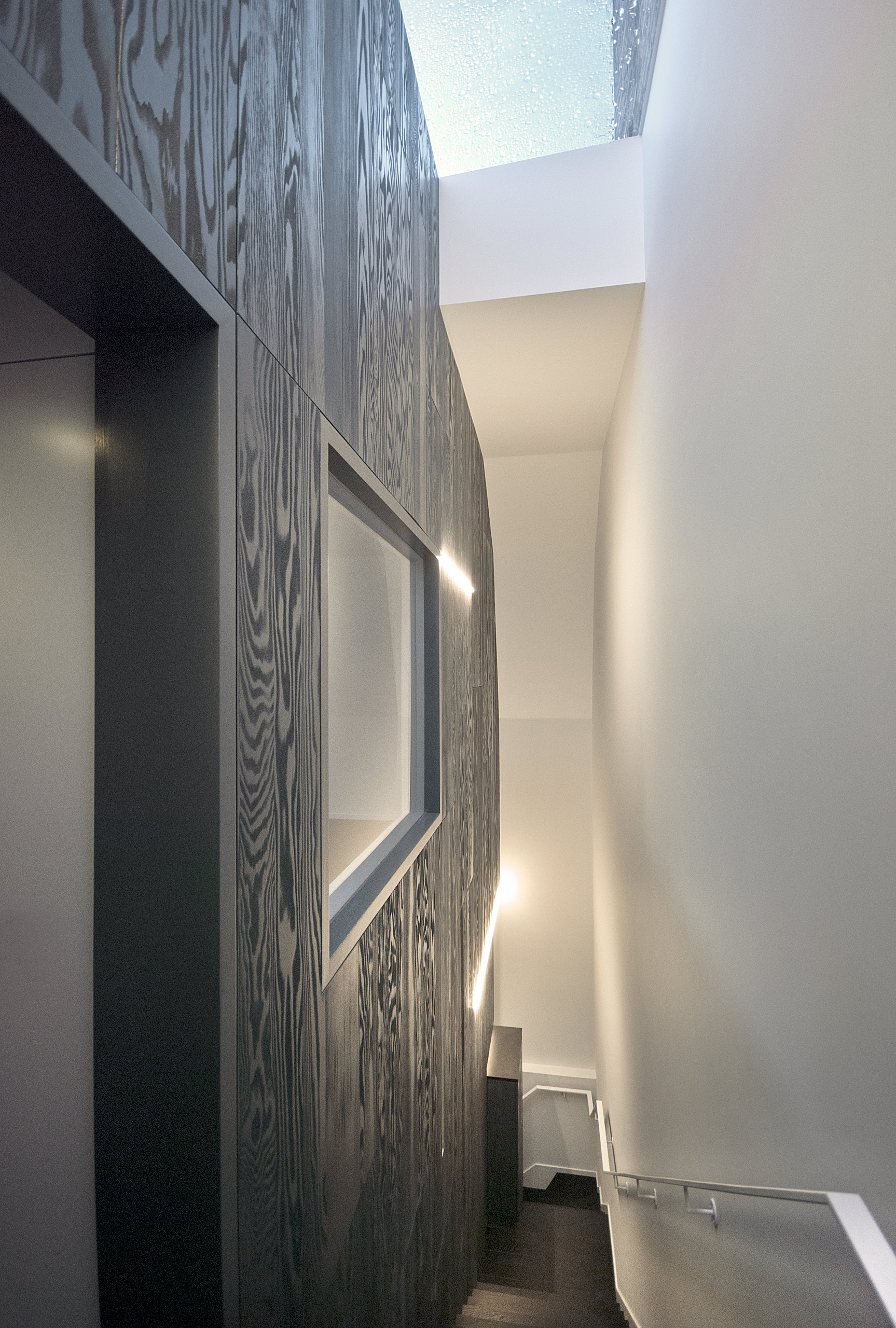
Cascade House: view of triple height staircase and internal window onto living area, with light flooding from the skylight above, highlighting the sandblasted timber panels
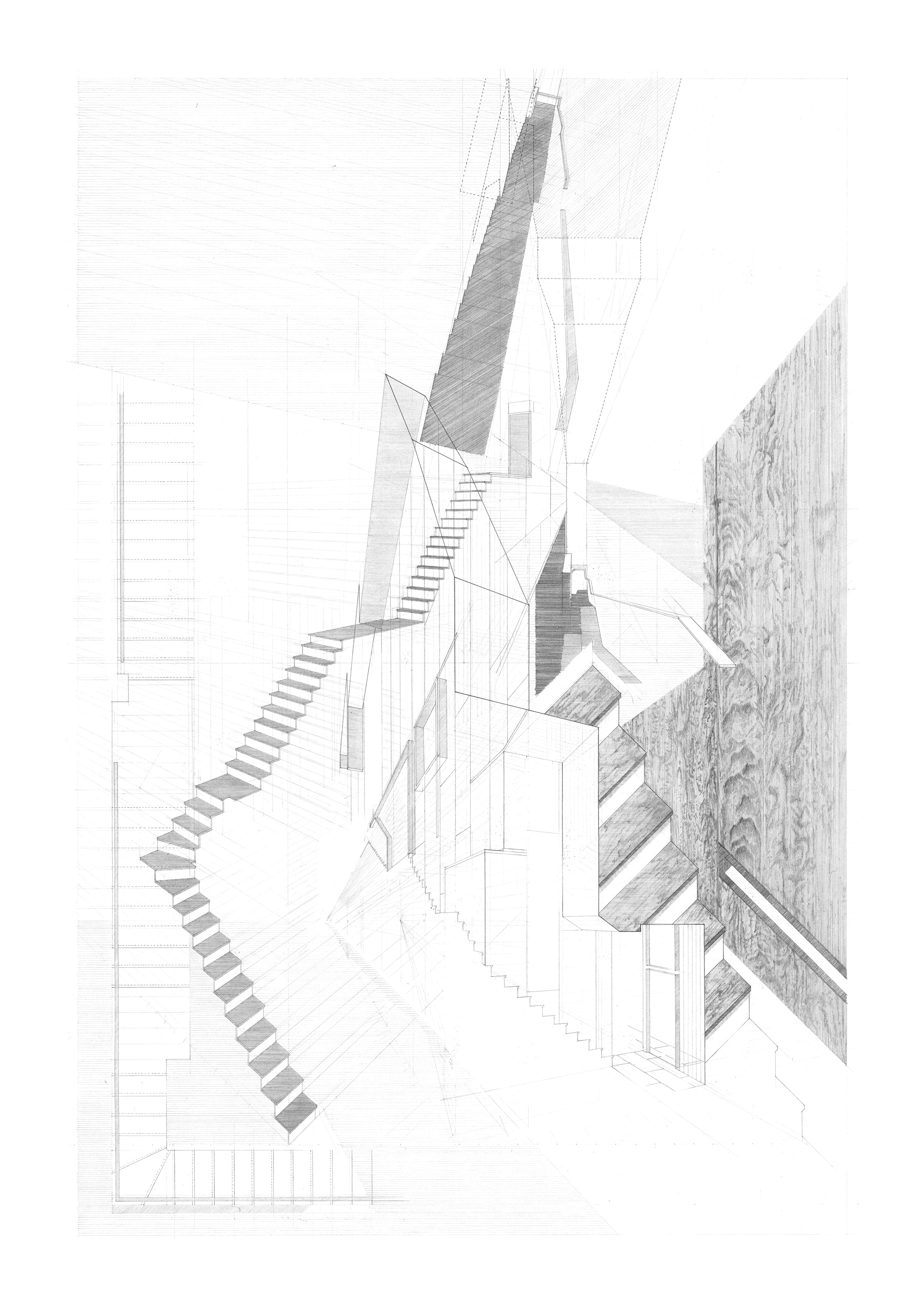
Cascade House: composite design concept drawing
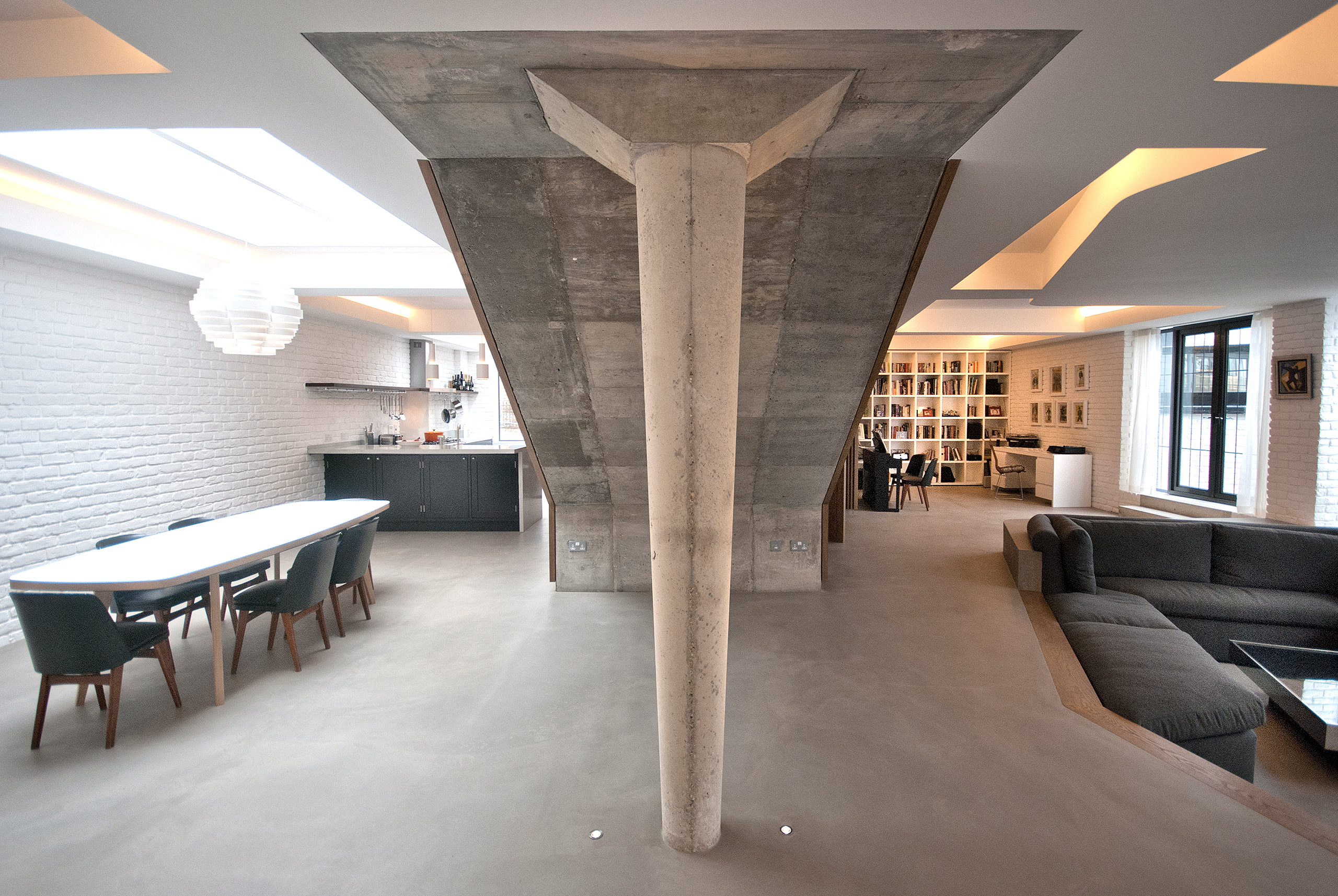
The Gables: view of the dinning area with intersecting staircase and support
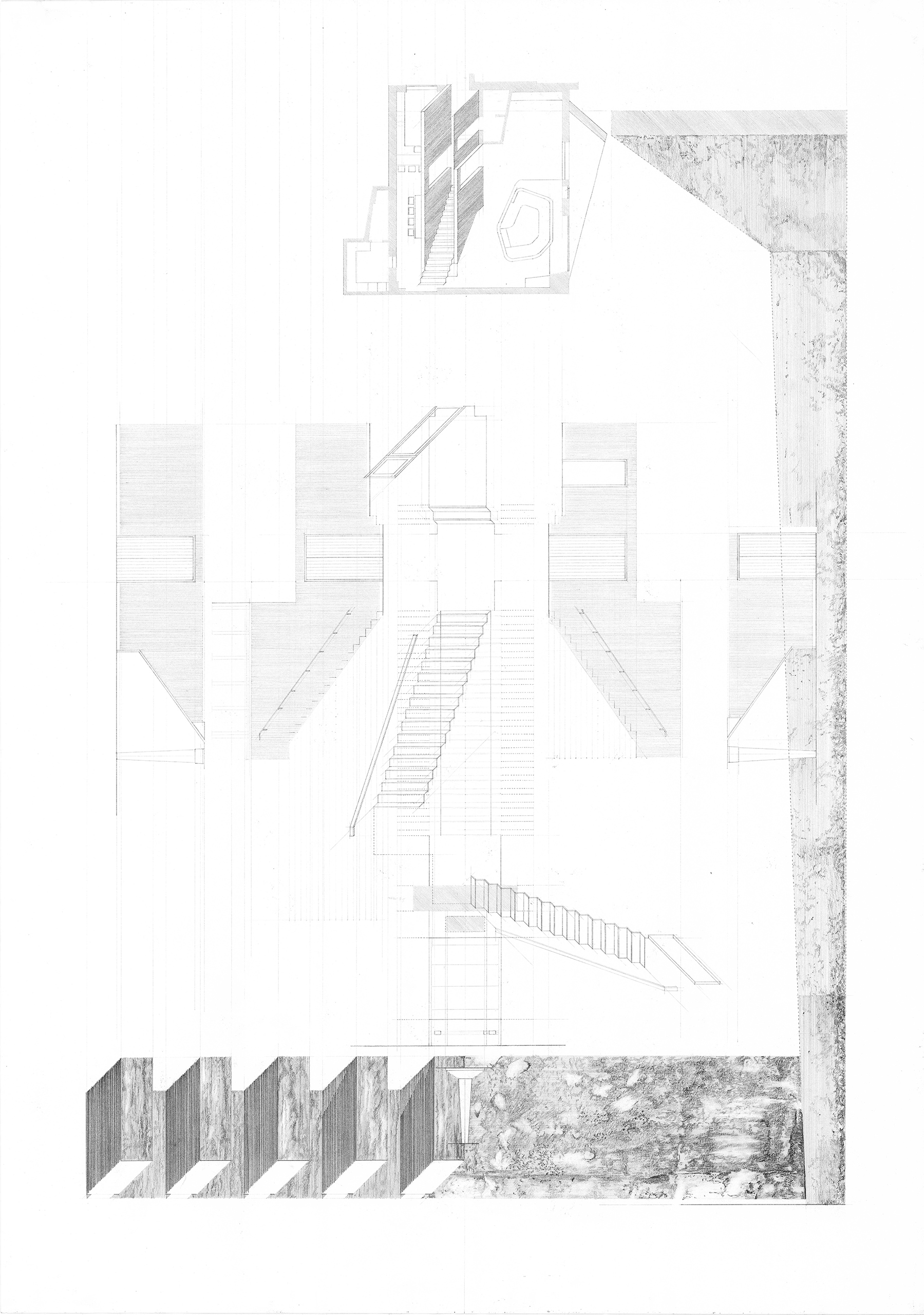
The Gables: composite design concept drawing
Staircases as Elongated Thresholds
Material choice is an important consideration. The handrail should feel comfortable as it leads you between living space and bed, and at the same time, the transition under foot between steps and level floor should be planned. Aside from tactility, materiality repeated can enhance connection between spaces, as explored in our mews conversion Primrose Hill Flats. Is your living space split over two levels? Or is the master bedroom located two floors below the children’s rooms? Staircases can separate when required, but they can also unite – although the flight of stairs crosses several stories its repetitious use of components and surfaces creates continuity, an elongated threshold.
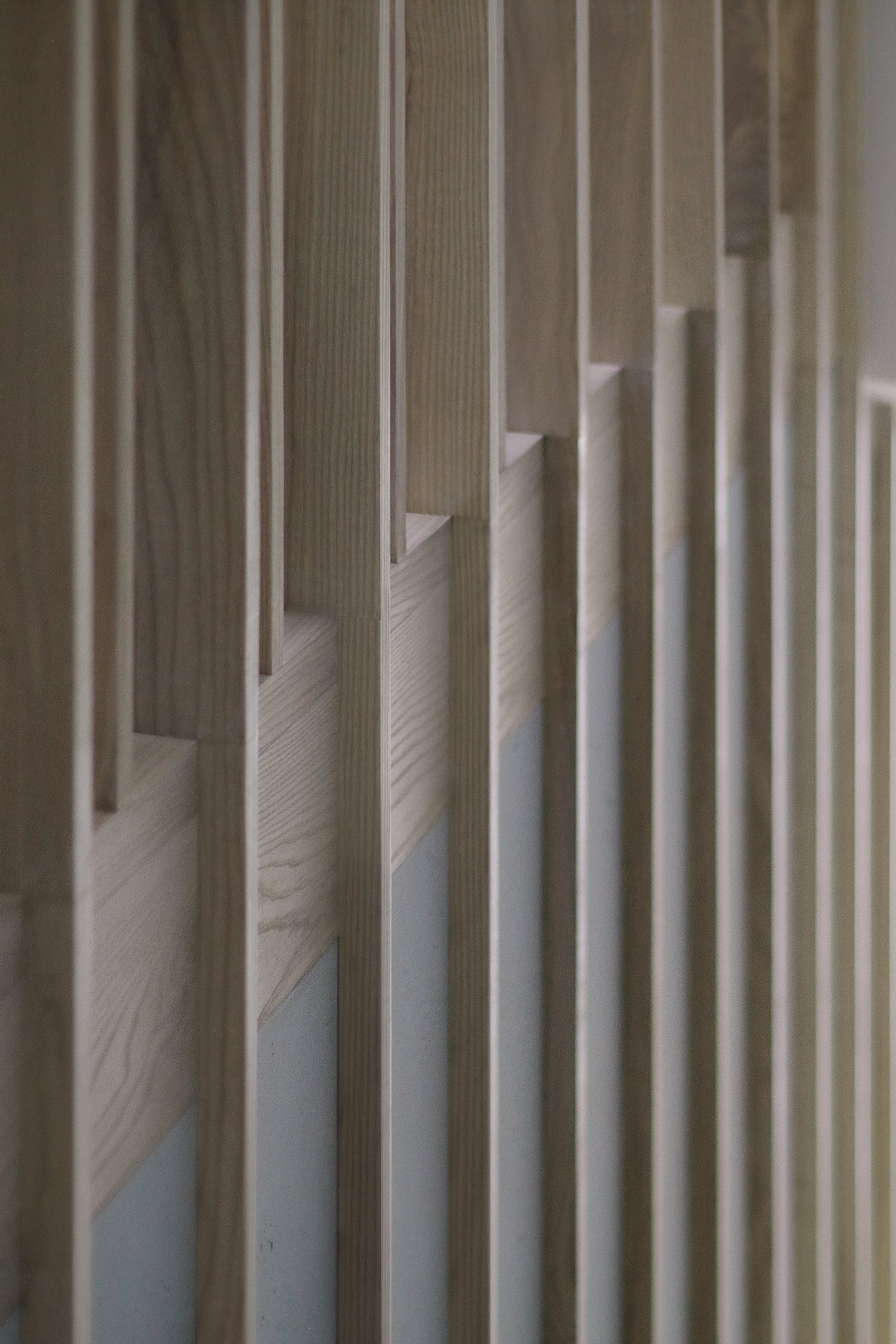
Primrose Hill Flats: solid ash balustrade with extended fins overlapping the insulated concrete-panelled staircase wall
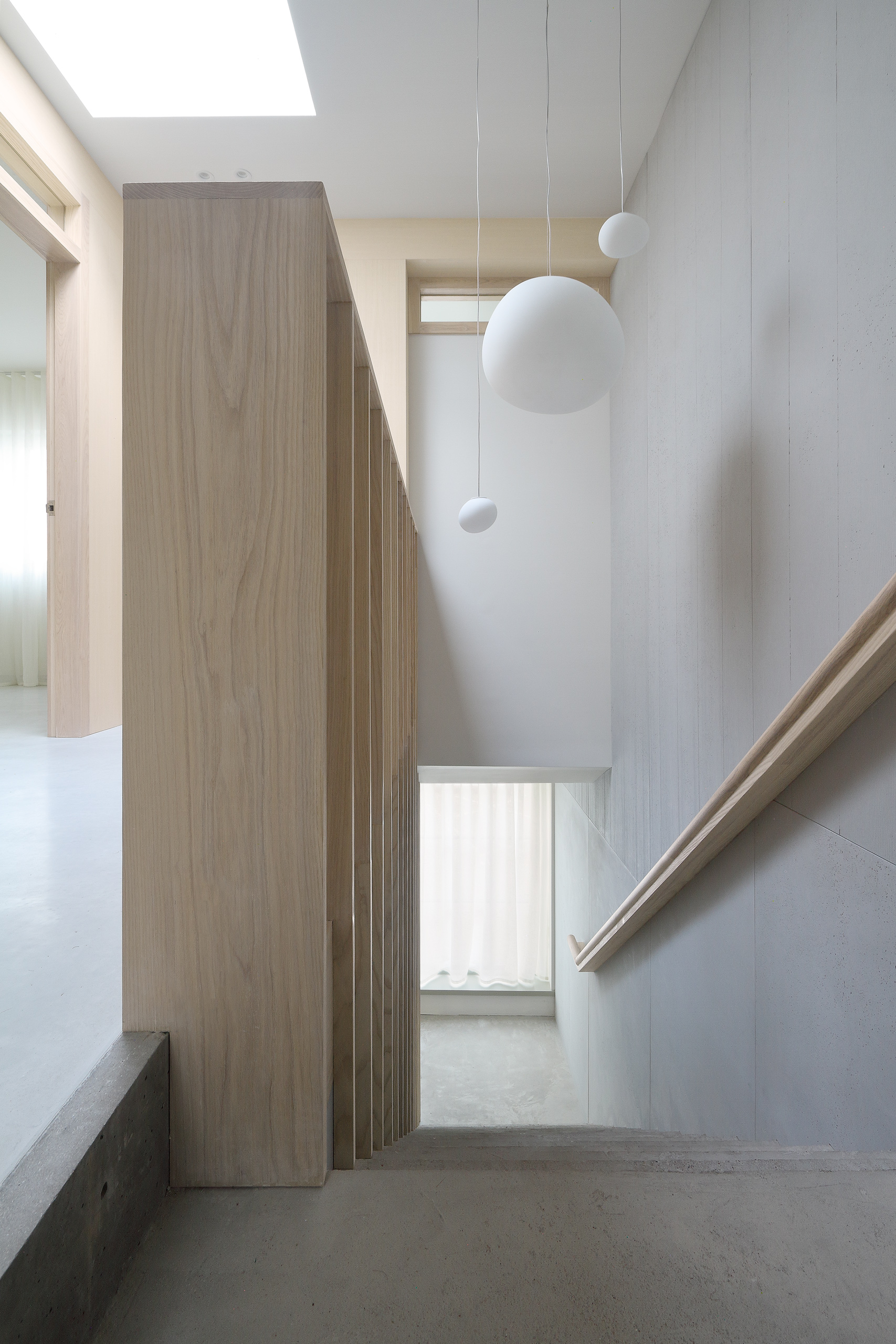
Primrose Hill Flats: making an entrance; new double-height staircase leading to the second floor flat embodying and accentuating the project’s play of light, volume and reinterpretation of the mews aesthetic with natural ash and concrete materiality
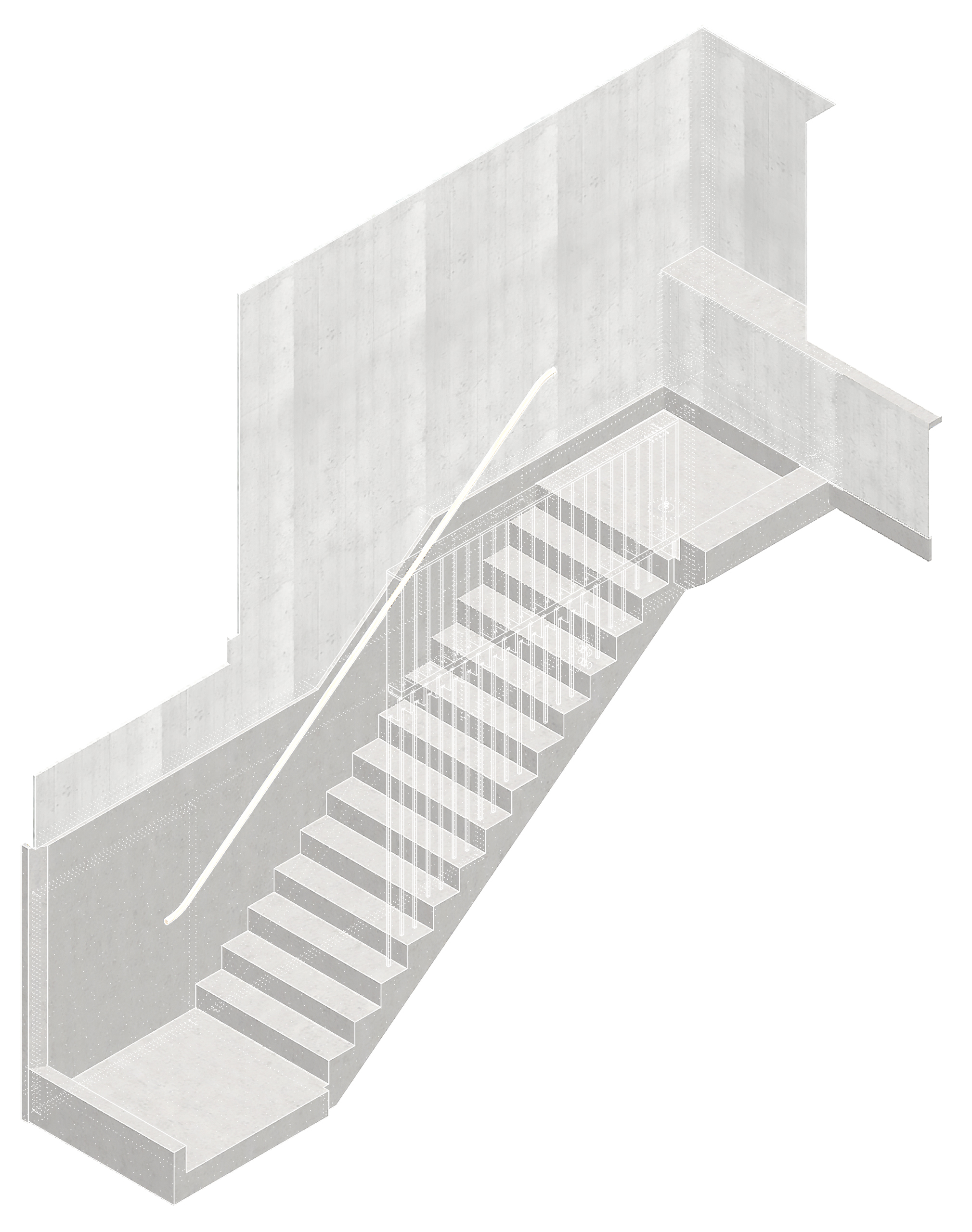
Primrose Hill Flats: conceptual stair isometric drawing
Staircases to Orchestrate Space
Connectivity can be increased by paying attention to lateral openings in floors and in voids around stairs. Offsetting staircase and wall or creating a well in the centre of the stairs encourages a visual and audio connection. As well as human presence, these apertures also allow lower floors to be animated by the sky – imagine a rooflight filtering sun light down to the ground floor via voids around the staircase, daylight focusing in and out, the shadow of the slim railings that form the balustrade softening and sharpening as clouds pass between sun and roof opening.
A small sacrifice of floor space can mean that your two-storey terraced house can offer a moment belonging to a different scale of building – a triple-height space at the centre of your Victorian workers cottage. Maybe this is an opportunity to suspend a pendant light and nocturnally increase drama, or play with light and shadow as with the sinuous curves of the bespoke staircase in Notting Hill Villa.
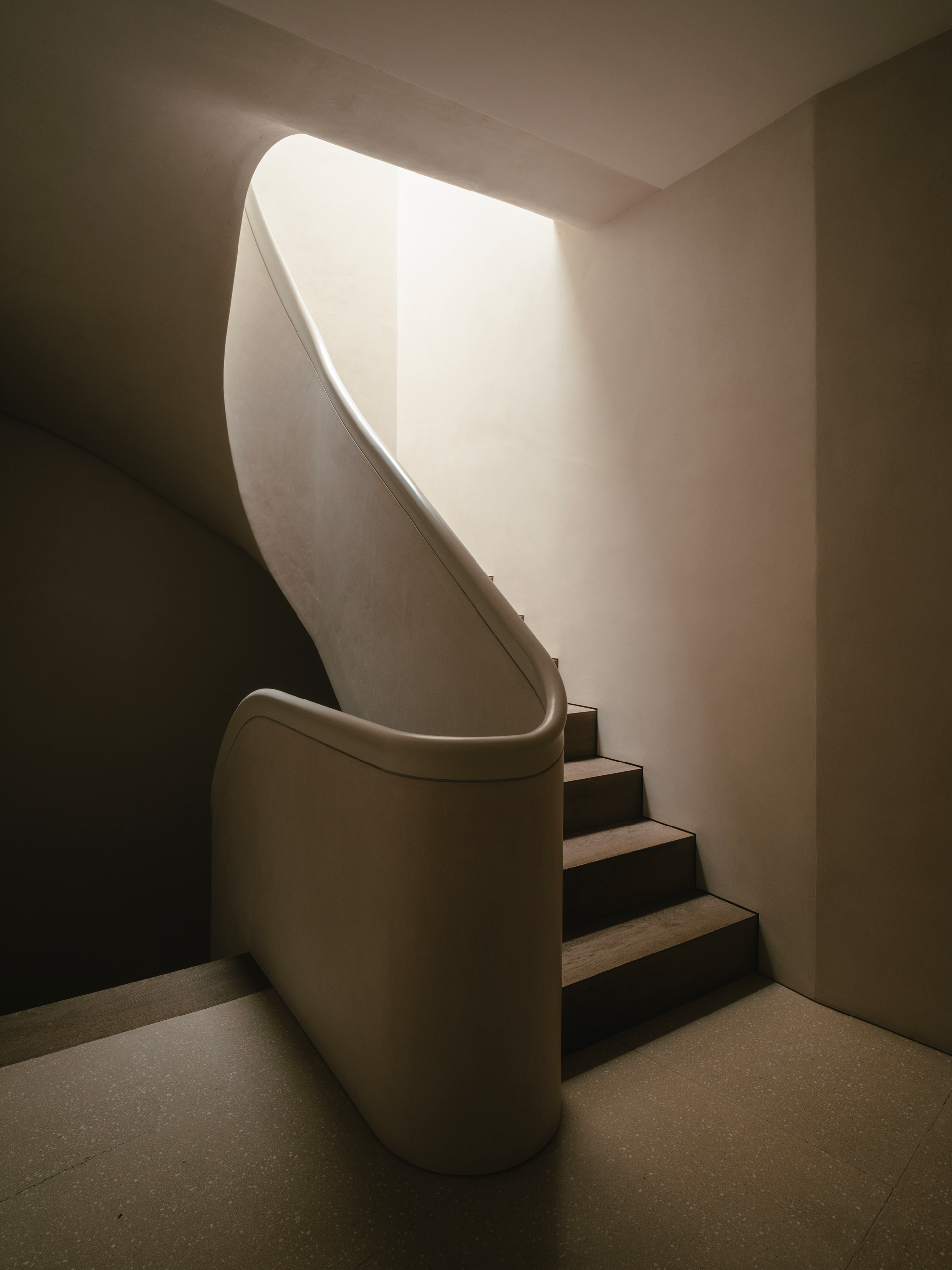
Notting Hill Villa: the flow of a new, bespoke stucco and timber staircase, forming a crux to living spaces of the lower floors
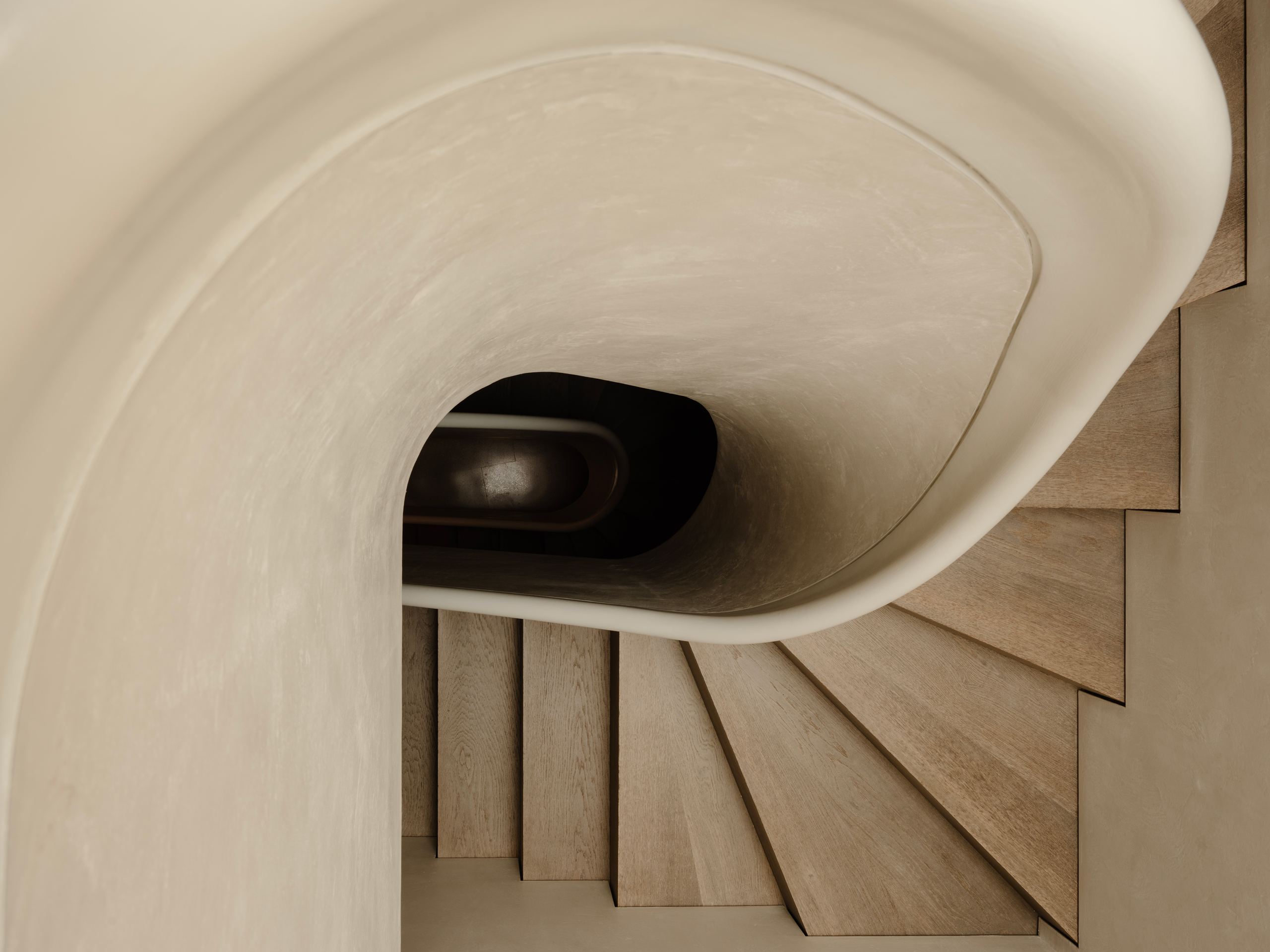
Notting Hill Villa: central view down the new sinuous staircase of tactile stucco and timber
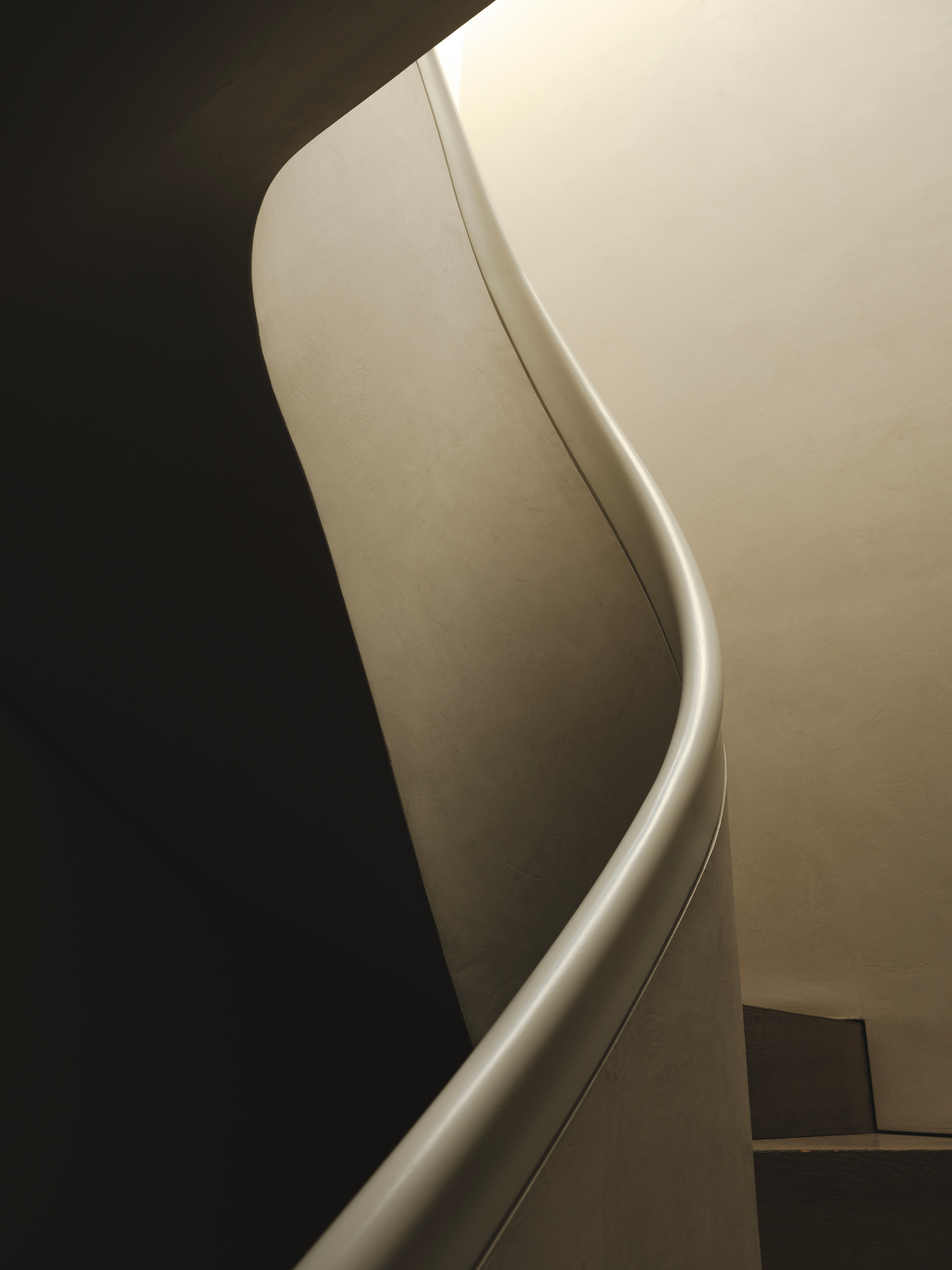
Notting Hill Villa: in praise of shadows; interplay of light and shadow from the skylight above, falling on the new, bespoke staircase
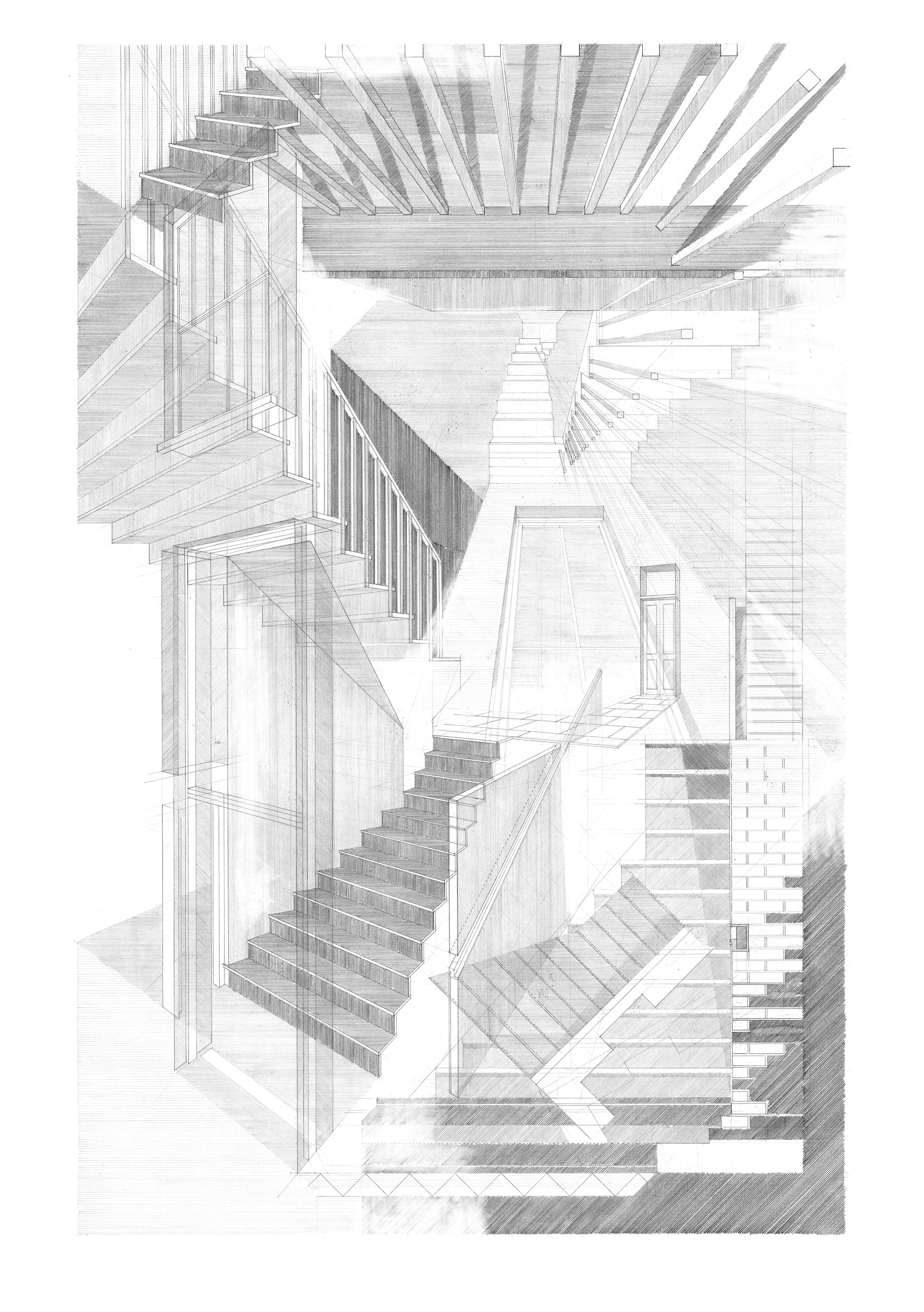
Clifton Hill House: composite design concept drawing
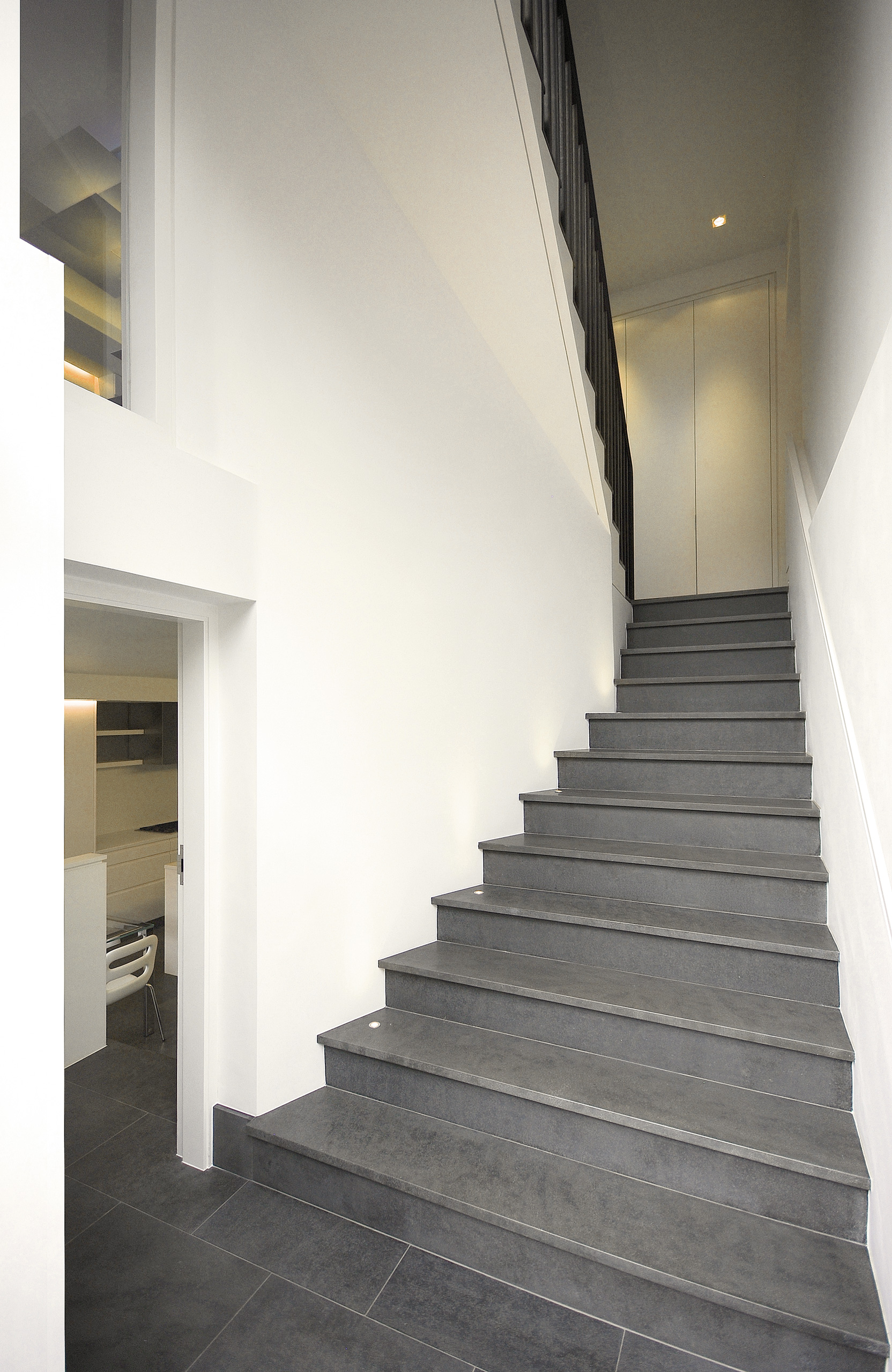
Clifton Hill House: tapered staircase and spatial connectivity, bolstering an improved relationship to the garden through a widening geometry
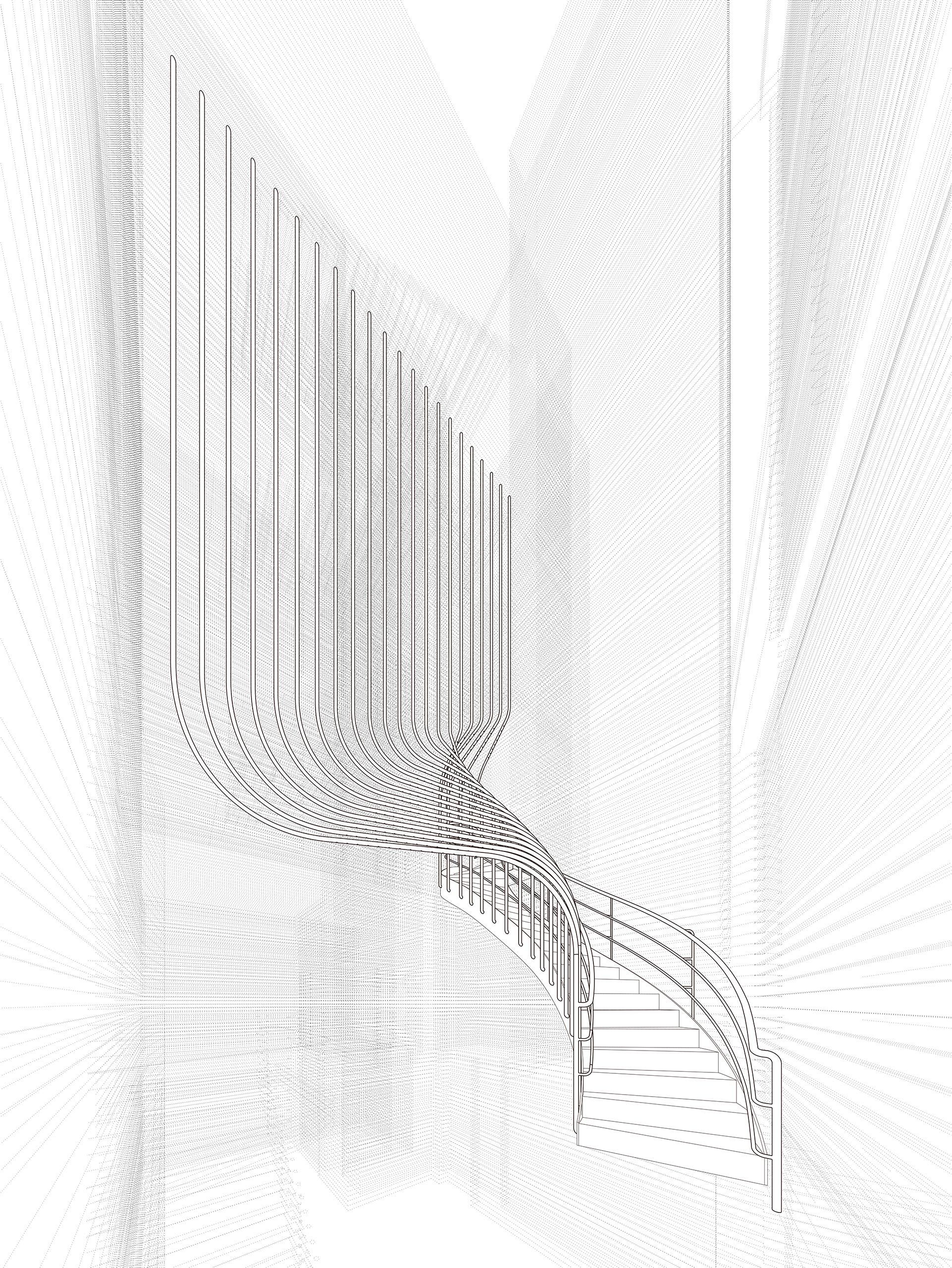
141-143 Shoreditch High Street: concept design drawing
Patalab starts to consider these details when we begin our feasibility studies. Although we initially work in plan, we imagine the entire space, working into these ideas sometimes in models or conceptual drawings when we have the chance.
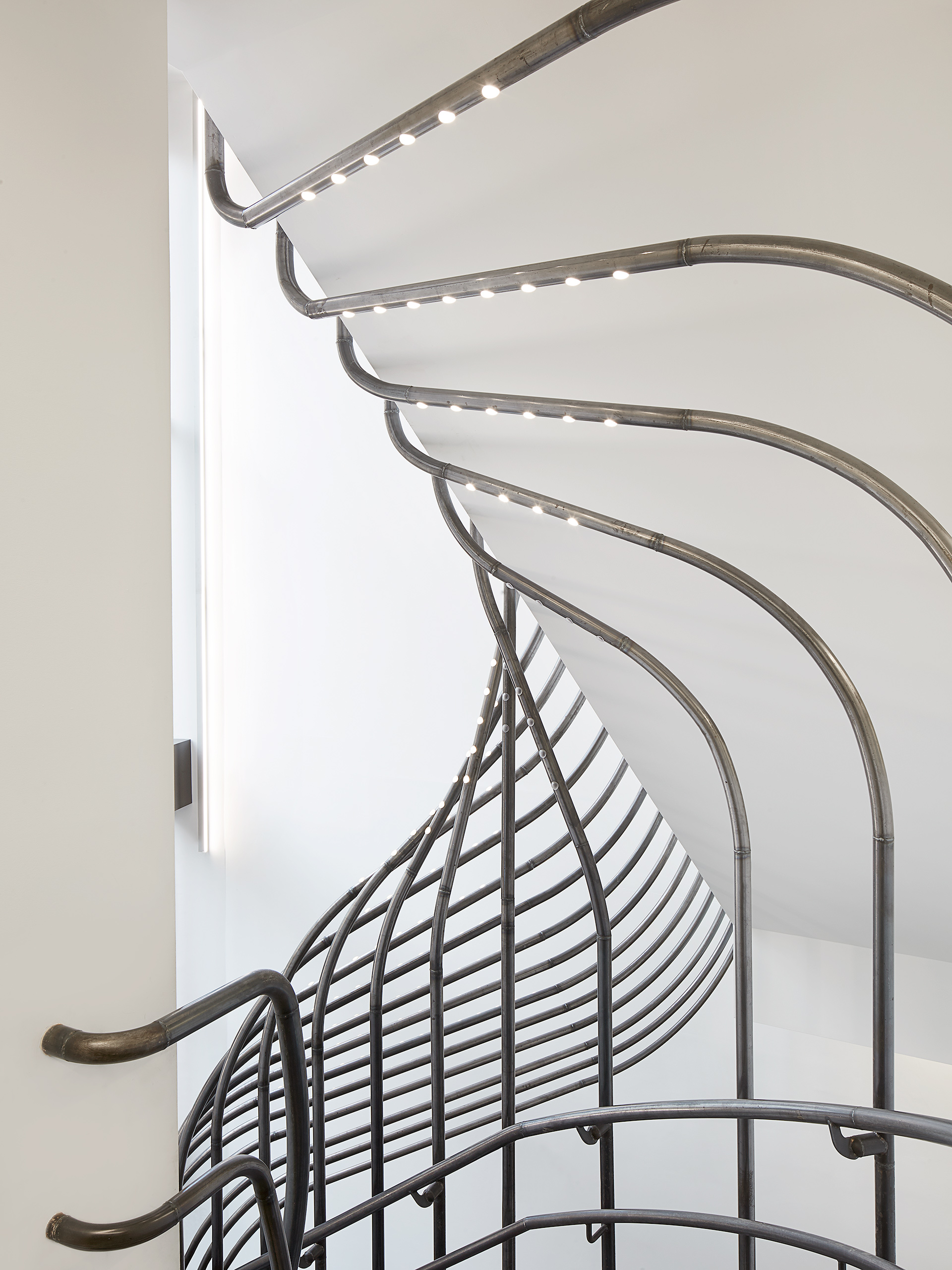
141-143 Shoreditch High Street: bespoke staircase integrated lighting and sculpted transition detail

141-143 Shoreditch High Street: bespoke staircase and sculpted transition detail forming balustrade guarding

German Embassy Garden Staircase: design drawing showing the new staircase in longitudinal and cross section

German Embassy Garden Staircase: garden staircase in its historic context
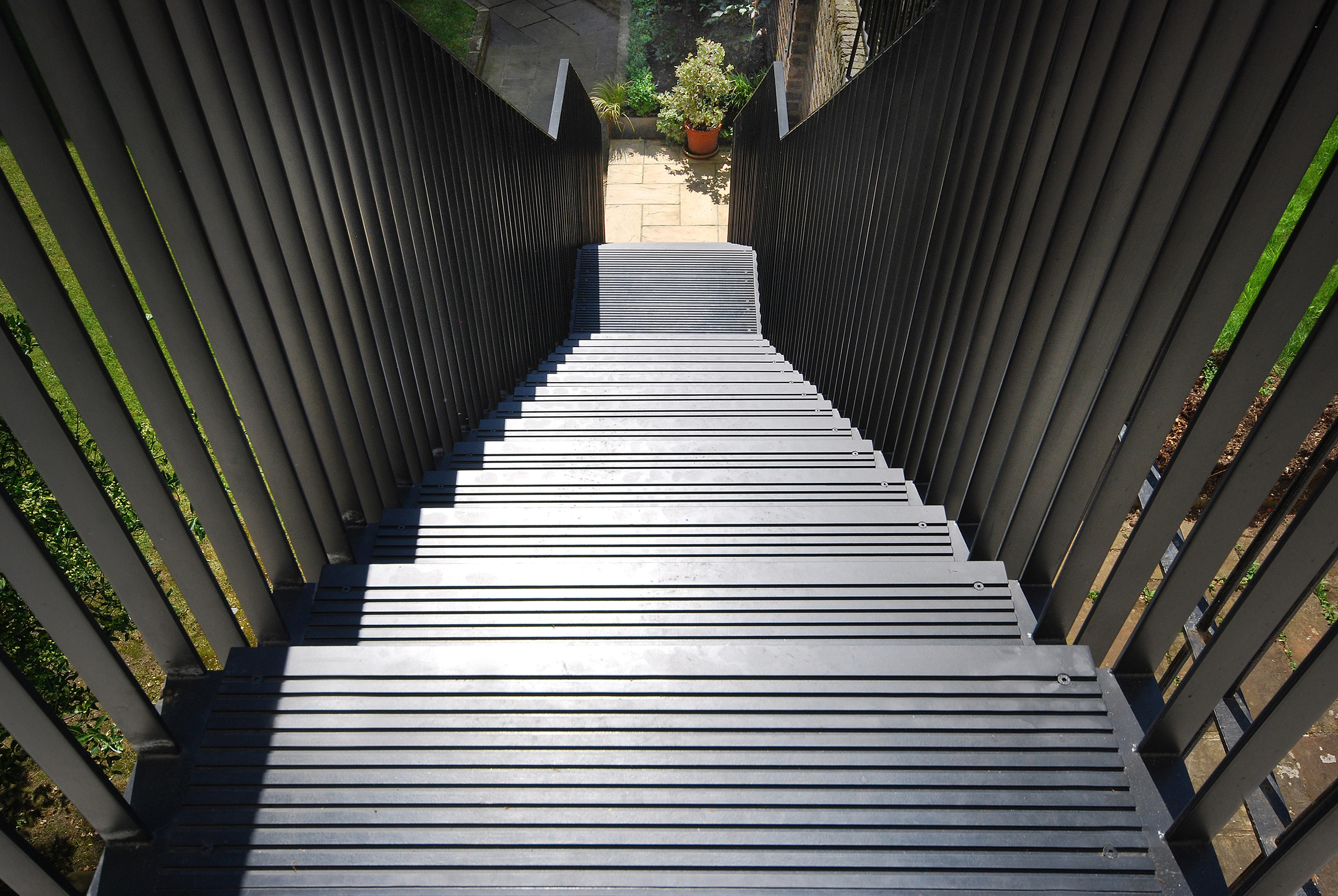
German Embassy Garden Staircase: stair approach from above
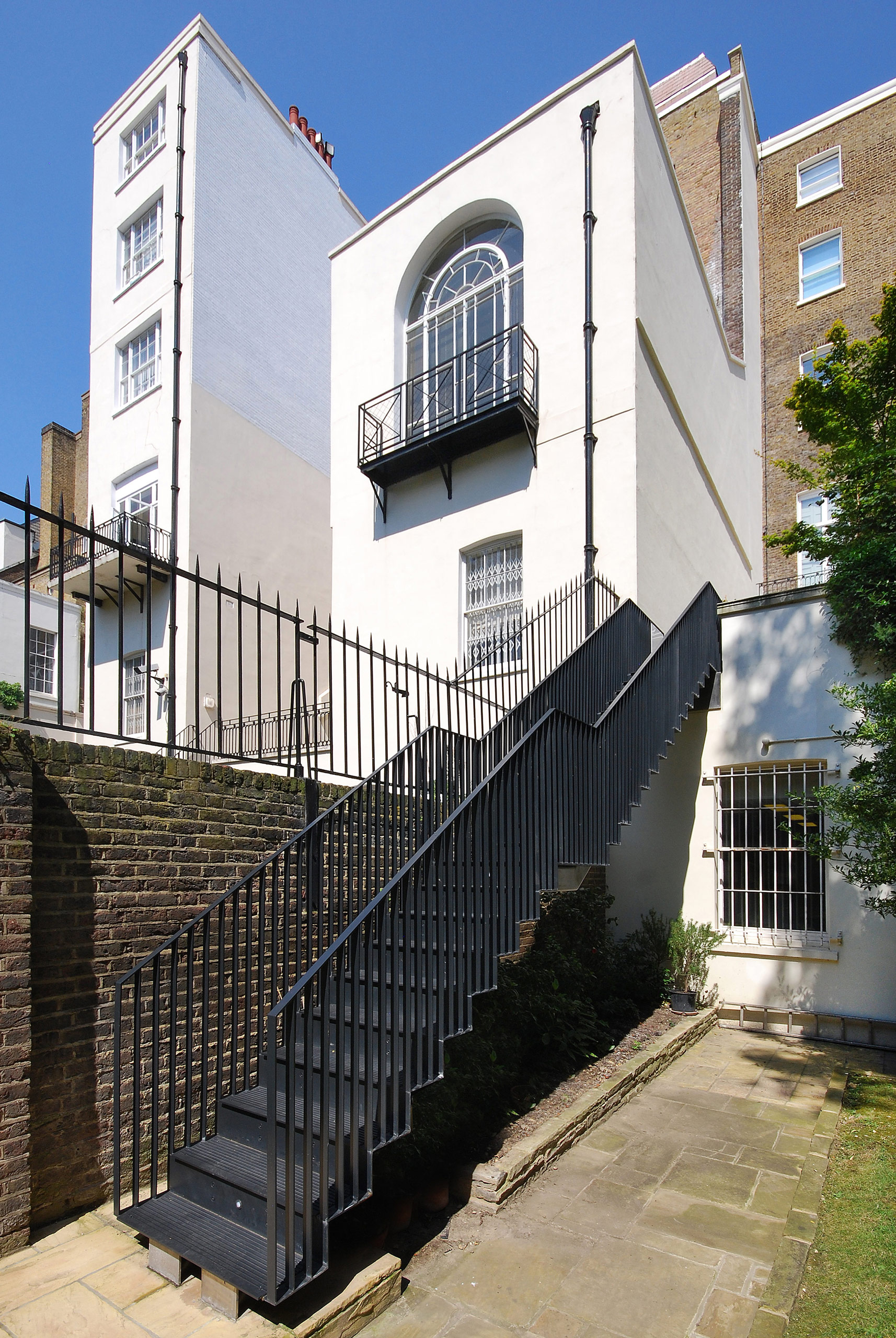
German Embassy Garden Staircase: the stairs link the residence's terrace with its garden five metre below
Publications
Patalab staircases have been widely published and exhibited. Here you can find a selection of some: