
Clifton Hill House is a refurbishment of a semi-detached Victorian villa in St John’s Wood, one of North London’s conservation areas. It appears conventional from the outside yet Patalab’s internal interventions spectacularly increases spatial connectivity within the house.
Sector
Homes
Location
St John’s Wood, London
Date
2008-2009
Client
Private
Area
285m2
Status
Completed

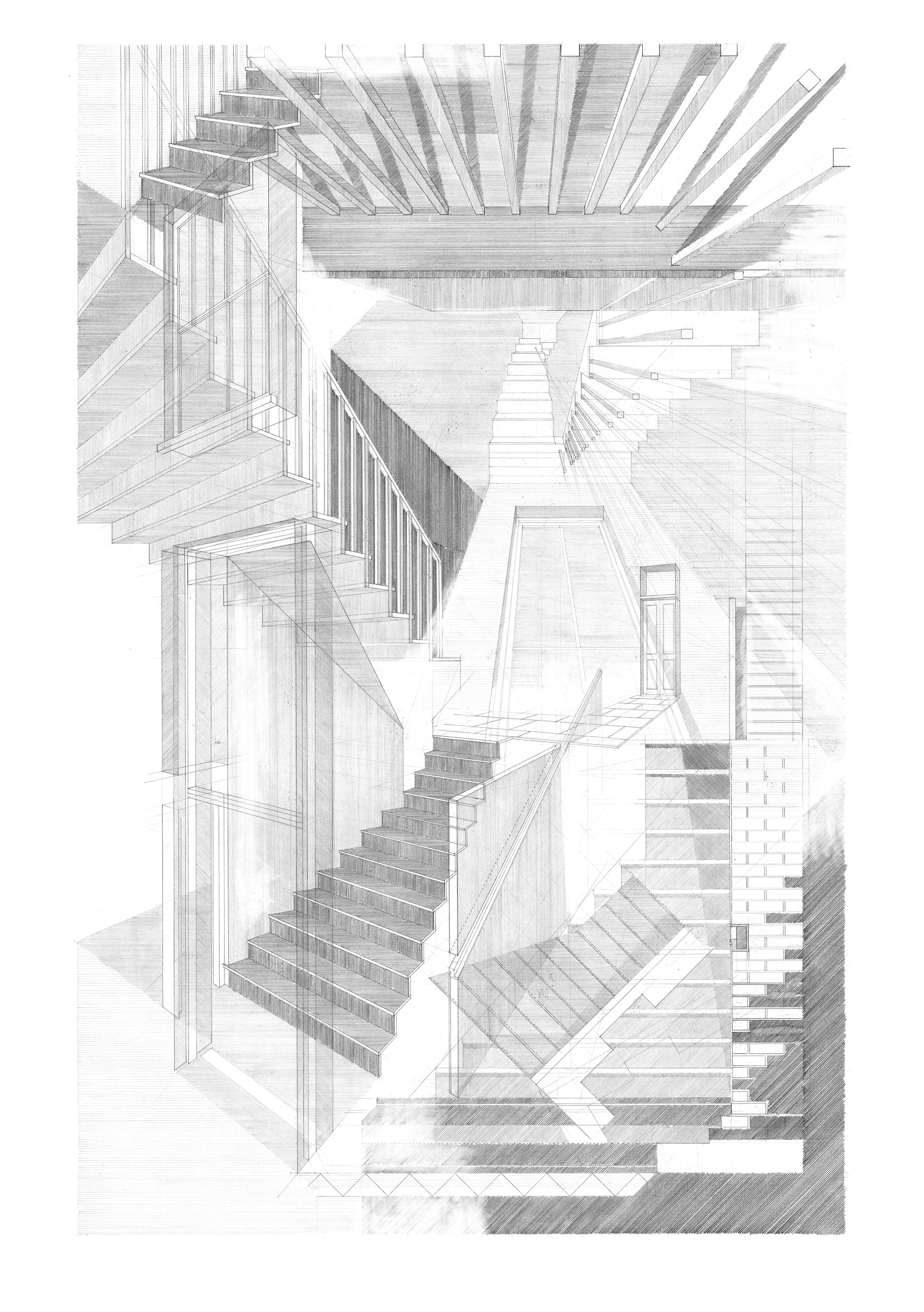
Composite design concept drawing
Clifton Hill House: The Brief
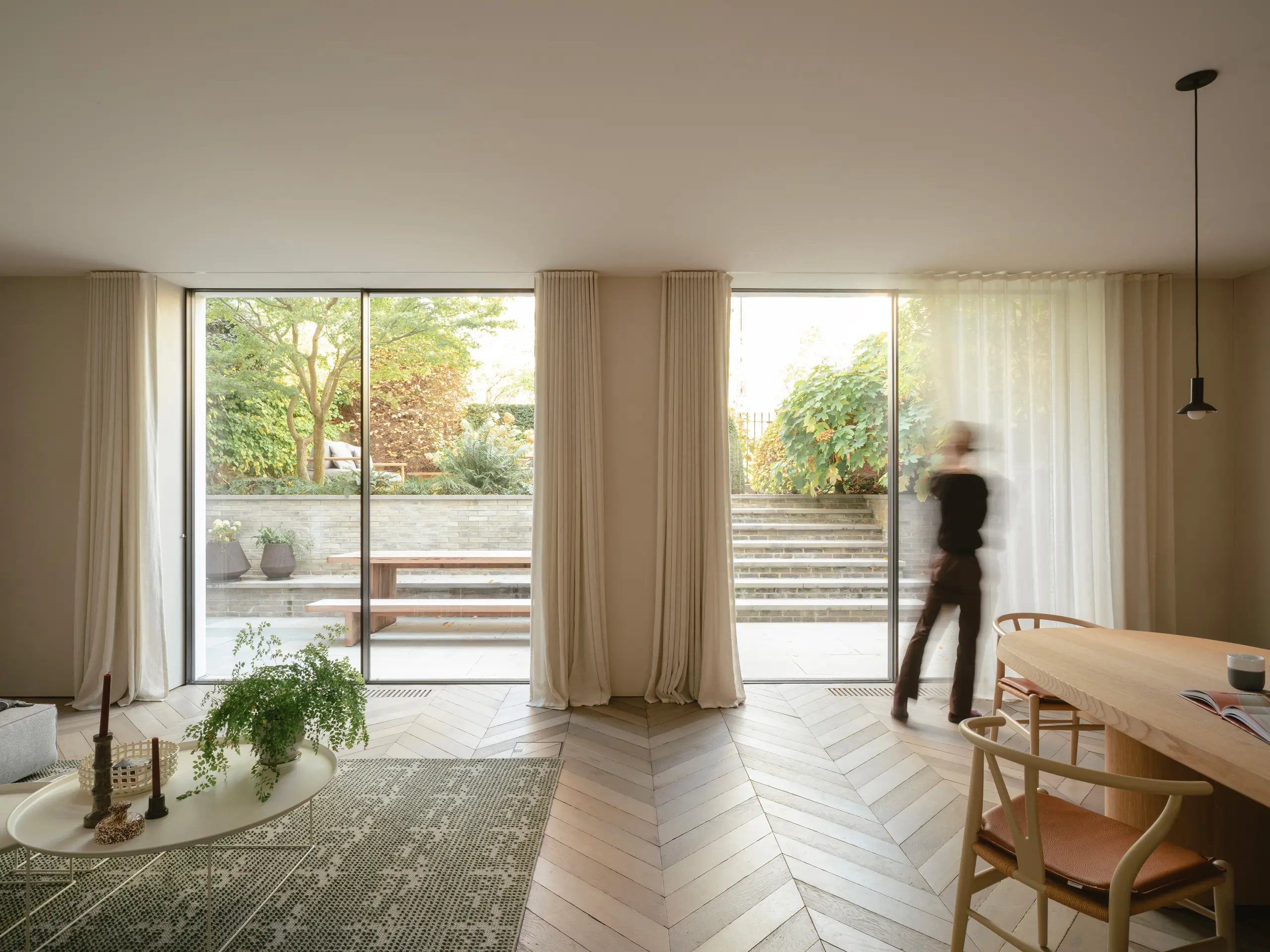
Our brief was to consolidate the lower ground floor flat and the rest of the house to create a contemporary home for a growing young family. As part of our strategy to connect the flat with the main house we had to carefully consider how the garden and house would interact as until our involvement, the garden had only been accessible from the lower ground floor making the back garden’s lush greenery feel disconnected from both bedrooms and living spaces in the house.
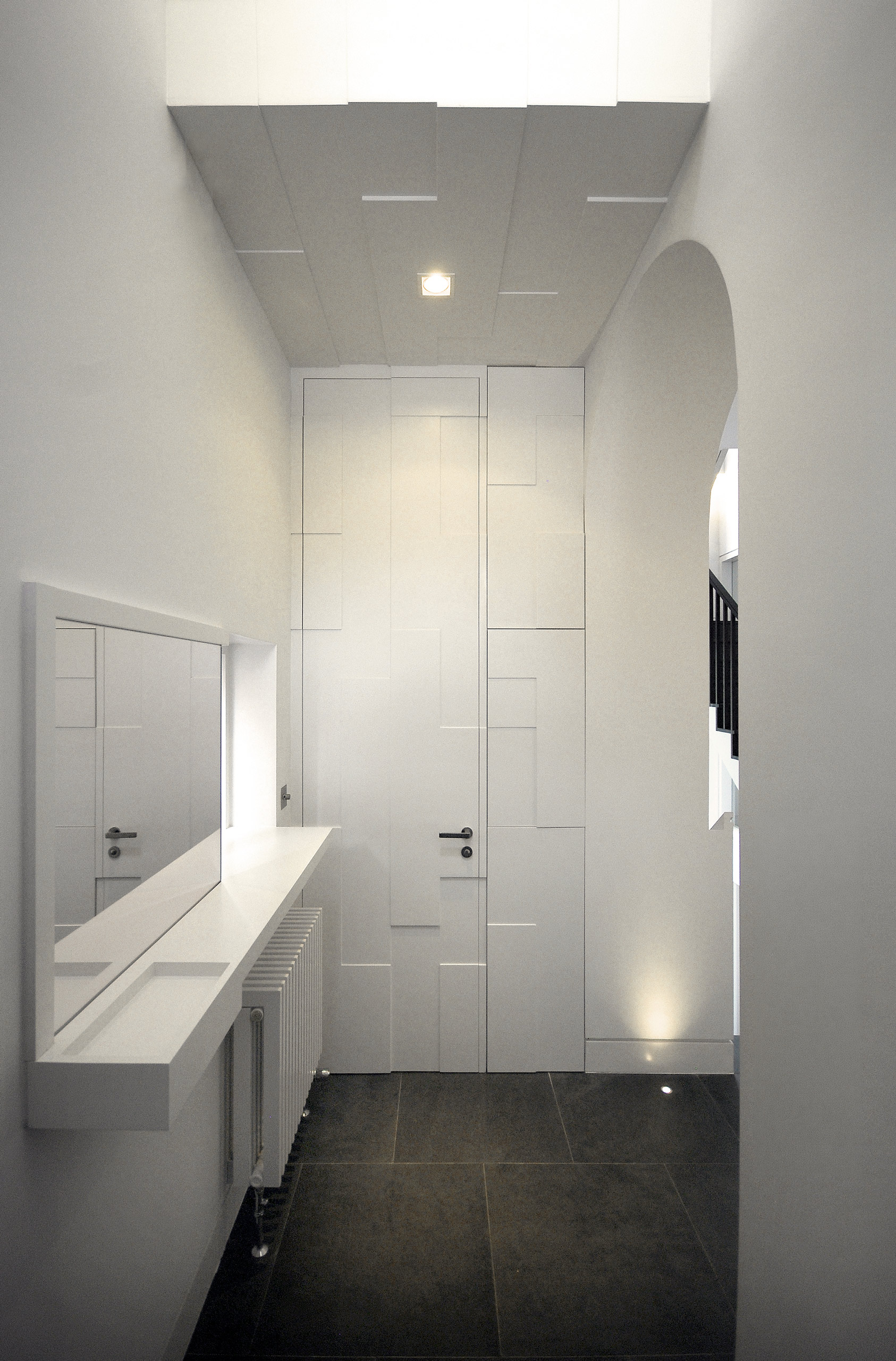
Approach from entrance to double height space, framed by thoughtful mirrored-window complete with integrated shelf on the left, and arched opening on the right leading onto the new staircase
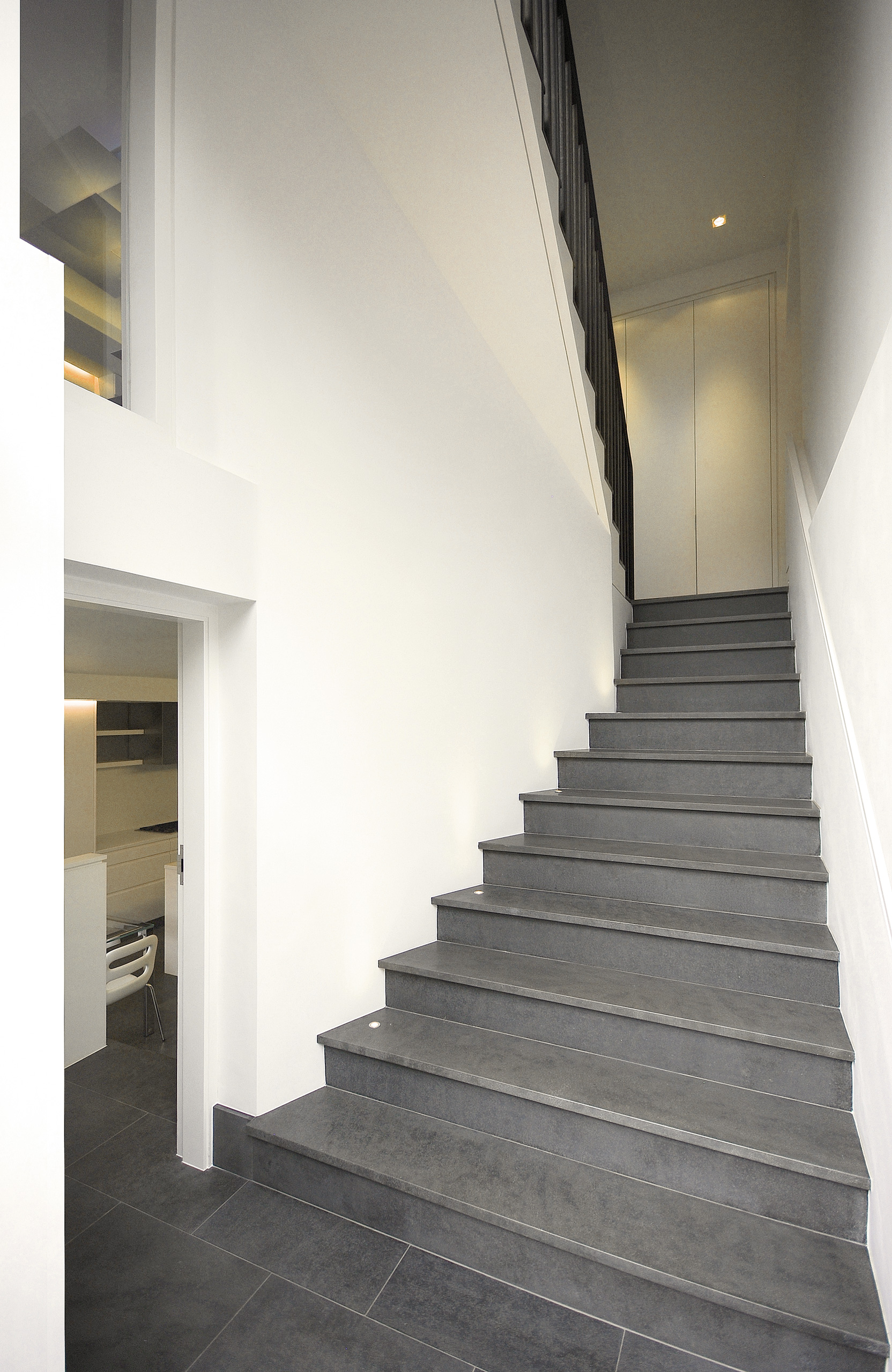
Tapered staircase and spatial connectivity, bolstering an improved relationship to the garden through a widening geometry
Spatial Connectivity
In response to this internal/external division, as well as the requirement to make the existing floor floors interconnected, we proposed a series of double-storey interventions.
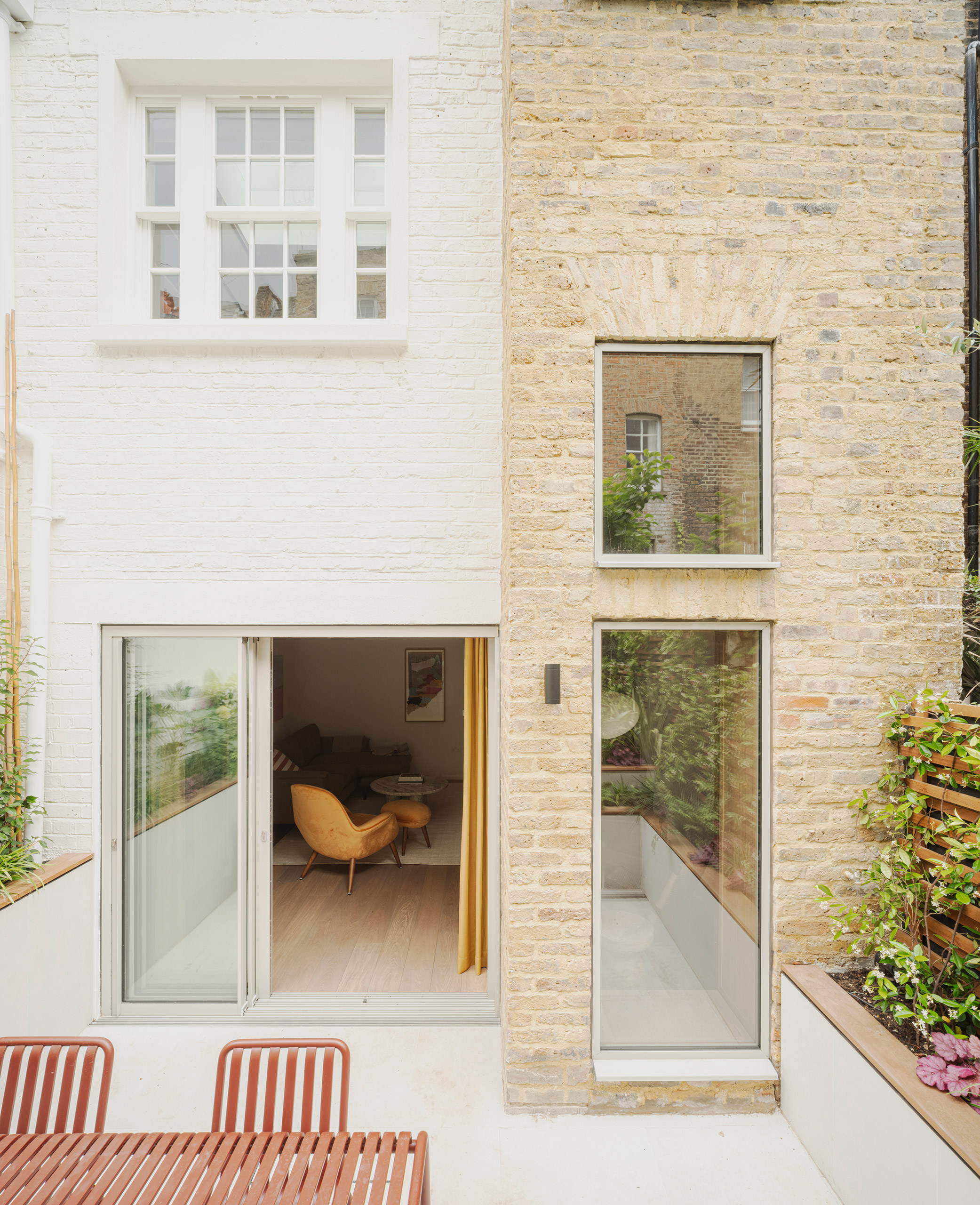
A new staircase leads from the entrance hall on the raised ground floor down to garden level where the kitchen area feels like it extends into the garden via a new sunken terrace. The flow of this journey between levels is reinforced by the geometry of the staircase – tapered, getting wider as you descend to reach the garden, drawing you from the upper to lower level. A new 4.5-metre-high glazed opening at the bottom of the staircase compliments the stair’s crescendo to bring view of the garden deeper into the house. Externally, this tall window adds to the collection of existing openings in the rear facade, completing the composition and hinting at the new internal arrangement.
To the front of the property a new void creates a more dramatic Entrance Hall – whilst the plan of the space remains narrow, the ceiling height is doubled resulting in an unexpected and grander entrance to the house. Not only does this allow the entrance to claim more natural light through a first storey window but it also provides a setting for a new light feature. The Master Suite looks out on to this void increasing the bedroom’s connection to the floor below.
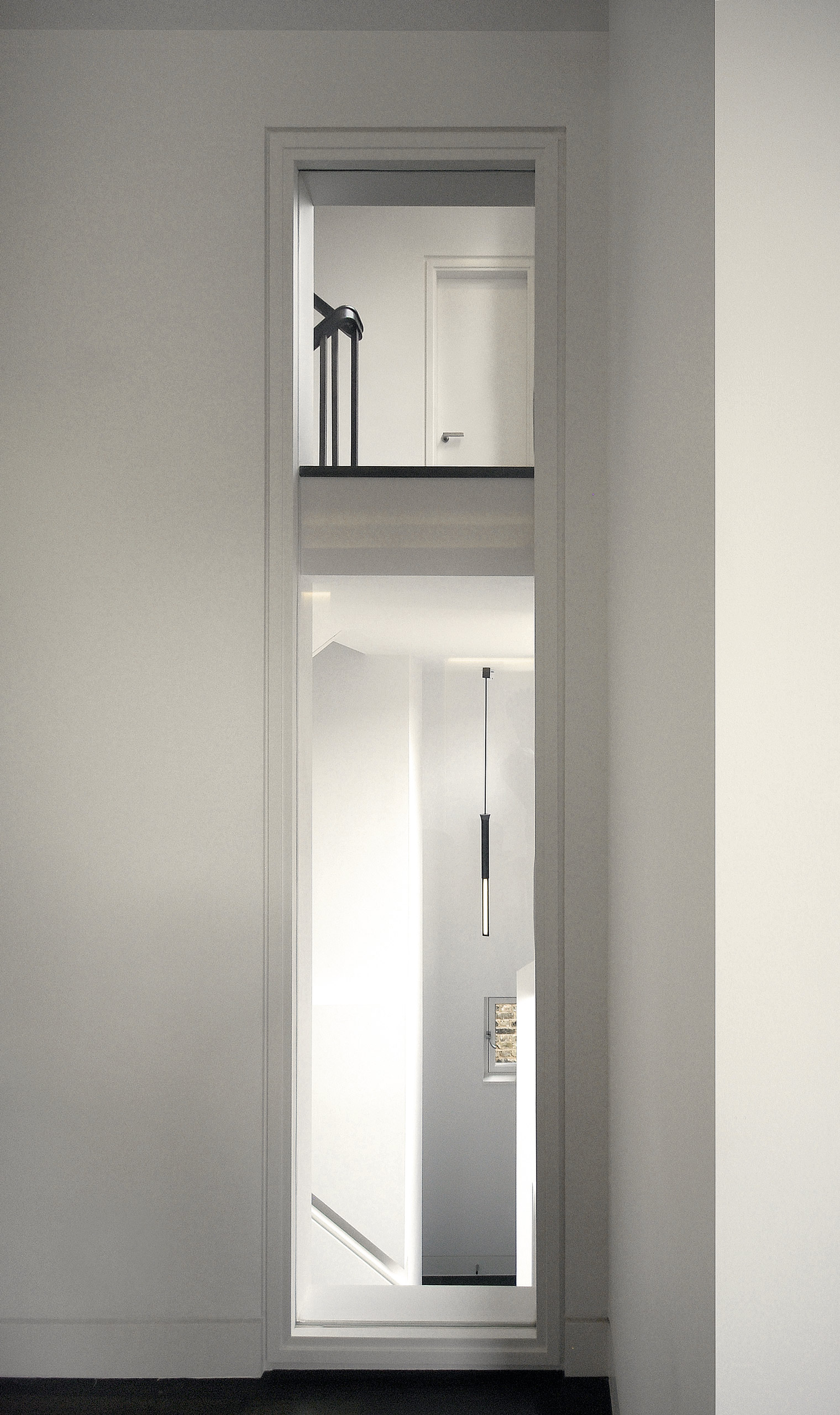
Tall, intersecting internal window maintaining strong spatial connectivity and playful interactions
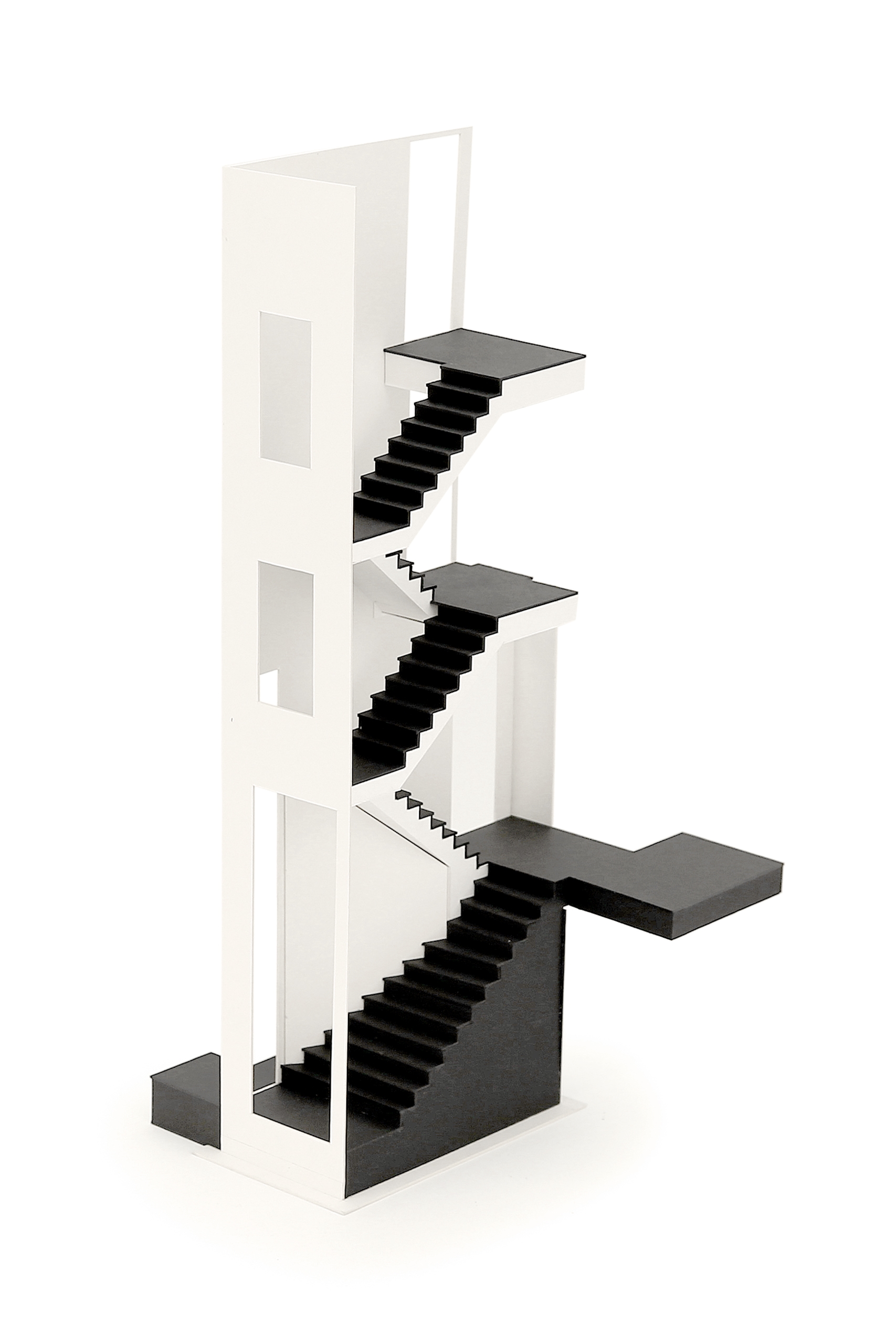
Staircase study model
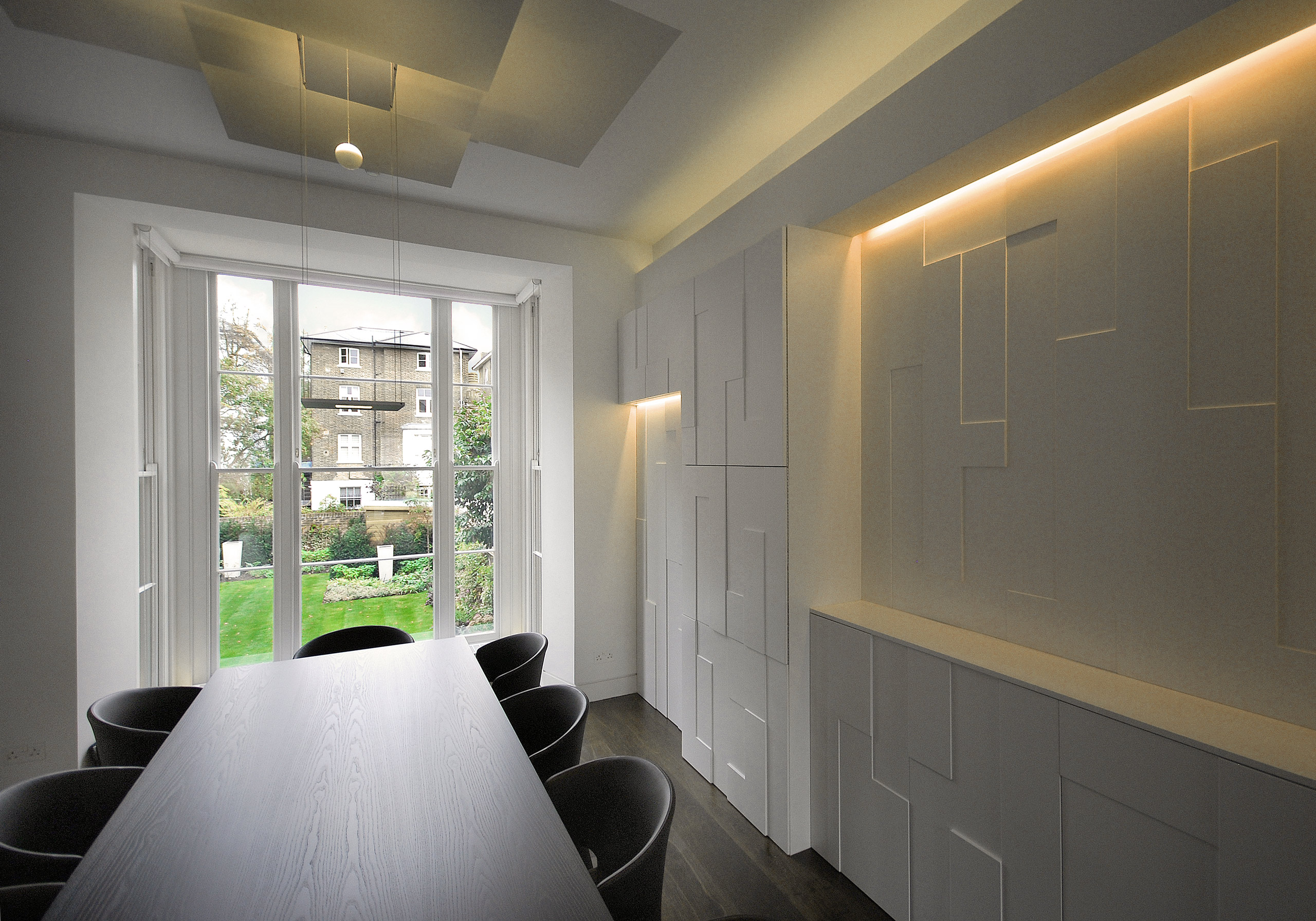
View through the generous tripartite sash to the lush garden, framed with playful relief details to integrated bespoke joinery
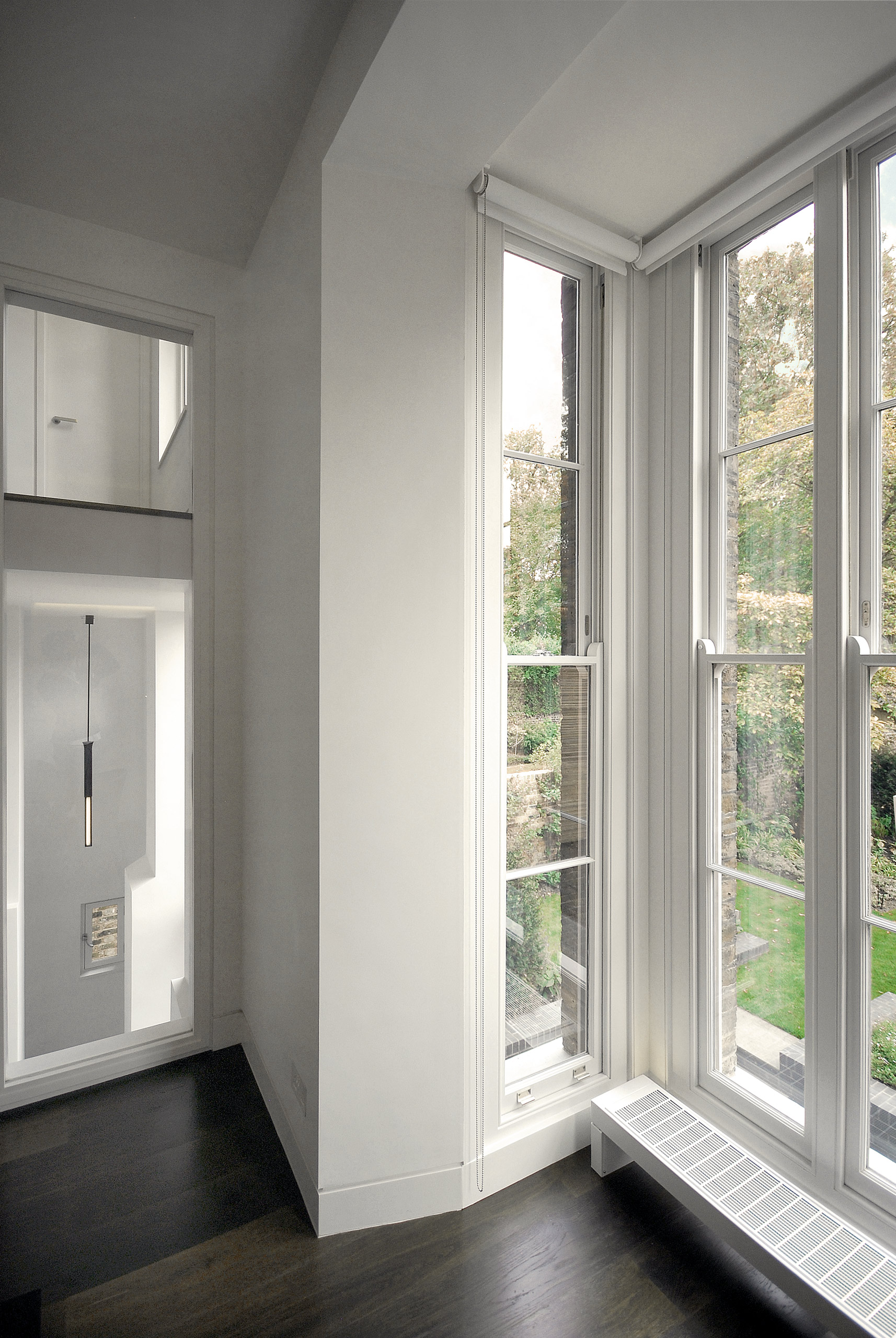
Heightened spatial connectivity and dialogue between past and present, exemplified through generous contemporary internal and traditional external windows
Material Palette
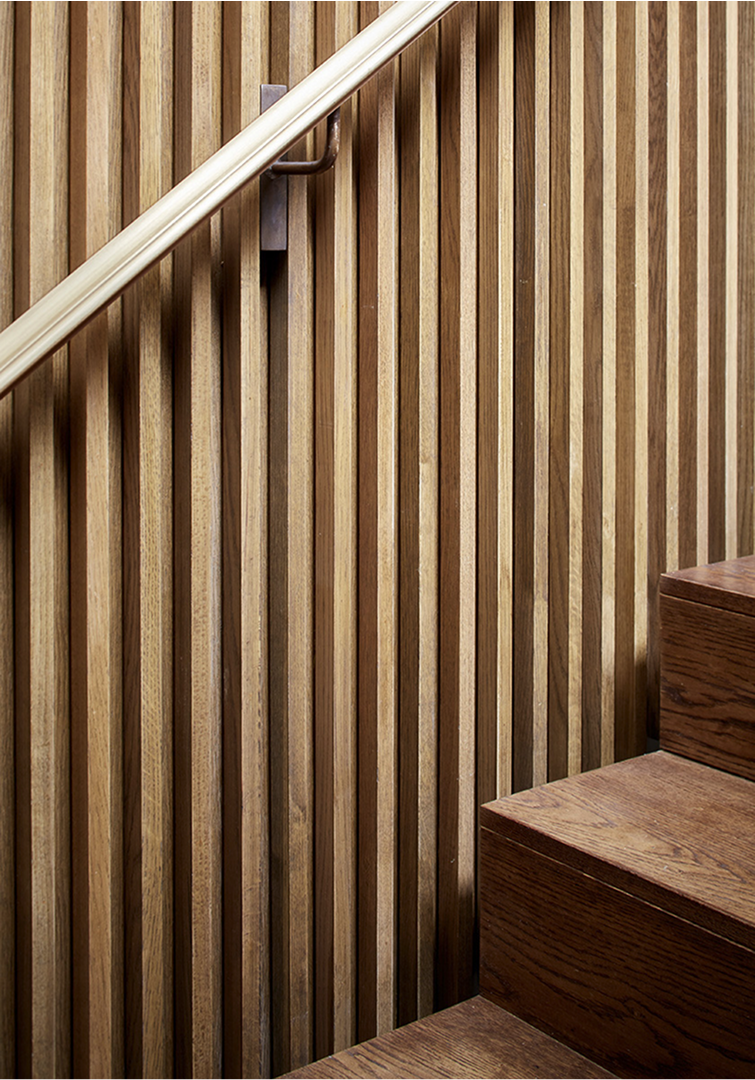
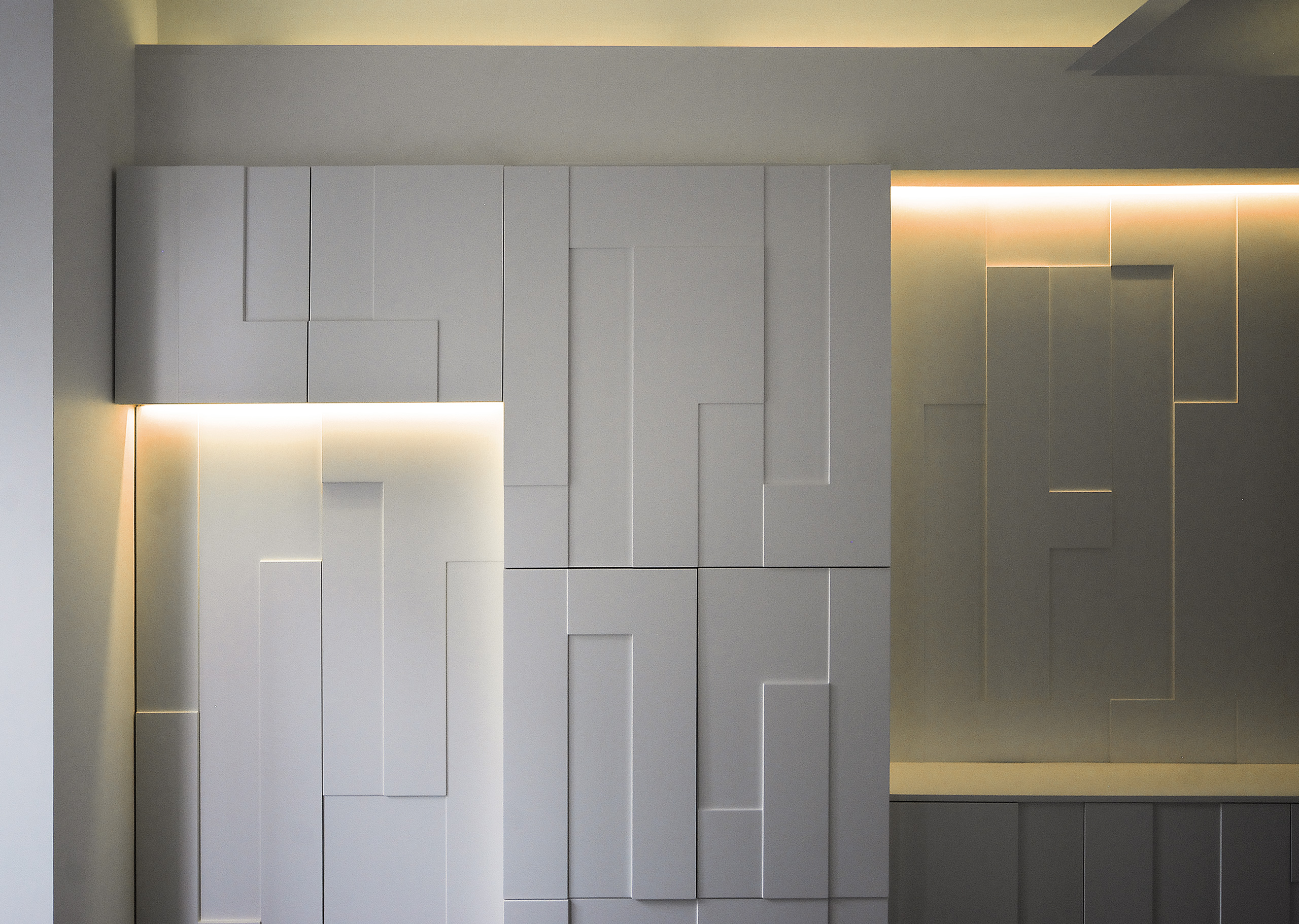
Providing a neutral palette for family life, the internal material treatment was kept deliberately simple. Bespoke joinery pieces are finished in light tones to allow their relief details to catch the increased daylight from the new staircase, and contrast with darker materials such as Belgian basalt and stained oak. We left the weathered brick facades untreated to conserve traces of the building’s 150-year history whilst window frames and rendered areas were decorated in grey tones to create subtle, soft and understated facades.

Simple material treatment with playful relief details accented by the increased daylight from the new staircase windows
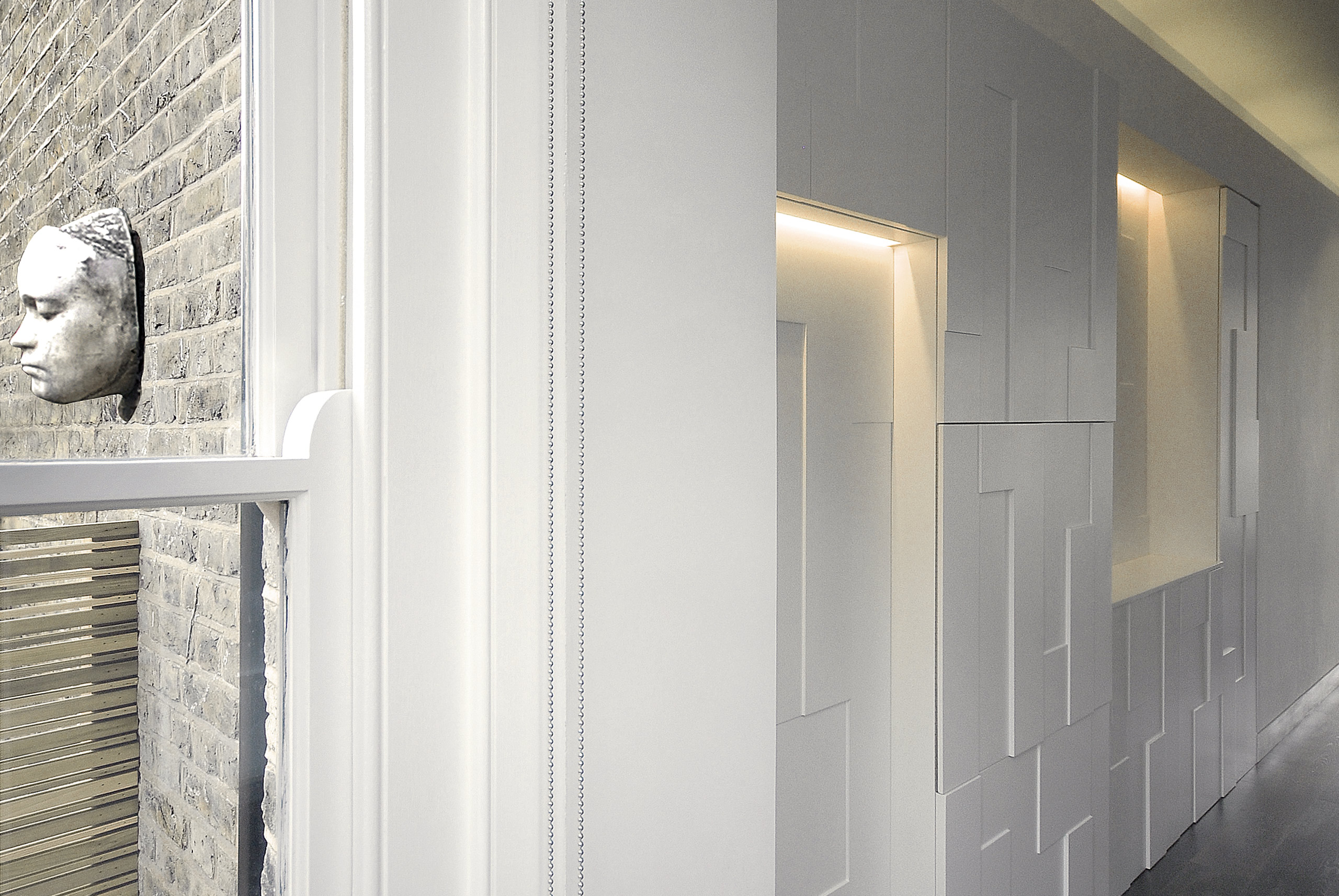
Playful joinery relief details and interaction between exterior and interior to the dining area
City of Westminster Projects
Clifton Hill House is one of the many schemes for private and commercial clients Patalab has delivered in the City of Westminster. It is also one of numerous projects we completed in St John’s Wood conservation area. Our other Westminster residential projects include Knightsbridge House, Prince’s Square Apartments and Chandos Street.
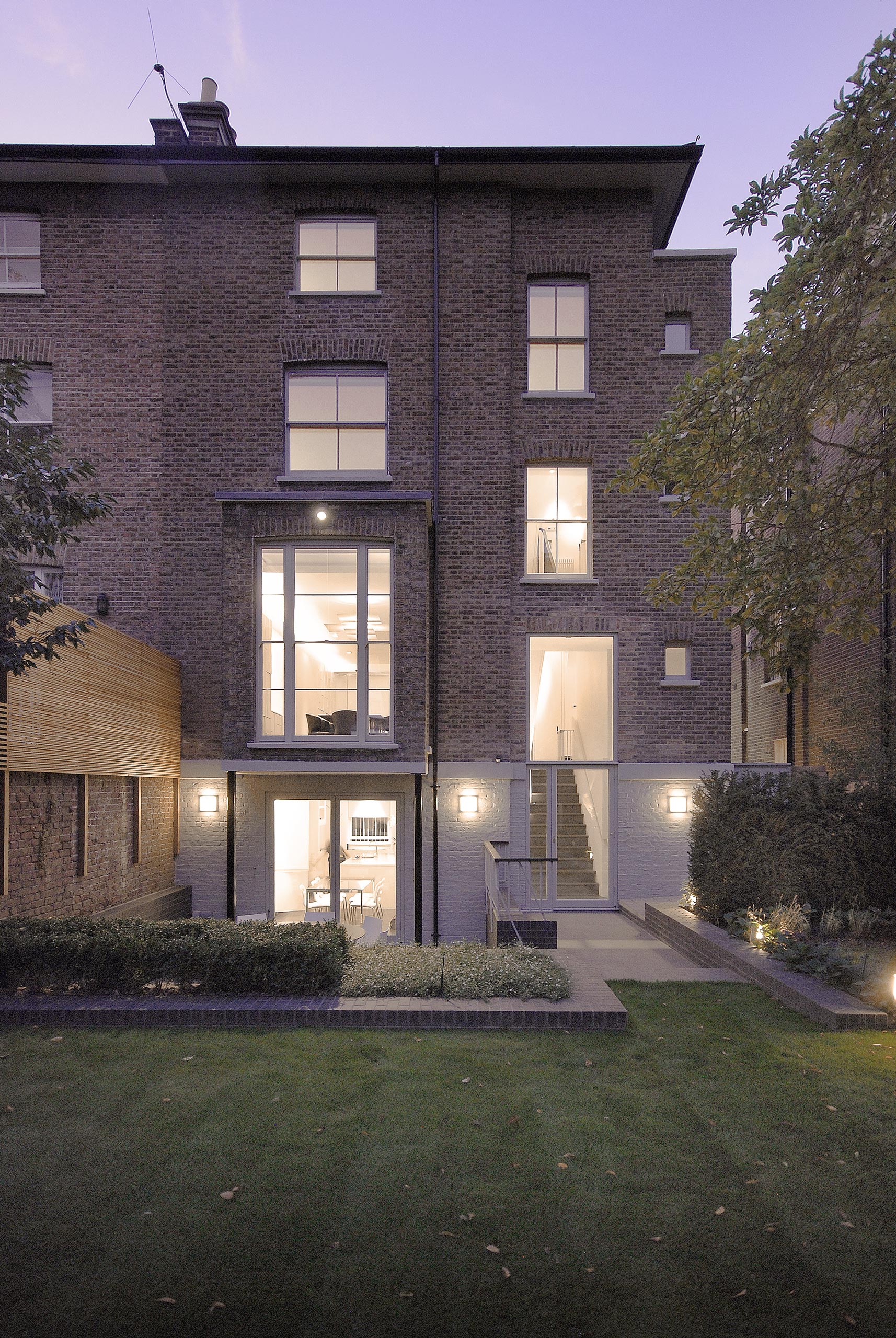
Rear elevation at dusk with the new 4.5-metre-high glazed opening marking a crescendo to the new staircase and spatial sequence onto the garden